Birdy did not start with a birdwatcher. I was at my girlfriend’s place when birds came up, and it turned out she carried a real fear of them. Out of that conversation came the idea: if you know which bird you are looking at, and can learn something about it, it becomes a little less strange.
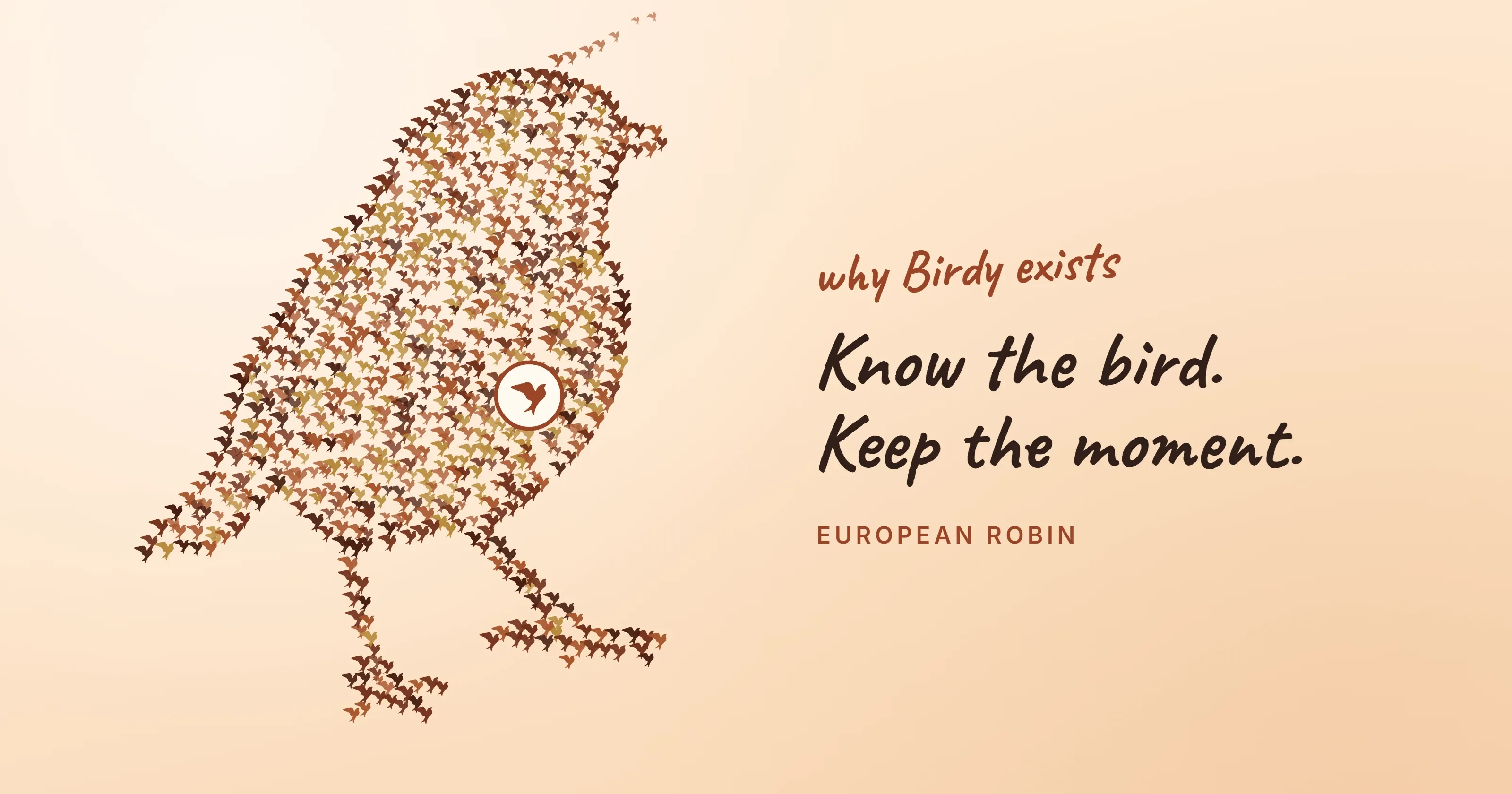
That is why Birdy exists. You see a bird and want to know what it is called. Birdy helps you with the camera, a photo or a recording of its song, and then you can save the sighting in your own field journal.
The identification gives you a name. The journal lets you keep the find.
Identification is the first step
Open the camera and Birdy suggests a species while you look at the bird. You can also choose a photo from your gallery or record its song. The app shows how confident it is, and when it is unsure it shows several suggestions. You review the match before you save anything.
The journal keeps the find
Your journal brings your sightings together. You can return to a bird you saw last week, look through the species you have found and build a record of the places you visit. Every day Birdy also picks a new species to look out for, the bird of the day.
The guide works without a signal
Birdy includes 839 European species with photos and descriptions. You can search the guide while you are outside, even when mobile coverage is poor. The models for photos and sound also run on your phone. Here on birdy.community there are also species pages where every fact is checked against its sources.
You do not need an account to get started. Your photos and journal stay on your device. Birdy does not need to upload a bird photo to identify it.
Made to help you learn
Birdy is useful when you are learning common garden birds and when you want a record of everything you have found. It can be unsure about a match, so you always make the final call before it goes into your journal.
The Android app is available now, and an iPhone version is in development. Want to know how Birdy was built and where it is going? Read Birdy × AlbIT.