Passeridae
House Sparrow
Passer domesticus
- Scientific name
- Passer domesticus
- Family
- Passeridae
- In Sweden
- Resident all year
- Size
- 14 to 18 cm
- Swedish Red List 2025
- Not red-listed
- Global Red List (IUCN)
- Least concern (LC)
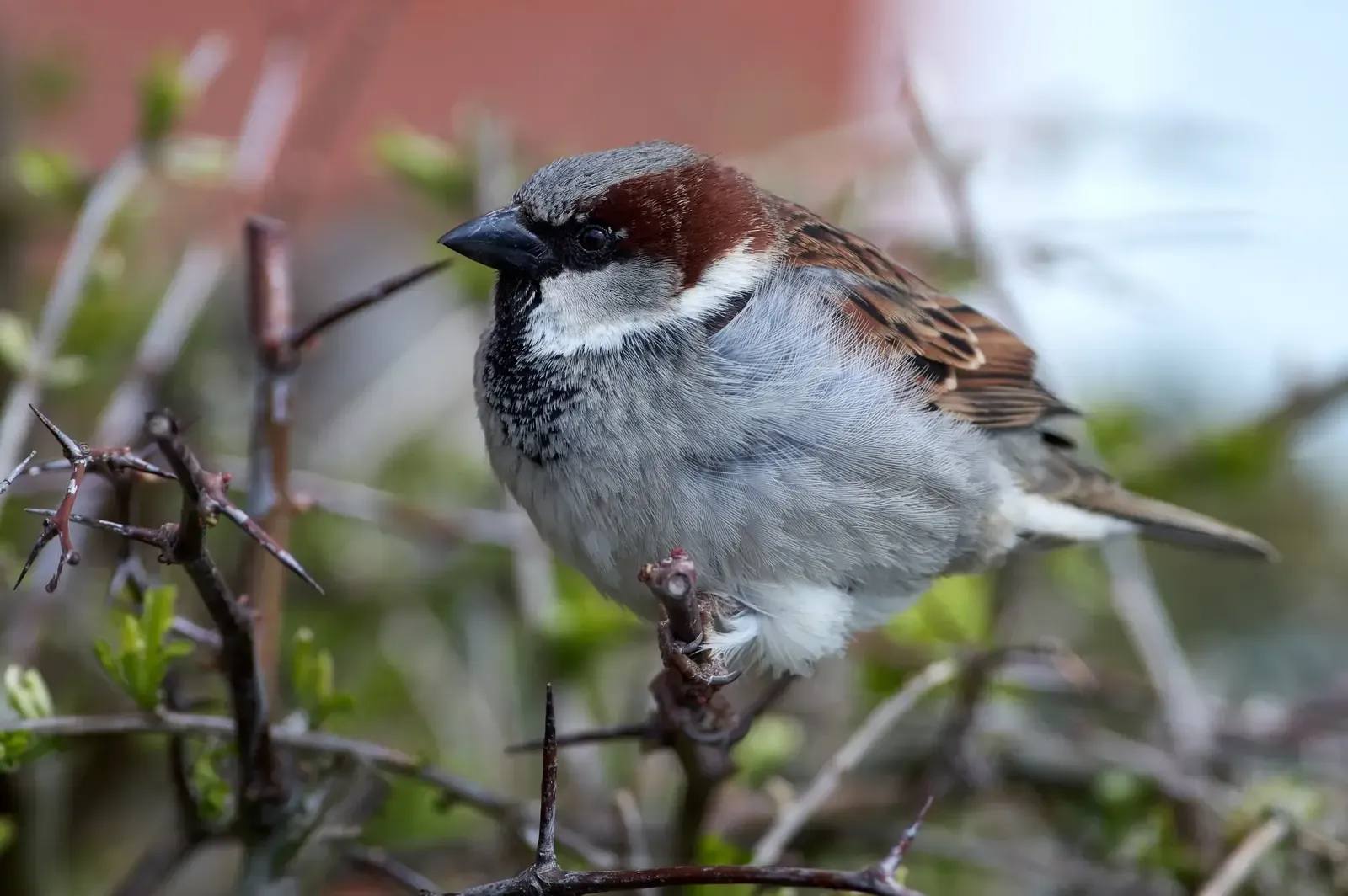
The House Sparrow is a sturdy, compact songbird with mainly grey and brown plumage. It does best in farming villages, suburbs, town centres with large parks, zoos and on livestock and poultry farms.
How to recognise it
- Sturdy, compact body with a large head and a heavy, conical bill
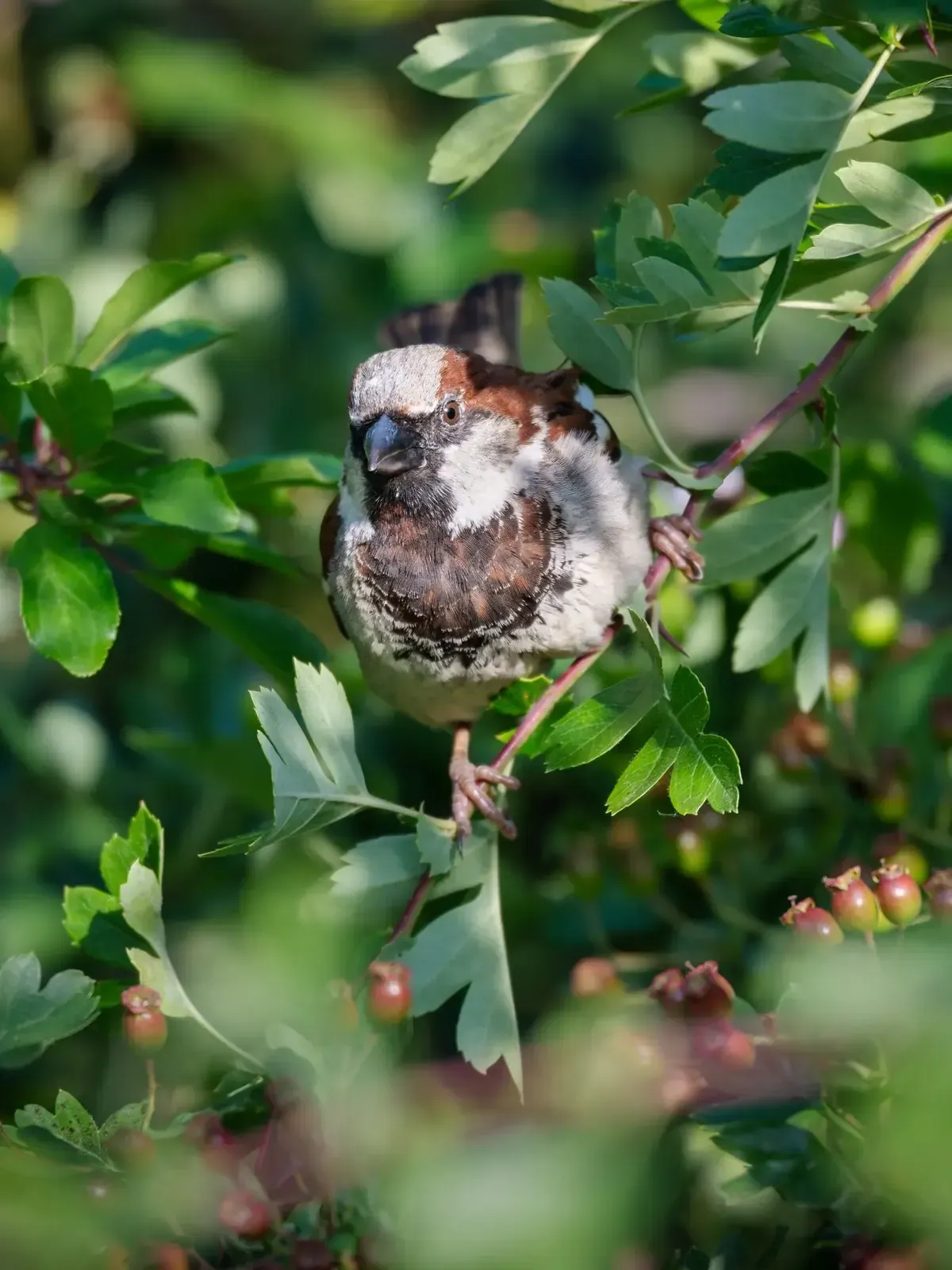
- Male has a grey crown, chocolate brown nape and black bib onto the upper breast
- Female is dull brown and pale grey with a pale eyebrow, clearest behind the eye
- Clear white front wing bar in all plumages and no black cheek patch
Call and song
Only the male sings, a monotonous, fairly loud and rhythmic "tjilp". A persistent, chattering twitter is often heard from several House Sparrows at once. The alarm for enemies in the air is a soft, trilling "dryyy", and for enemies on the ground it gives persistent nasal calls like "kev kev" or "terrettett".
Where and when
The House Sparrow is resident and occurs in most of Sweden except the mountains. It is reported from all 21 counties and is reported most in January. Numbers in Sweden have fallen but still come to about one million individuals, and it is not red-listed in the Swedish Red List 2025.
When is it seen in Sweden?
Where is it reported?
- No reports
- Small share
- Medium share
- Large share
Reported most in January. Reported from all 21 counties.
Food and behaviour
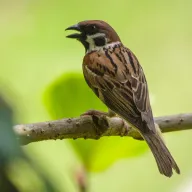
It eats mainly seeds, above all cultivated grain. From spring to summer, insects and other animal food can make up to 30 percent of its diet. It lives in flocks, also mixed ones with for example Tree Sparrows, and usually hops rather than walks on the ground. It takes sand baths against feather parasites and flies fast, straight and fairly low.
Easily confused with
-
Passer hispaniolensis
The male Spanish Sparrow has a chestnut crown, while the male House Sparrow has a grey crown.
More songbirds
Photo: Hobbyfotowiki, CC0, via Wikimedia Commons, resized

Photo: Julian Herzog, CC BY 4.0, via Wikimedia Commons, resized

The text was written with AI from facts in Wikipedia and may be shared under CC BY-SA 4.0. Sources: Swedish article, English article, German article
Report data: Artportalen (SLU Swedish Species Information Centre) via GBIF.org, 2016 to 2025. Red list: The Swedish Red List 2025, SLU Swedish Species Information Centre via GBIF.org.
Checked against sources on . How we make these pages