Fringillidae
Eurasian Chaffinch
Fringilla coelebs
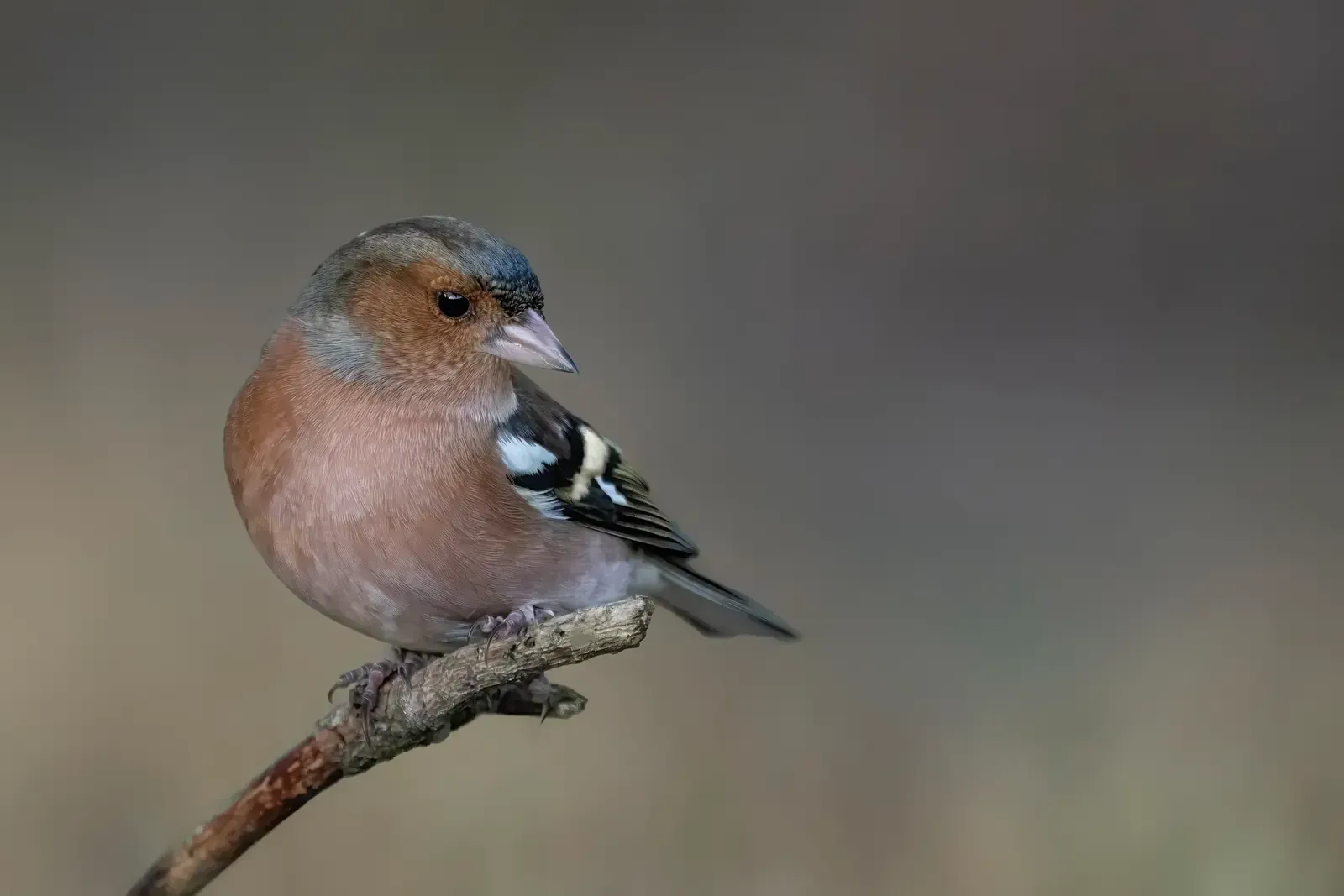
- Scientific name
- Fringilla coelebs
- Family
- Fringillidae
- In Sweden
- Partial migrant, breeds here
- Size
- 14 to 16 cm
- Swedish Red List 2025
- Not red-listed
- Global Red List (IUCN)
- Least concern (LC)
Together with the Willow Warbler, the Eurasian Chaffinch is the commonest bird species in Sweden. It lives in woodland, gardens and parks, and in mountain areas up to about 1500 metres.
How to recognise it
- The size of a House Sparrow but slimmer and with a longer tail
- Double white wing bars and white outer tail feathers, clearly visible in flight
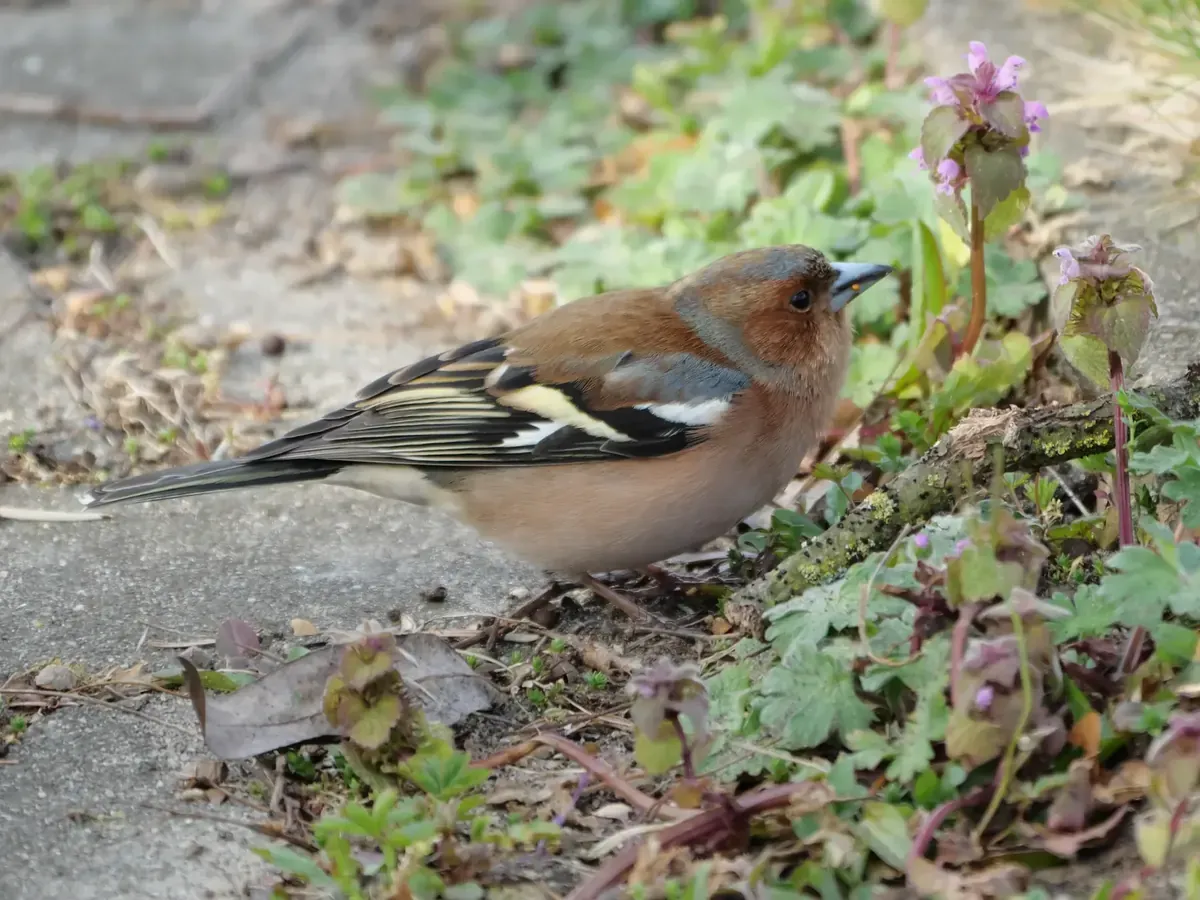
- Male has a blue-grey head, black forehead and reddish-brown cheeks, neck and breast
- Female is duller grey-brown on neck and breast, and young birds resemble her
Call and song
From March the Eurasian Chaffinch sings loudly and piercingly, with a final flourish that sounds roughly like tsitsitsitsjatsjatsoritiu-tsip. The song has regional dialects. The call is a loud fink, fink and the flight call a soft jupp. In some areas it also gives a call known as the rain song, hyitt or rrhy.
Where and when
The Eurasian Chaffinch is a partial migrant that breeds in Sweden. It reaches north to the spruce forest zone or the lower pine forest zone in Lapland. The number of pairs in Sweden was estimated in 2018 at about 8.3 million. It is reported all year round and from all 21 counties.
When is it seen in Sweden?
Where is it reported?
- No reports
- Small share
- Medium share
- Large share
Reported all year round. Reported from all 21 counties.
Food and behaviour
It eats berries, insects and all kinds of seeds, and its young are fed insects and larvae. Outside the breeding season it eats mainly seeds and plant material on the ground, nodding its head rhythmically. It then forms loose flocks, sometimes with Bramblings. In winter mainly females with young of the year leave the breeding area, while older males more often stay in their territory.
More in the Fringillidae family
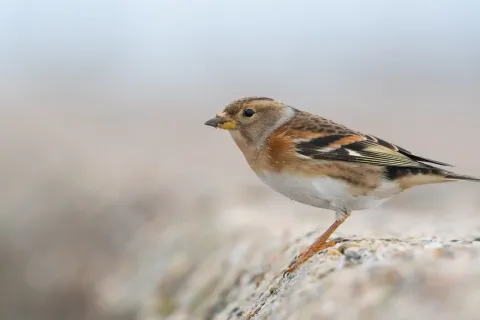
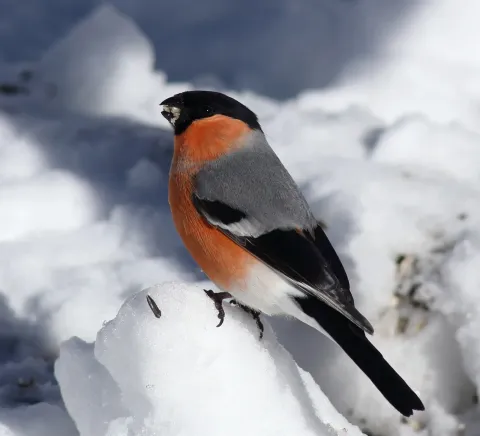
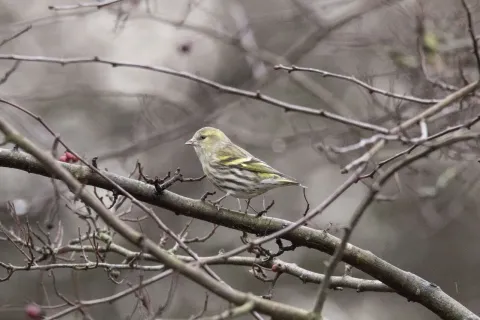
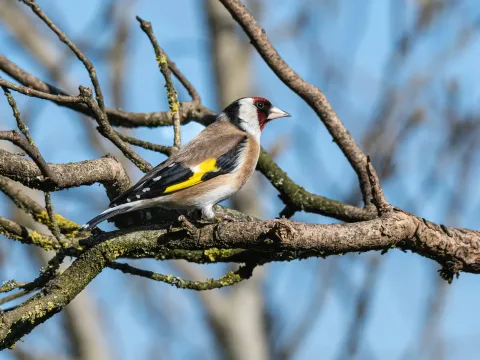
Photo: Ralf Hüsges, CC BY 2.0, via Wikimedia Commons, resized

Photo: Membeth, CC0, via Wikimedia Commons, resized

The text was written with AI from facts in Wikipedia and may be shared under CC BY-SA 4.0. Sources: Swedish article, English article, German article
Report data: Artportalen (SLU Swedish Species Information Centre) via GBIF.org, 2016 to 2025. Red list: The Swedish Red List 2025, SLU Swedish Species Information Centre via GBIF.org.
Checked against sources on . How we make these pages