Accipitridae
Common Buzzard
Buteo buteo
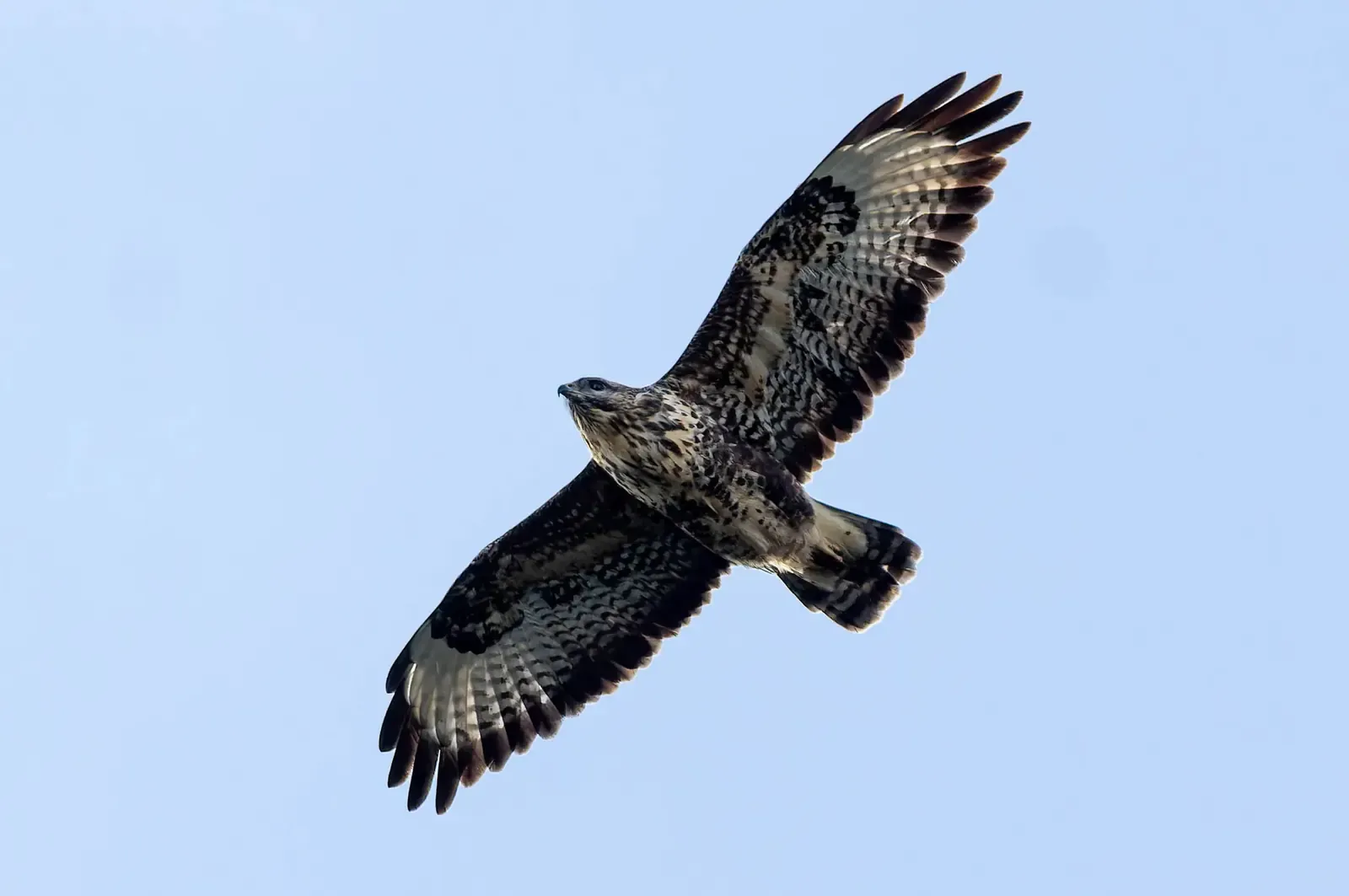
- Scientific name
- Buteo buteo
- Family
- Accipitridae
- In Sweden
- Partial migrant, breeds here
- Size
- 45 to 58 cm
- Swedish Red List 2025
- Not red-listed
- Global Red List (IUCN)
- Least concern (LC)
The Common Buzzard is a compact, medium-sized bird of prey and, along with the Sparrowhawk, one of the commonest raptors in Sweden. It is usually seen in open, broken country with scattered clumps of trees and along forest edges bordering fields.
How to recognise it
- Compact and broad-winged, the female on average 2 to 7 percent larger than the male
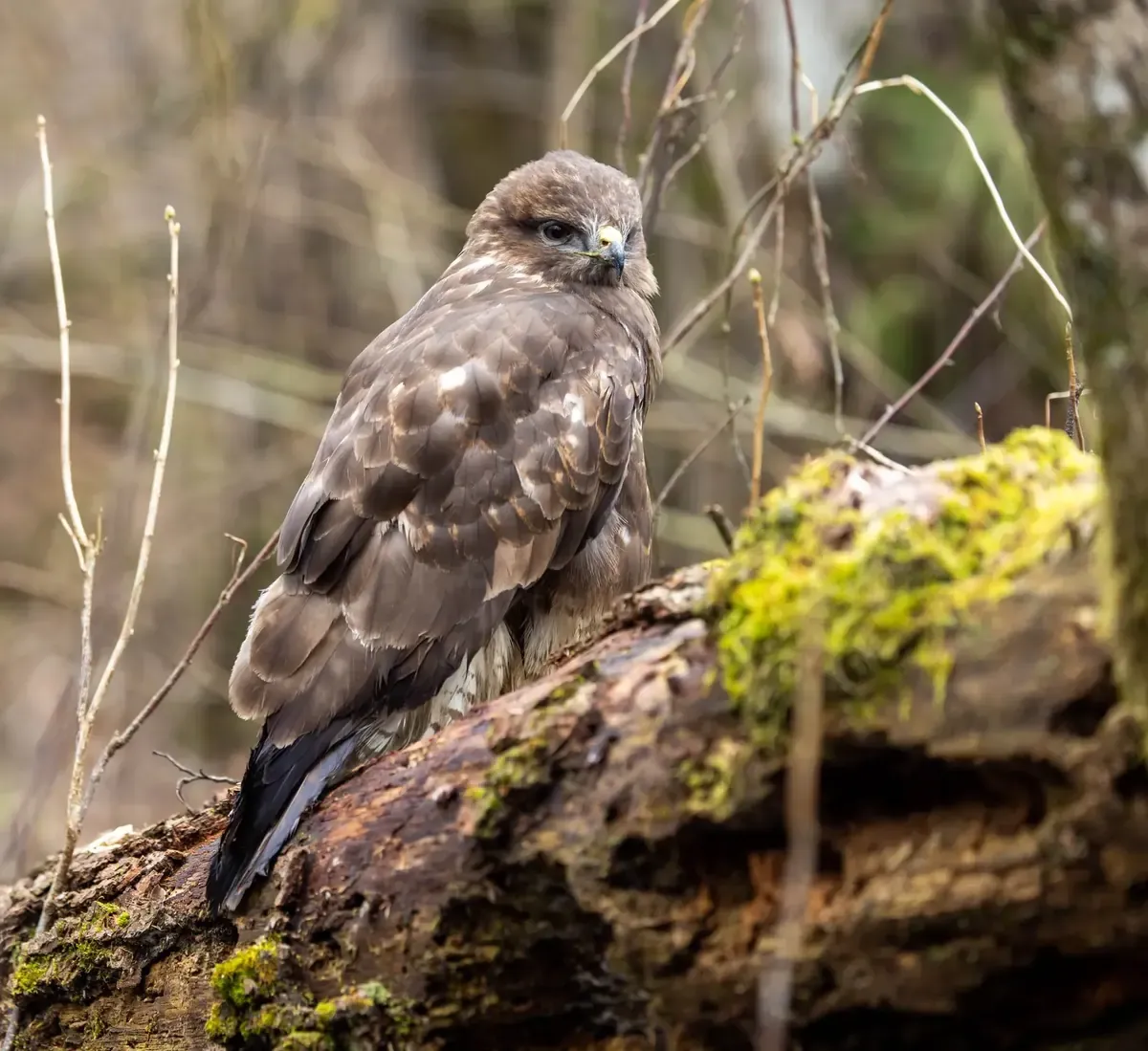
- Usually brown and mottled but very variable, often with a pale U-shaped band across the breast
- From below in flight: paler underwing with a dark trailing edge
- Adults have yellow feet and cere, juveniles a paler eye and streaked underparts
Call and song
The main call is a plaintive, far-carrying “pii-jå” or “piii-o”. The falling, mewing call is heard mostly in flight and is often imitated by the Jay.
Where and when
About 35 000 pairs breed across much of wooded Sweden, but not in the mountains. It is a partial migrant: most move a short way to Europe for winter, but it winters in southern Sweden, especially Skåne. Migration south runs August to November, the return February to May. Up to 41 000 have been counted at Falsterbo. It is reported year-round from all 21 counties.
When is it seen in Sweden?
Where is it reported?
- No reports
- Small share
- Medium share
- Large share
Reported all year round. Reported from all 21 counties.
Food and behaviour
Its food is mainly small rodents such as voles and mice. It is often seen on freshly ploughed fields, searching for worms and insects. It likes to watch from trees or posts beside roads, looking for road-killed animals. The nest is built in a large tree, usually a spruce, and the female lays two to four eggs in April to May. The pair incubate together for 33 to 38 days.
Easily confused with
-
Pernis apivorus
The Honey Buzzard has a smaller bill, a more protruding head and neck, and longer wings. It circles on flat or lowered wings, while the Common Buzzard holds them slightly raised.
-
Rough-legged Buzzard
The Rough-legged Buzzard is slightly larger with longer wings, usually a pale upper tail and clearly dark carpal patches.
More birds of prey
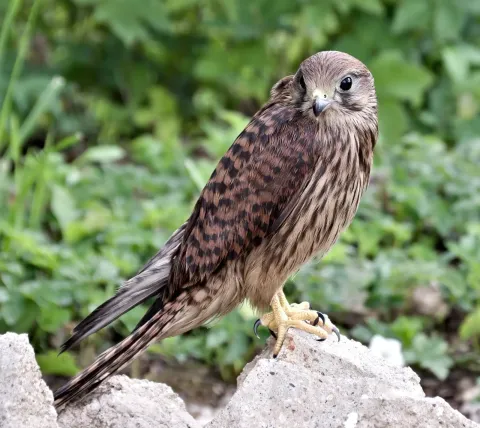
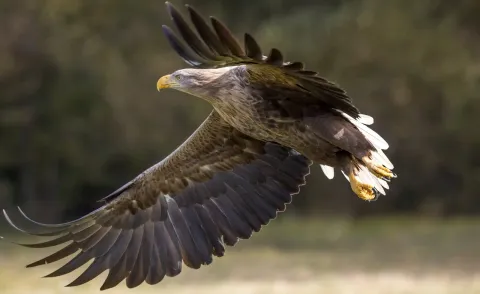
Photo: Hobbyfotowiki, CC0, via Wikimedia Commons, resized

Photo: Yerpo, CC BY-SA 4.0, via Wikimedia Commons, resized

The text was written with AI from facts in Wikipedia and may be shared under CC BY-SA 4.0. Sources: Swedish article, English article, German article
Report data: Artportalen (SLU Swedish Species Information Centre) via GBIF.org, 2016 to 2025. Red list: The Swedish Red List 2025, SLU Swedish Species Information Centre via GBIF.org.
Checked against sources on . How we make these pages