Paridae
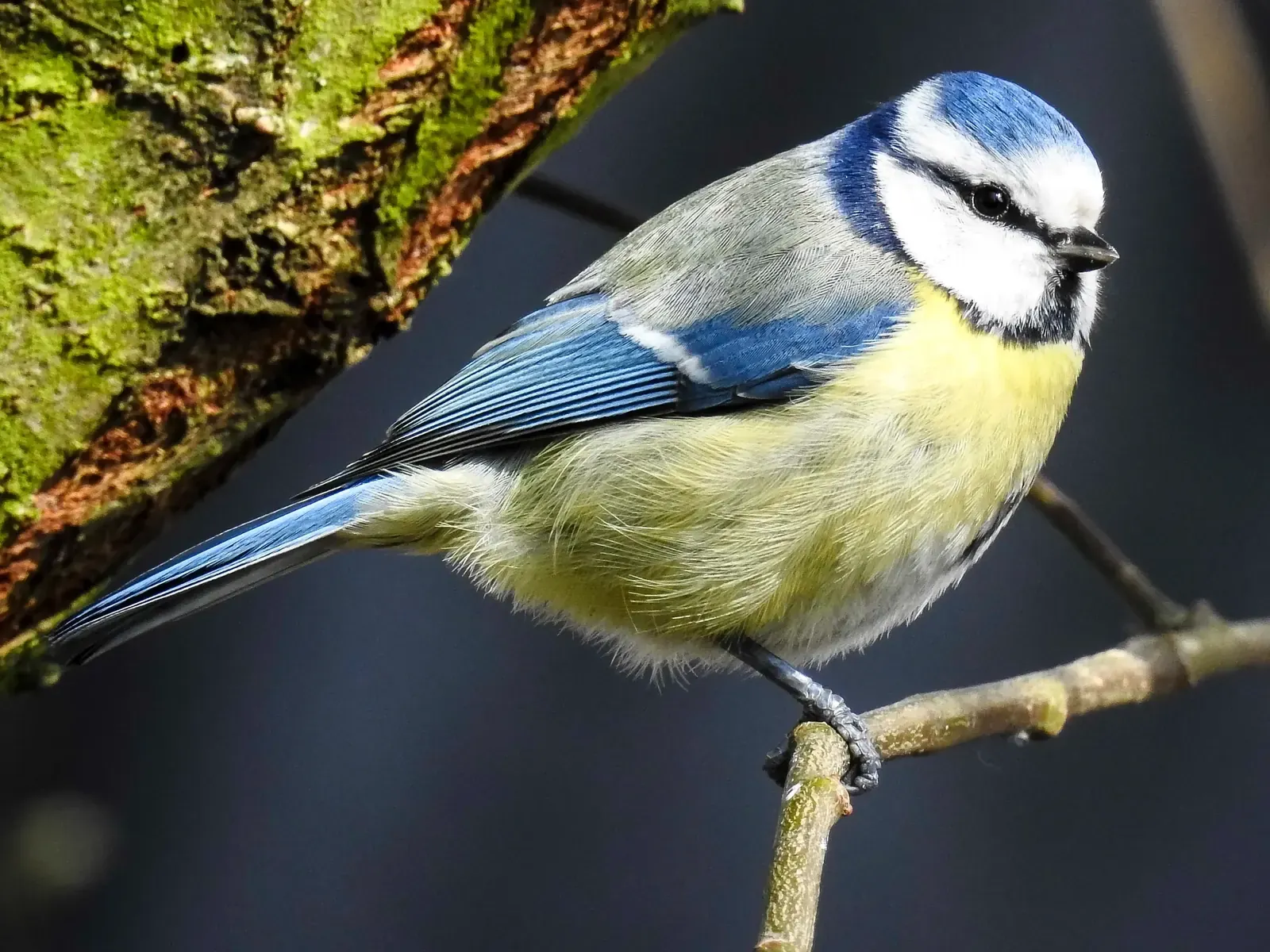
Eurasian Blue Tit
Cyanistes caeruleus
- Scientific name
- Cyanistes caeruleus
- Family
- Paridae
- Size
- 10.5 to 12 cm
- Swedish Red List 2025
- Not red-listed
- Global Red List (IUCN)
- Least concern (LC)
The blue tit will hang upside-down from a twig without hesitation.
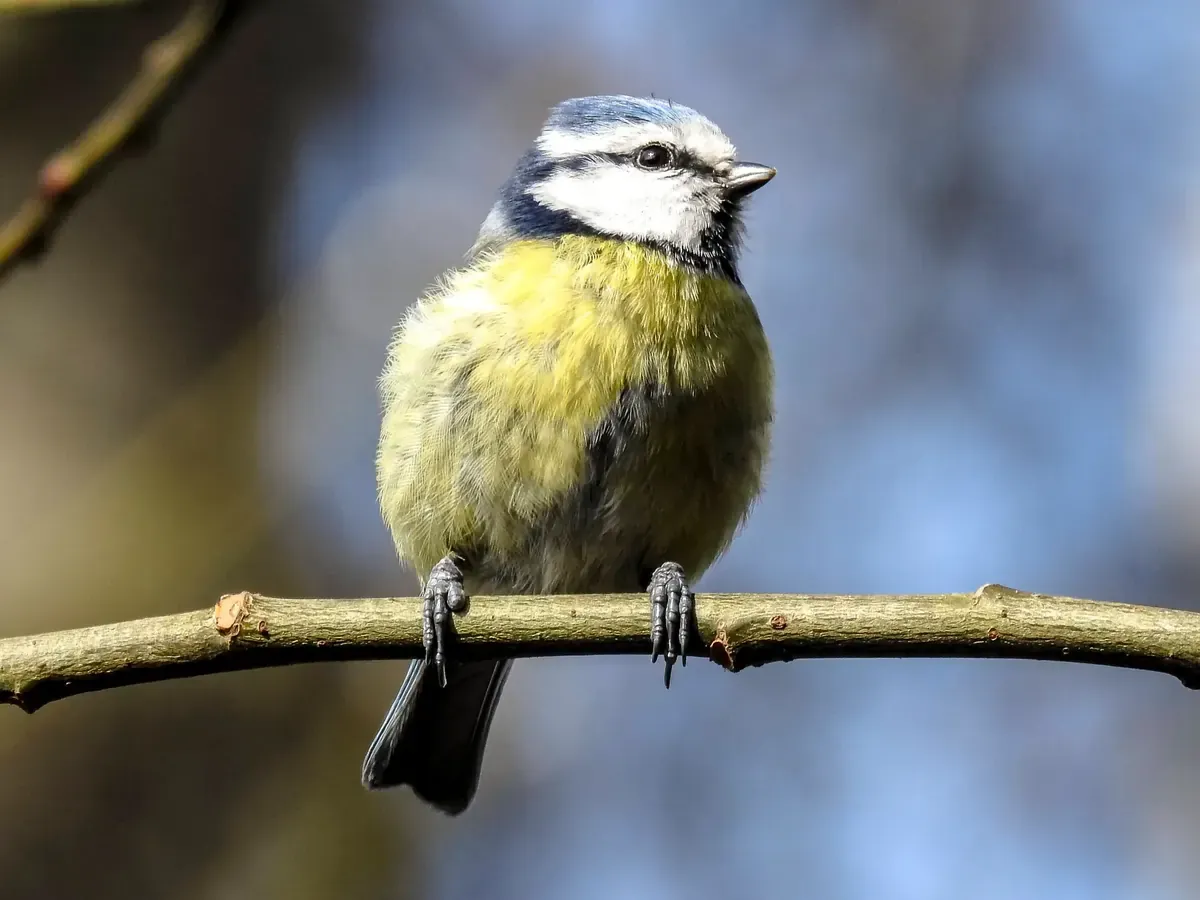
The Eurasian Blue Tit is a tit with a pale blue crown and upperparts and pale yellow underparts. It lives in deciduous and mixed woodland as well as in parks and gardens, and in winter it is a common visitor to bird feeders.
How to recognise it
- Pale blue crown and upperparts, dark blue eye mask and dark blue collar round the head
- White cheeks, pale yellow in young, bordered by black throat patch and blue-black neck ring
- Pale yellow underparts with a black central stripe and a dull greenish back
- Blue wings with white wing bar, male shows more white on forehead and wing bar
Call and song
The territorial song starts with two to three high, even notes, often written "sisi" or "sisisi", followed by a trill at a slightly lower pitch. When birds of prey fly over it gives a very high, long drawn-out "ii" alarm. At feeders it calls "tee, tee, tee" or a scolding "churr".
Where and when
In Sweden the continuous breeding range reaches about 61° north, and up to 65° along the coast, and the range has spread strongly northwards in recent decades. The Swedish population was estimated in 2018 at 774 000 pairs. It is reported from all 21 counties and is reported most from November to February.
When is it seen in Sweden?
Where is it reported?
- No reports
- Small share
- Medium share
- Large share
Reported most in November to February. Reported from all 21 counties.
Food and behaviour
It prefers insects and spiders, but outside the breeding season it eats more seeds and other plant food. It clings to the outermost branches of trees and often hangs upside down while looking for food. In winter it is seen more often close to people. The flight is bounding and fairly slow. It usually nests in tree holes, and it uses nest boxes too.
Easily confused with
-
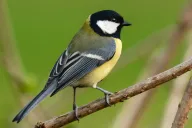
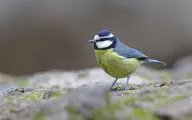
The Eurasian Blue Tit is clearly smaller than the Great Tit.
The blue tit will hang upside-down from a twig without hesitation.
More in the Paridae family
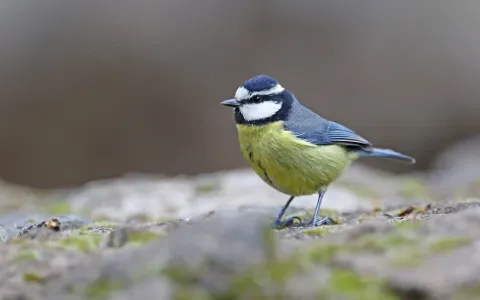
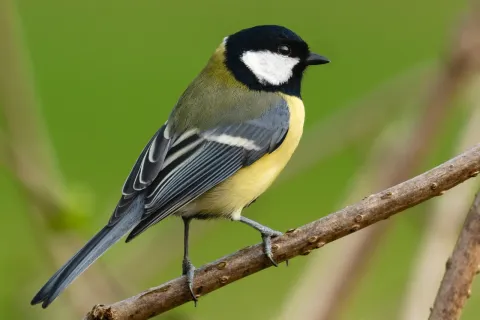
Photo: Kathy Büscher, CC BY 2.0, via Wikimedia Commons, resized

Photo: Kathy Büscher, CC BY 2.0, via Wikimedia Commons, resized

The text was written with AI from facts in Wikipedia and may be shared under CC BY-SA 4.0. Sources: Swedish article, English article, German article
Report data: Artportalen (SLU Swedish Species Information Centre) via GBIF.org, 2016 to 2025. Red list: The Swedish Red List 2025, SLU Swedish Species Information Centre via GBIF.org.
Checked against sources on . How we make these pages