Turdidae
Common Blackbird
Turdus merula
- Scientific name
- Turdus merula
- Family
- Turdidae
- In Sweden
- Partial migrant, breeds here
- Size
- 24 to 27 cm
- Swedish Red List 2025
- Not red-listed
- Global Red List (IUCN)
- Least concern (LC)
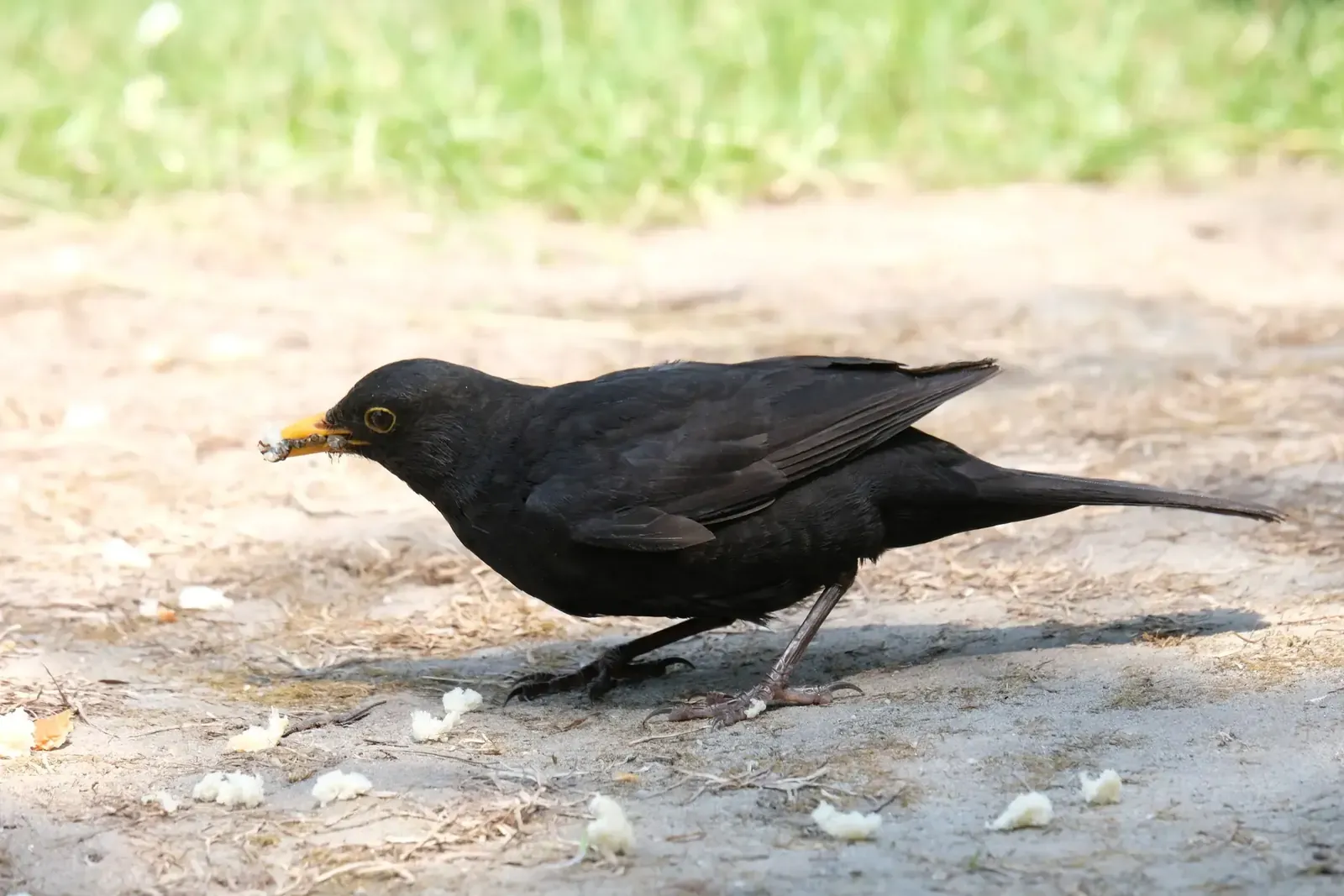
The Common Blackbird is a thrush that breeds in Sweden and is a partial migrant. Once a typical forest bird, since the 1800s it has also lived in parks and gardens near houses.
How to recognise it
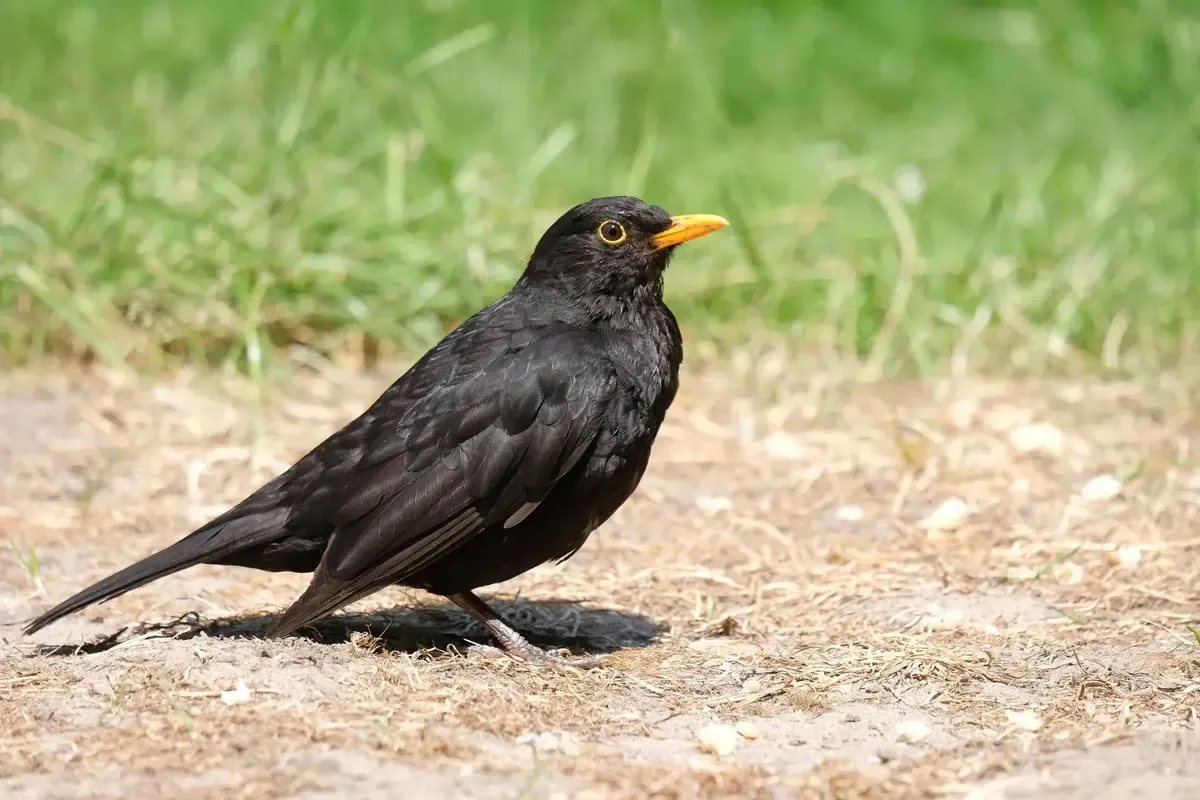
- Adult male: plain black to brownish black, with orange-yellow bill and orange-yellow eye-ring
- Female: sooty brown, brownish-white throat, faintly spotted breast, pale yellow bill with dark brown upper half
- Juveniles look like the female but have pale spots on the upperparts
- First-year males have a dark bill, weaker eye-ring and brown wings against a black body
Call and song
The male sings a varied, melodious, low fluting song from trees, rooftops and other high perches, mainly March to June. It carries far, starts shortly before sunrise and often includes short imitations of other birds. The alarm is a hard, agitated "tack". A very high "ssieh" warns of a flying enemy, and on migration a soft rolling "srrri" is heard.
Where and when
It breeds in Sweden and is a partial migrant. It is common throughout southern and central Sweden up to northern Värmland and along the Norrland coast. The population is estimated at about 1.8 million pairs. It is reported from all 21 counties, most often in December and January. Most Swedish birds migrate to Western Europe from late September to early November and return in March to April.
When is it seen in Sweden?
Where is it reported?
- No reports
- Small share
- Medium share
- Large share
Reported most in December and January. Reported from all 21 counties.
Food and behaviour
The Common Blackbird is omnivorous and eats insects, earthworms, seeds and berries. In autumn and winter it eats more fallen fruit and berries, such as apples and rowan berries. It forages mostly on the ground, running and hopping with jerky movements. The female builds the nest alone and lays three to five, usually four, blue-green eggs with reddish-brown spots.
Easily confused with
-
Turdus torquatus
A Ring Ouzel in first-winter plumage can look like a Common Blackbird but has paler wings.
-
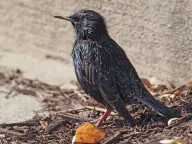
The Starling is also dark and often on the ground, but it is smaller and has a clearly shorter tail.
More in the Turdidae family
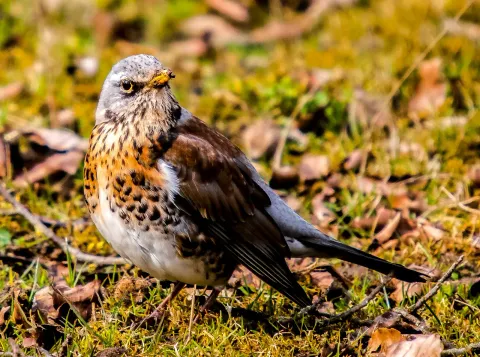
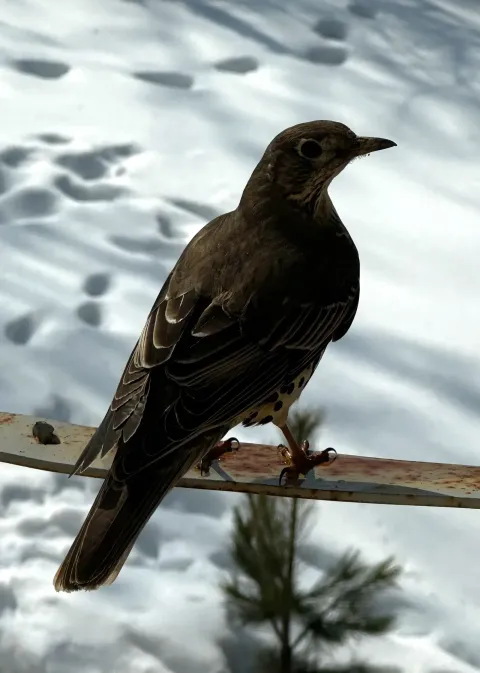
Photo: Musicaline, CC BY-SA 4.0, via Wikimedia Commons, resized

Photo: Musicaline, CC BY-SA 4.0, via Wikimedia Commons, resized

The text was written with AI from facts in Wikipedia and may be shared under CC BY-SA 4.0. Sources: Swedish article, English article, German article
Report data: Artportalen (SLU Swedish Species Information Centre) via GBIF.org, 2016 to 2025. Red list: The Swedish Red List 2025, SLU Swedish Species Information Centre via GBIF.org.
Checked against sources on . How we make these pages