Corvidae
Eurasian Magpie
Pica pica
- Scientific name
- Pica pica
- Family
- Corvidae
- In Sweden
- Partial migrant, breeds here
- Size
- 40 to 51 cm
- Swedish Red List 2025
- Not red-listed
- Global Red List (IUCN)
- Least concern (LC)
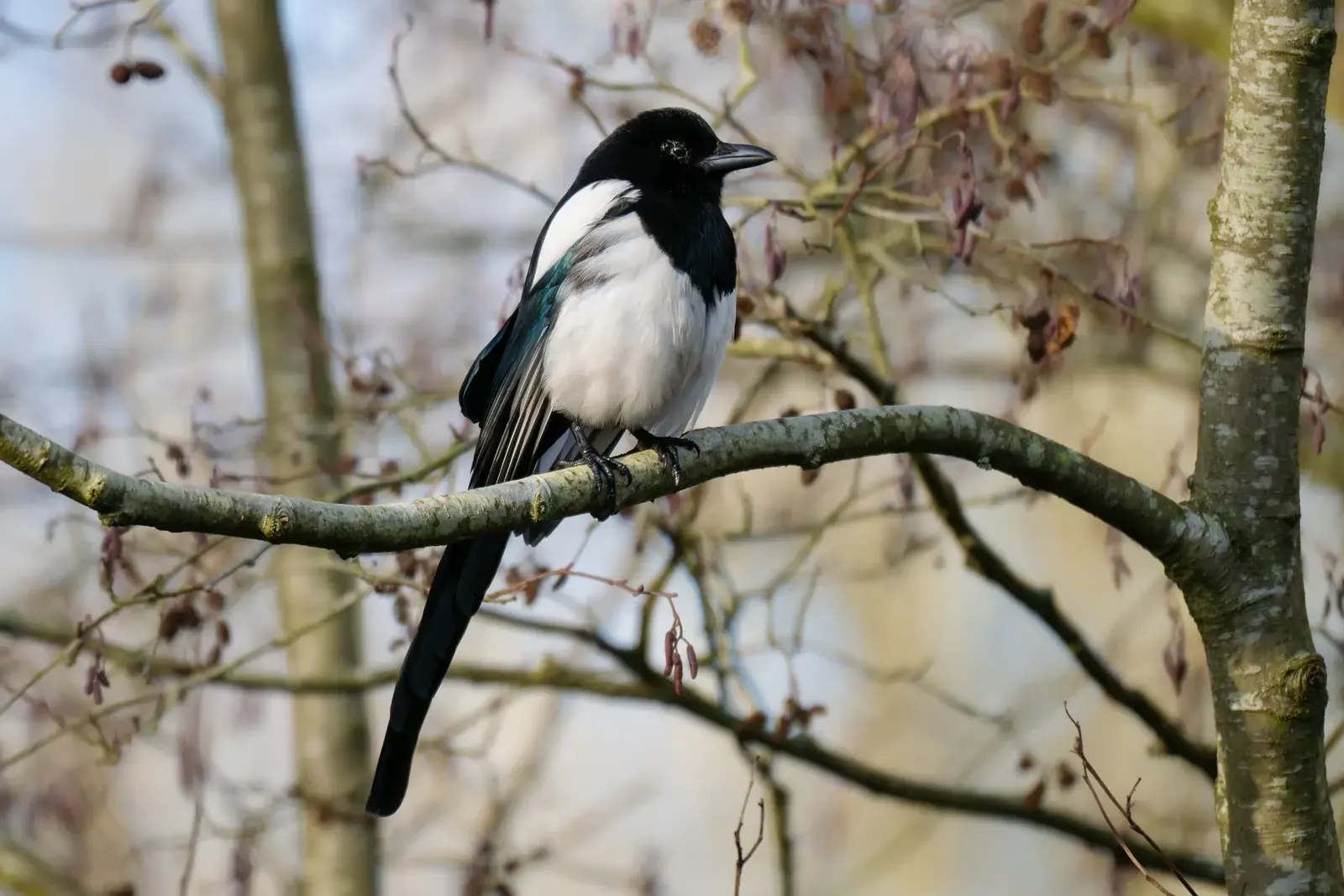
The Eurasian Magpie is a member of the crow family with black and white plumage and a long, wedge-shaped tail. It is often closely tied to human settlement and appears both in towns and in the countryside.
How to recognise it
- Long, wedge-shaped tail, often as long as the rest of the body
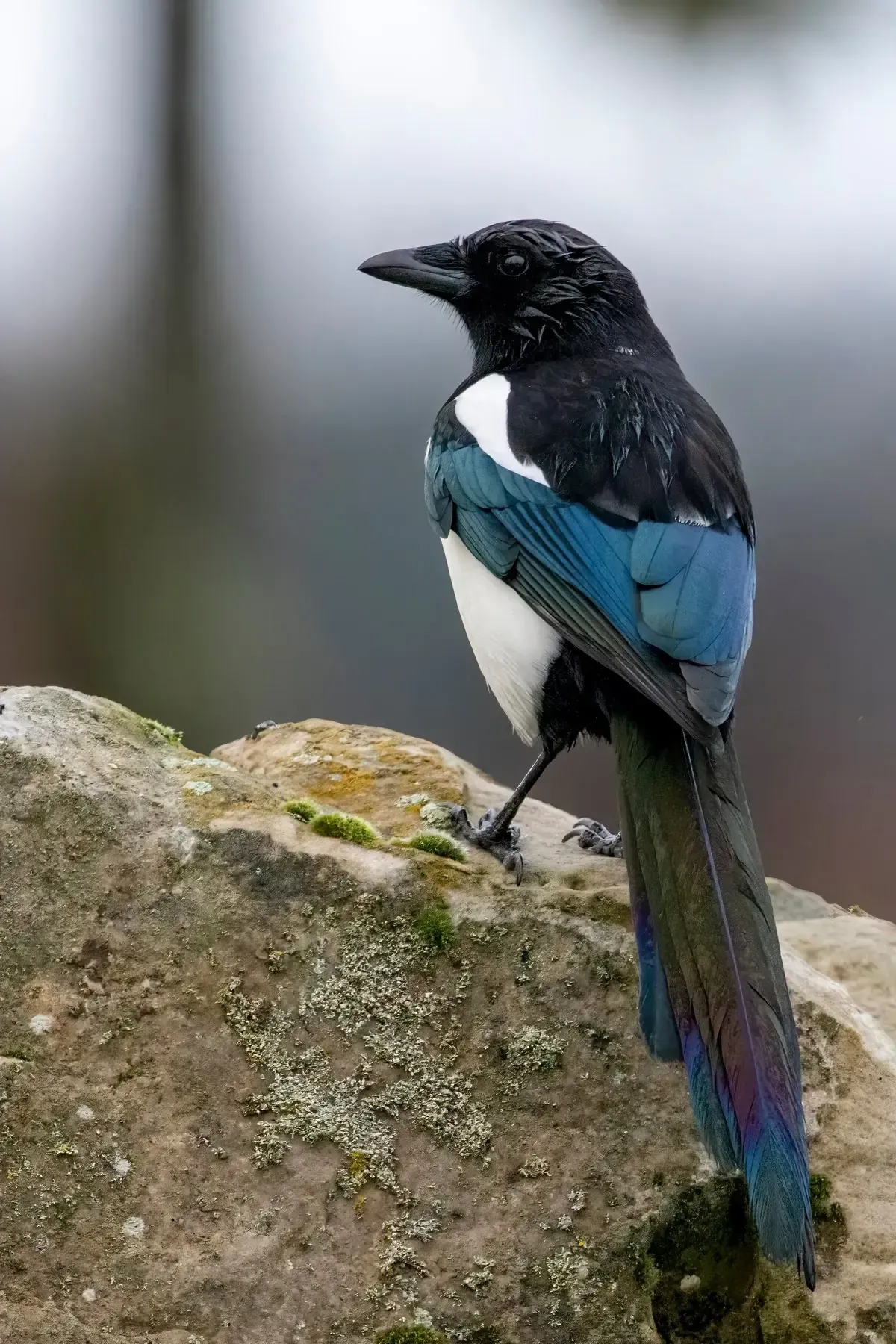
- White belly, flanks and shoulders, the rest black with a metallic sheen
- Close up, tail and flight feathers shimmer green, blue or purple
- Young birds have browner black head and breast and a shorter, unglossed tail
Call and song
The commonest call is a harsh, laughing chatter in series: "schäck-schäck-schäck". It is a warning and alarm call, and fast, broken chattering shows great agitation. Pairs give a low, half-stifled babbling song, often heard on cold winter days. To mark territory they use a call like "kia", "kjää" or "kik".
Where and when
A partial migrant that breeds in Sweden. Here it is wholly tied to human settlements, seldom more than a few hundred metres from houses. In towns it lives mainly in residential areas, parks, avenues, churchyards and large gardens. Reported from all 21 counties, most in December and January. The 2007 population estimate was 300 000 to 700 000 pairs.
When is it seen in Sweden?
Where is it reported?
- No reports
- Small share
- Medium share
- Large share
Reported most in December and January. Reported from all 21 counties.
Food and behaviour
The Eurasian Magpie is omnivorous and often feeds on the ground. In the breeding season in spring and early summer it raids other birds' nests for eggs and young. On the ground it often hops with both feet together or walks jerkily, often with its tail raised. Its flight is flappy and straight. In winter magpies form flocks of a dozen up to a few hundred birds.
More in the Corvidae family
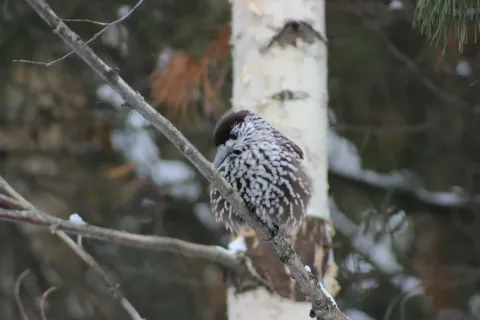
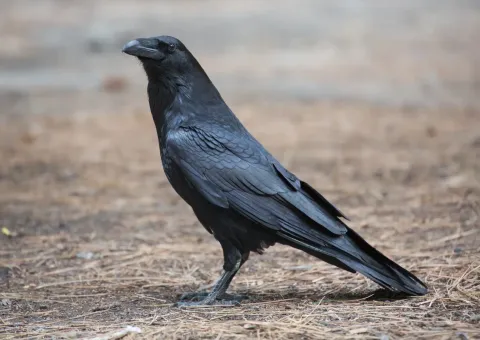
Photo: Julian Herzog, CC BY 4.0, via Wikimedia Commons, resized

Photo: Alexis Lours, CC BY 4.0, via Wikimedia Commons, resized

The text was written with AI from facts in Wikipedia and may be shared under CC BY-SA 4.0. Sources: Swedish article, English article, German article
Report data: Artportalen (SLU Swedish Species Information Centre) via GBIF.org, 2016 to 2025. Red list: The Swedish Red List 2025, SLU Swedish Species Information Centre via GBIF.org.
Checked against sources on . How we make these pages