Laridae
Common Gull
Larus canus
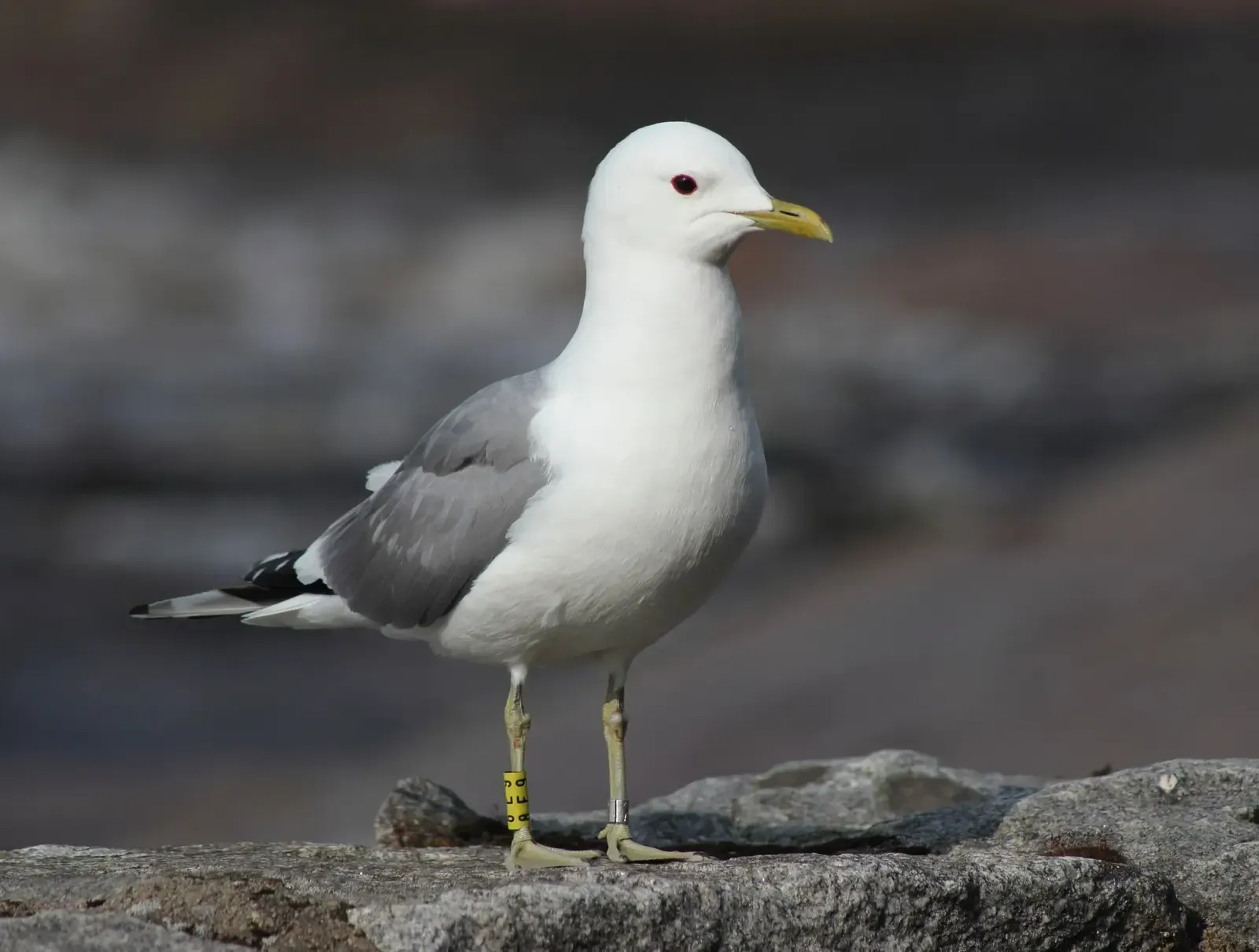
- Scientific name
- Larus canus
- Family
- Laridae
- In Sweden
- Partial migrant, breeds here
- Size
- 40 to 46 cm
- Swedish Red List 2025
- Not red-listed
- Global Red List (IUCN)
- Least concern (LC)
The Common Gull is a gull that breeds near water, for example by large lakes, small forest tarns and along the coast. It also occurs in towns and cities.
How to recognise it
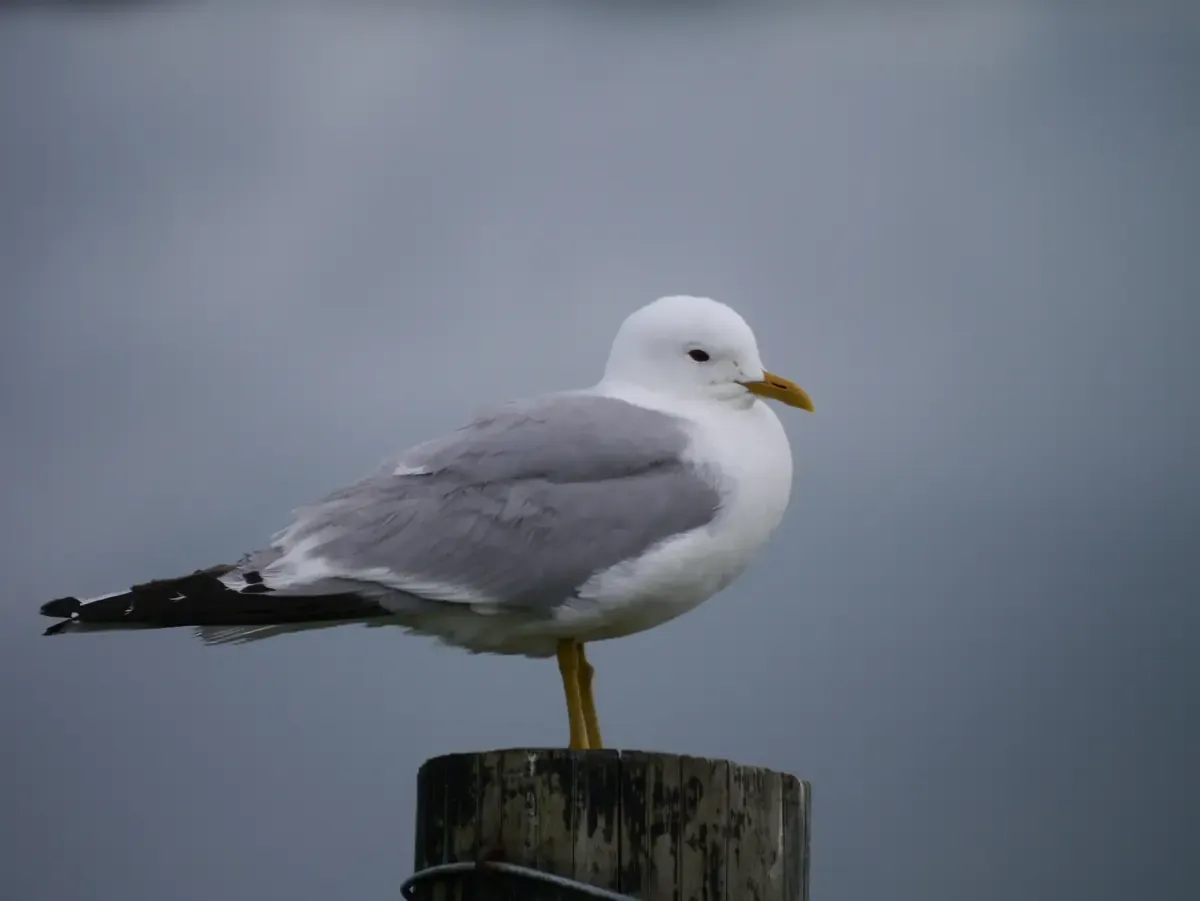
- Like a Herring Gull but clearly smaller and slimmer, with thinner bill and rounder head
- Adults have a grey back and upperwing, black outer primaries with a large white spot
- Yellow bill, pale yellow-green legs, in winter a grey-streaked head and black bill mark
- Young birds are mottled brownish grey above, with pink legs and a black-tipped pink bill
Call and song
The call is a whining “gia”. When alarmed it gives persistent “gli-u gli-u” calls. All its calls are higher-pitched than the corresponding calls of the Herring Gull.
Where and when
The Common Gull breeds by water throughout Sweden, right up into the mountains, and is reported from all 21 counties. It is a partial migrant: most Swedish birds leave in winter, but some stay along the southern coasts of Sweden. It is reported all year round. The Swedish breeding population has been estimated at between 100 000 and 200 000 pairs.
When is it seen in Sweden?
Where is it reported?
- No reports
- Small share
- Medium share
- Large share
Reported all year round. Reported from all 21 counties.
Food and behaviour
It eats fish, fish waste, mussels, earthworms, household waste, insects, berries and seed grain, among other things. In farmland it searches ploughed fields and pastures for insects and larvae. It breeds both in larger colonies and as single pairs. Single pairs may nest on rooftops, in trees or on a large boulder in a field. Both parents incubate the average clutch of three eggs for 23 to 28 days.
Easily confused with
-
Larus brachyrhynchus
The Short-billed Gull is very similar but slightly smaller, with a shorter bill and a darker grey back and upperwing.
More in the Laridae family
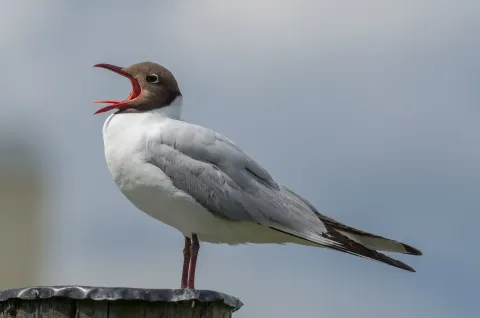
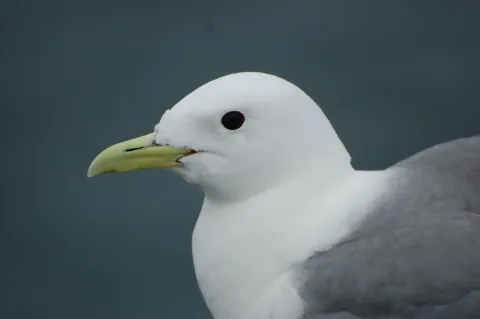
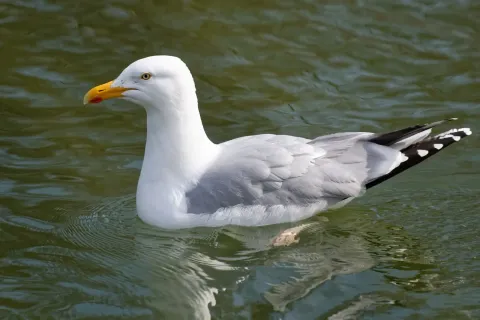
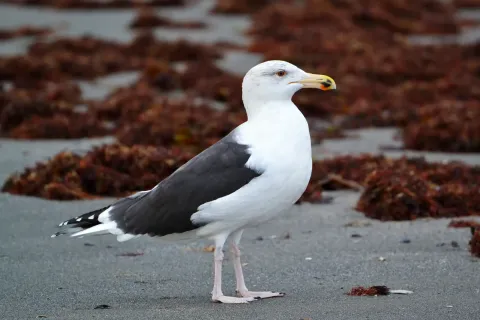
Photo: Estormiz, CC0, via Wikimedia Commons, resized

Photo: James T M Towill, CC BY-SA 2.0, via Wikimedia Commons, resized

The text was written with AI from facts in Wikipedia and may be shared under CC BY-SA 4.0. Sources: Swedish article, English article, German article
Report data: Artportalen (SLU Swedish Species Information Centre) via GBIF.org, 2016 to 2025. Red list: The Swedish Red List 2025, SLU Swedish Species Information Centre via GBIF.org.
Checked against sources on . How we make these pages