Corvidae
Western Jackdaw
Coloeus monedula
- Scientific name
- Coloeus monedula
- Family
- Corvidae
- In Sweden
- Partial migrant, breeds here
- Size
- 34 to 39 cm
- Swedish Red List 2025
- Not red-listed
- Global Red List (IUCN)
- Least concern (LC)
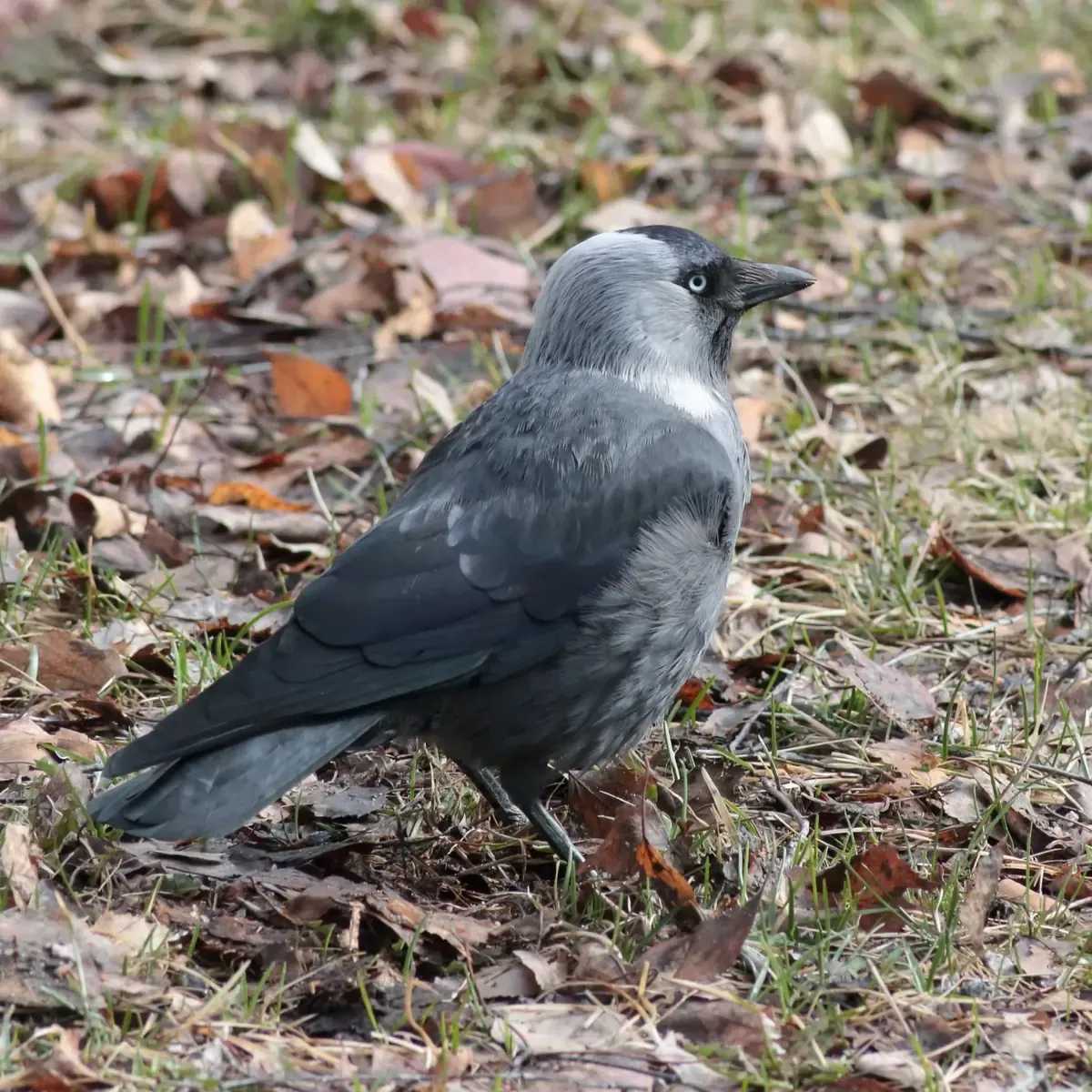
The Western Jackdaw is a member of the crow family with black plumage, a grey nape and a strikingly pale iris. It is often found near human settlements, and in winter larger flocks often gather in towns and cities.
How to recognise it
- Black plumage with a grey nape, blue-black crown and dark grey underparts
- Strikingly pale iris and a short, stout black bill
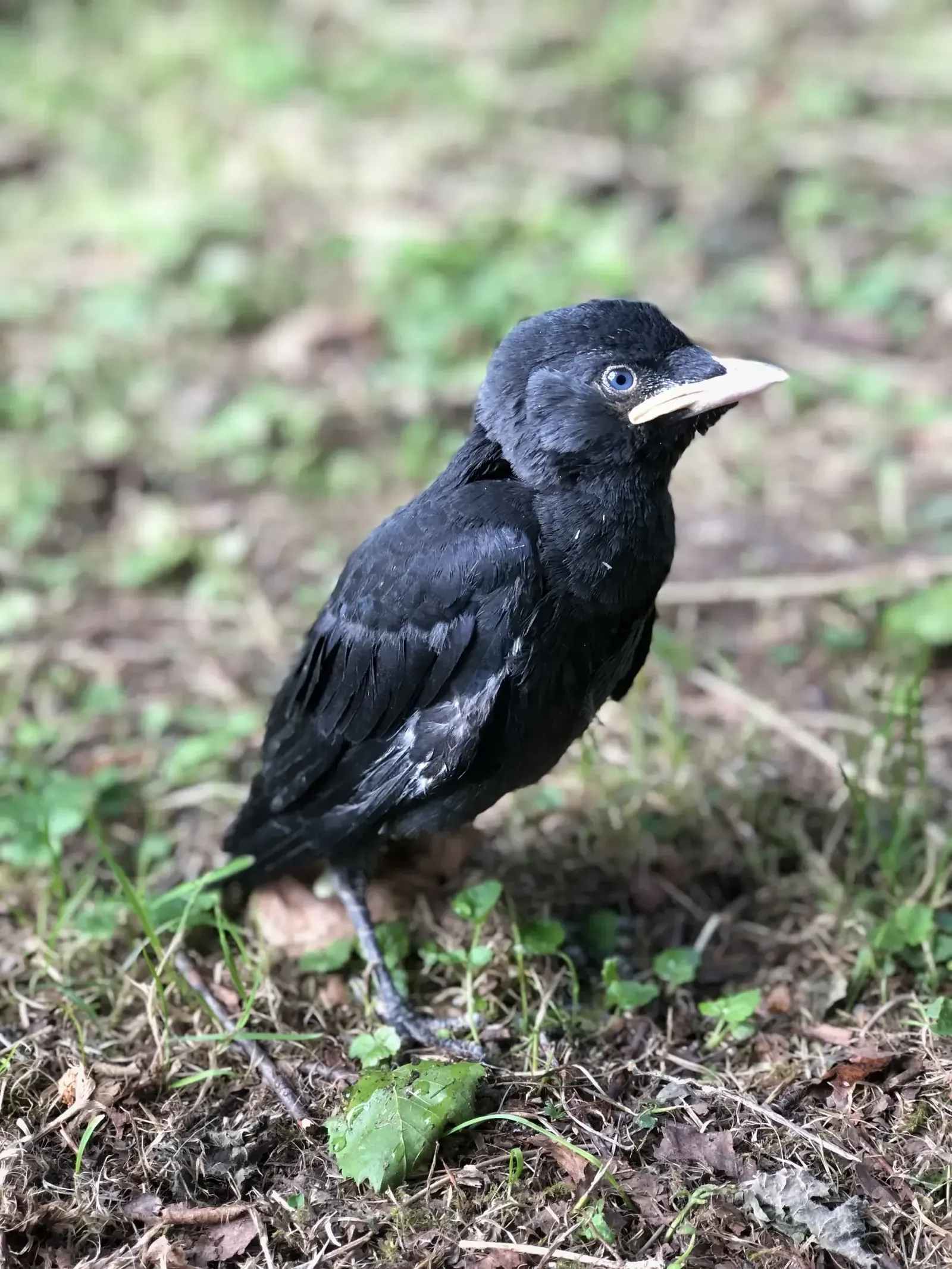
- Male and female look alike, young birds have a brown iris and browner wings
- Jerky wingbeats in flight and an upright stance on the ground
Call and song
The call is a metallic "jack". Jackdaws are very talkative, especially in flocks, and can move around noisily. Against predators it gives a hoarse, drawn-out "arrrrr" or "kaaaarr" alarm call.
Where and when
The Western Jackdaw is a partial migrant that breeds in Sweden. It occurs in southern and central Sweden and along the Norrland coast to Norrbotten, locally also in inland Norrland. Some birds winter in Sweden, while others move south and return as early as March to April. The Swedish population was estimated at 199 000 pairs in 2018. It is reported all year round and from all 21 counties.
When is it seen in Sweden?
Where is it reported?
- No reports
- Small share
- Medium share
- Large share
Reported all year round. Reported from all 21 counties.
Food and behaviour
It mainly eats small invertebrates up to 18 mm. It also eats grain, weed seeds, elderberries, acorns and cultivated fruit, and feeds mainly on open ground. Towards autumn jackdaws gather in flocks, often together with rooks and crows. They usually breed in colonies, in cavities such as woodpecker holes or chimneys. Almost all pairs that have been together for more than six months stay together for life.
Easily confused with
-
Rook
At a distance the Western Jackdaw can be confused with a Rook, but the jackdaw is smaller, with a short bill and a grey nape.
More in the Corvidae family
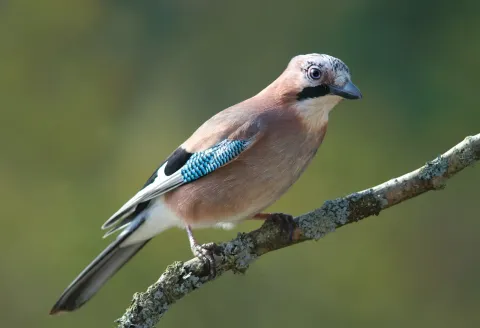
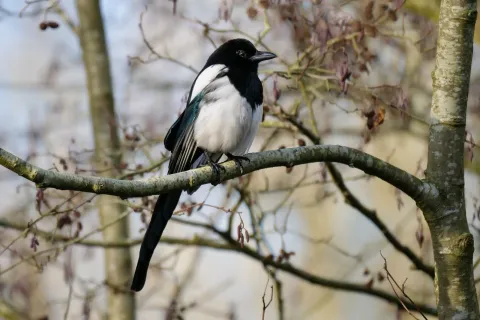
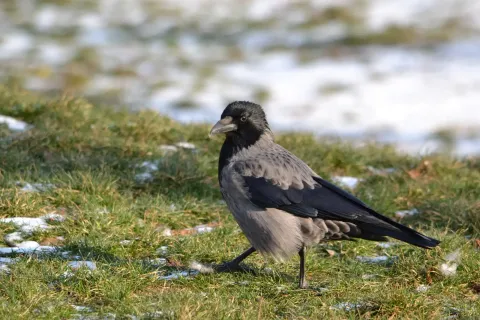
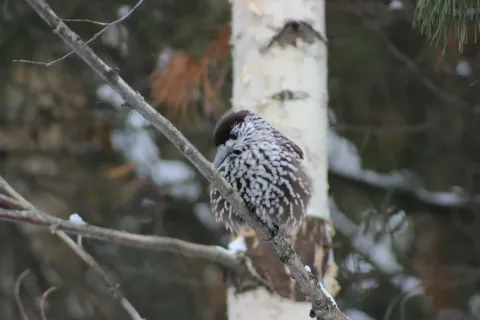
Photo: ChoucasChoucas, CC0, via Wikimedia Commons, resized

Photo: Estormiz, CC0, via Wikimedia Commons, resized

The text was written with AI from facts in Wikipedia and may be shared under CC BY-SA 4.0. Sources: Swedish article, English article, German article
Report data: Artportalen (SLU Swedish Species Information Centre) via GBIF.org, 2016 to 2025. Red list: The Swedish Red List 2025, SLU Swedish Species Information Centre via GBIF.org.
Checked against sources on . How we make these pages