Anatidae
Mallard
Anas platyrhynchos
- Scientific name
- Anas platyrhynchos
- Family
- Anatidae
- Size
- 55 to 60 cm
- Swedish Red List 2025
- Not red-listed
- Global Red List (IUCN)
- Least concern (LC)
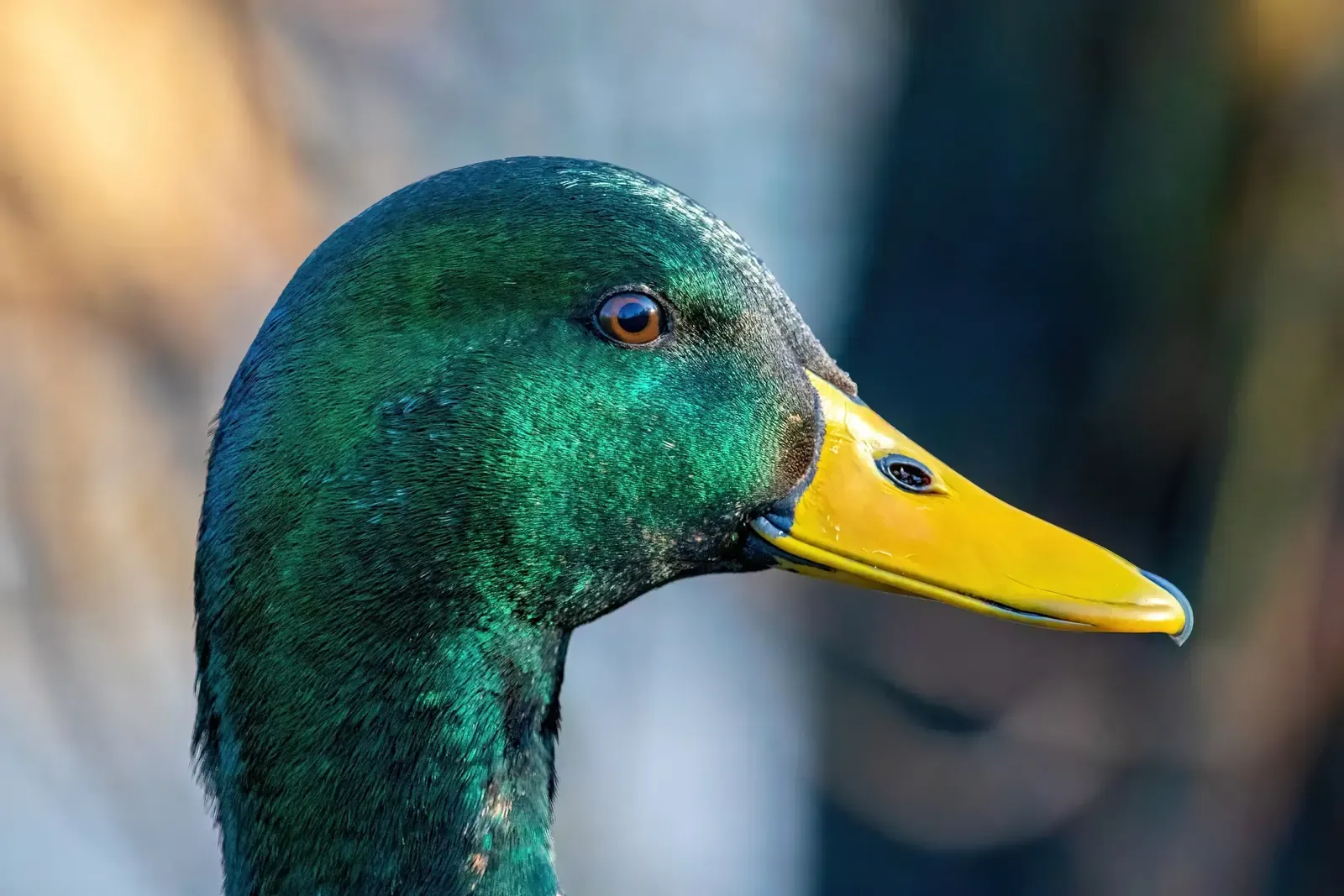
The Mallard is a large, sturdy duck that breeds by almost any kind of water: forest marshes, lakes, rivers and parks, as well as brackish and salt water.
How to recognise it
- Male has a dark green, slightly glossy head, thin white collar and purple-tinged chestnut breast
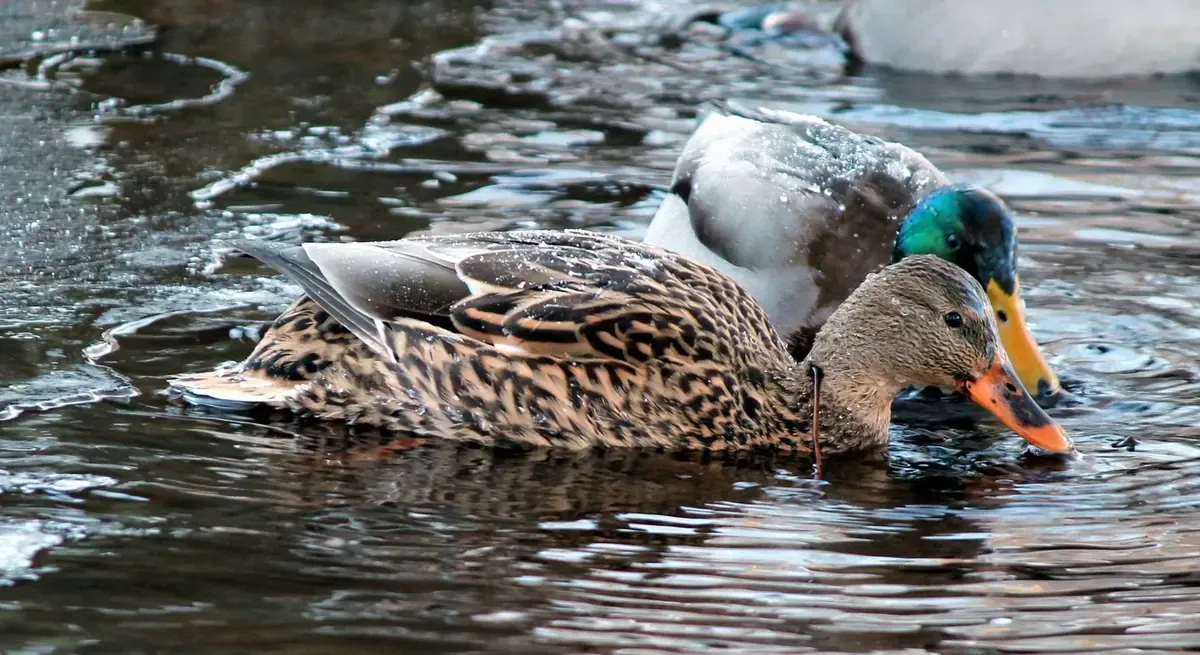
- Female is mottled brown above, pale brown below, with an orange bill and dark grey ridge
- In all plumages, a dark blue glossy speculum bordered by black, then broad white
- Eclipse male looks like the female but has a plain dull yellow bill
Call and song
The male gives muffled, nasal "vähp" calls, often repeated when the bird is alarmed. When courting the female he gives a short whistle, "pjy". The female quacks in a loud series that gradually fades. As a Mallard takes off, its wings make a faint whistling sound.
Where and when
The Mallard breeds commonly throughout Sweden except in the mountains. It is reported all year round and from all 21 counties. It prefers water less than 0.9 metres deep, and egg laying can take place from March to July. Every year 400 000 Mallards are reared in captivity in Sweden. It is not listed on the Swedish Red List 2025.
When is it seen in Sweden?
Where is it reported?
- No reports
- Small share
- Medium share
- Large share
Reported all year round. Reported from all 21 counties.
Food and behaviour
The Mallard is a flexible omnivore, and plant material makes up a large part of its diet, especially during autumn migration and winter. It usually feeds by tipping its body forward to snap or graze plants under water. Outside the breeding season it is very social and forms large flocks. It takes off almost vertically and flies fast and straight. During moult it cannot fly for about a month.
Easily confused with
-
Gadwall
The female Gadwall resembles the female Mallard but is smaller, with a white belly. Its speculum is black and white and shows as a white patch in flight, while the Mallard's is dark blue.
More in the Anatidae family
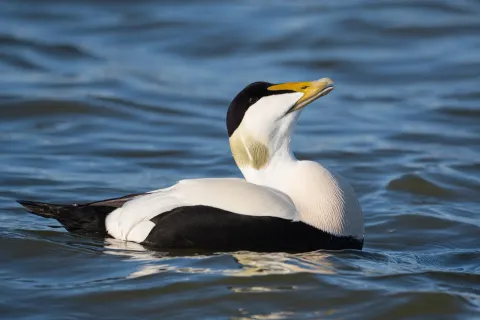
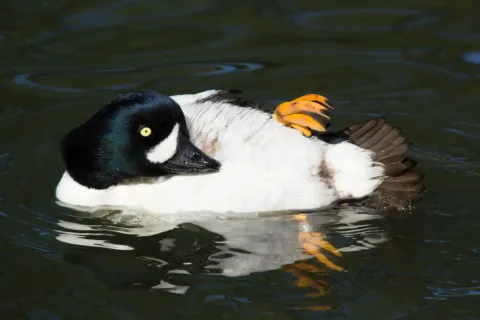
Photo: Alexis Lours, CC BY 4.0, via Wikimedia Commons, resized

Photo: Calle Eklund/V-wolf, CC BY 3.0, via Wikimedia Commons, resized

The text was written with AI from facts in Wikipedia and may be shared under CC BY-SA 4.0. Sources: Swedish article, English article, German article
Report data: Artportalen (SLU Swedish Species Information Centre) via GBIF.org, 2016 to 2025. Red list: The Swedish Red List 2025, SLU Swedish Species Information Centre via GBIF.org.
Checked against sources on . How we make these pages