Gruidae
Common Crane
Grus grus
- Scientific name
- Grus grus
- Family
- Gruidae
- In Sweden
- Summer visitor, breeds here
- Size
- 115 to 130 cm
- Swedish Red List 2025
- Not red-listed
- Global Red List (IUCN)
- Least concern (LC)
The Common Crane is a grey migrant that breeds in Sweden, usually in small swampy openings in pine forest. Thousands of cranes are seen every year at Hornborgasjön, where they perform their mating dance.
How to recognise it
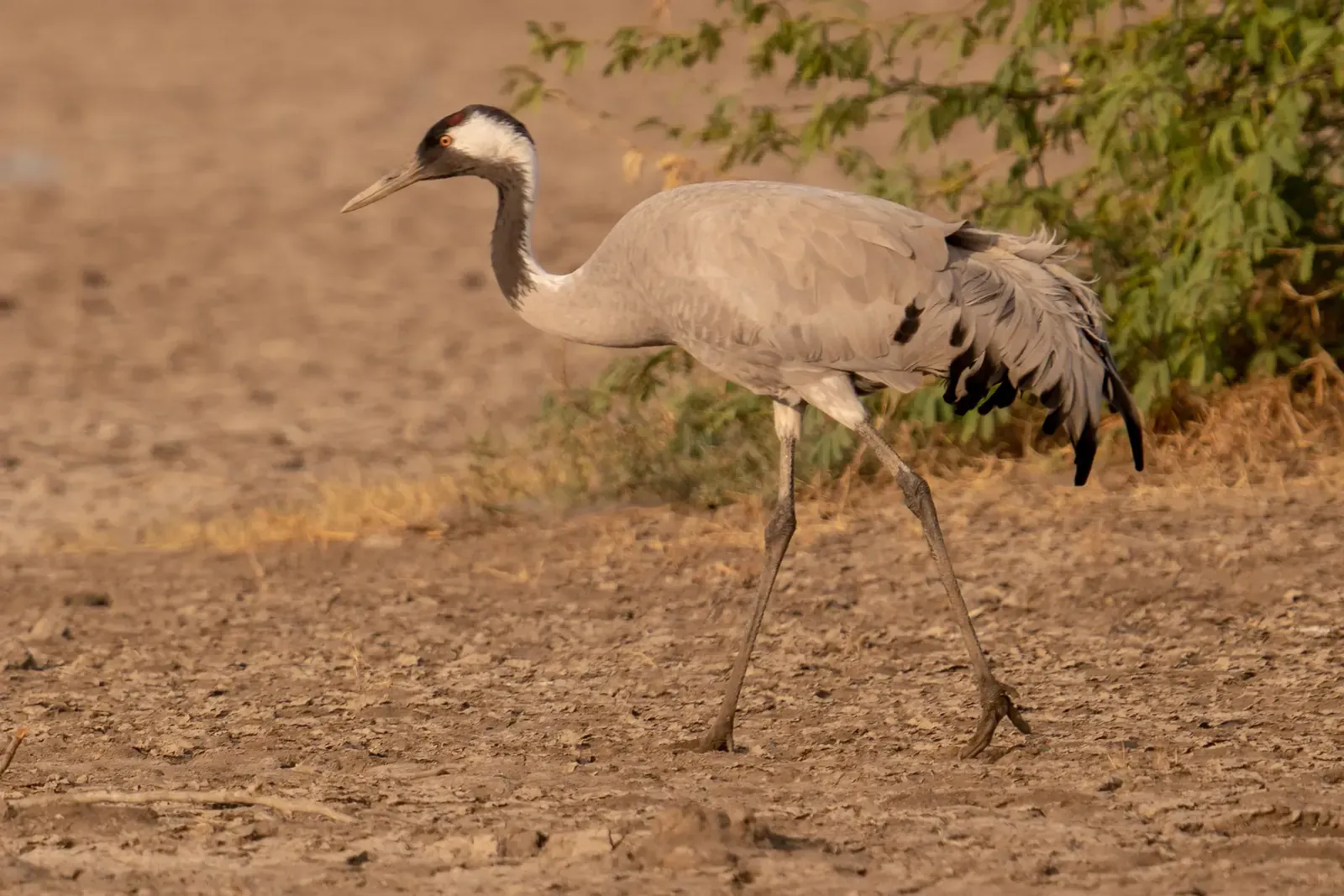
- Grey plumage with black cheeks, nape and neck, and whitish head sides behind the eyes
- Bare, red, warty patch on the crown and black flight feathers
- Elongated inner secondaries form a curly, tail-like plume, while the actual tail is fairly short
- Male slightly larger than female, juveniles have a feathered crown and yellowish-brown feather tips
Call and song
The call is a loud, nasal, rasping trumpeting that is piercing and carries a long way. In the pair's duet the female gives a high note and the male follows with a longer scream.
Where and when
The Common Crane is a migrant that breeds sparsely throughout Sweden except in the mountains, and less often along the south coast and around Gothenburg. It arrives in March to April and leaves in September to October. It is reported most in March and rarely from November to January, with reports from all 21 counties. It is not red-listed in the Swedish Red List 2025.
When is it seen in Sweden?
Where is it reported?
- No reports
- Small share
- Medium share
- Large share
Reported most in March. Rarely reported in November to January. Reported from all 21 counties.
Food and behaviour
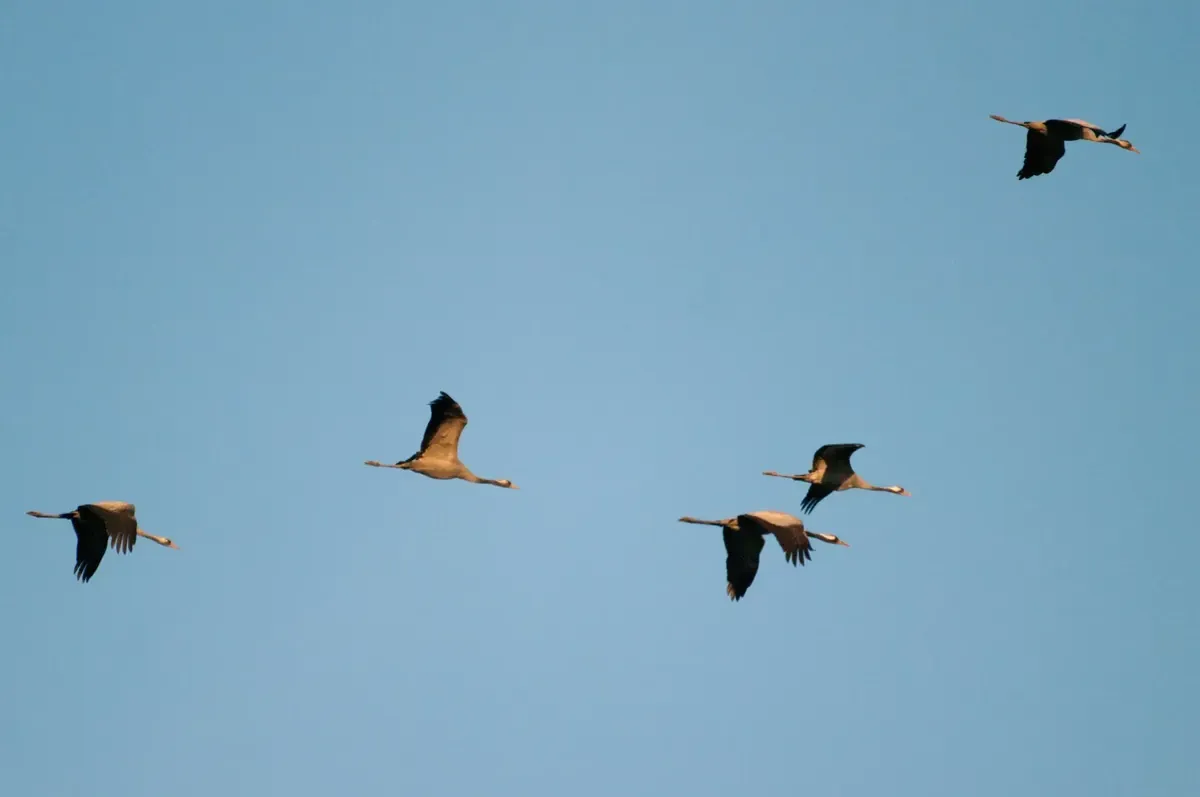
It is omnivorous, with plant food dominating, especially outside the breeding season. When breeding it also eats worms, snails, insects, frogs, snakes, lizards, fish and rodents. It migrates in flocks in V formation, flying with its neck outstretched. It dances by jumping with raised wings, and when breeding it is very wary and easily scared. The nest is a mound of moss and twigs placed directly on the ground.
More cranes & rails
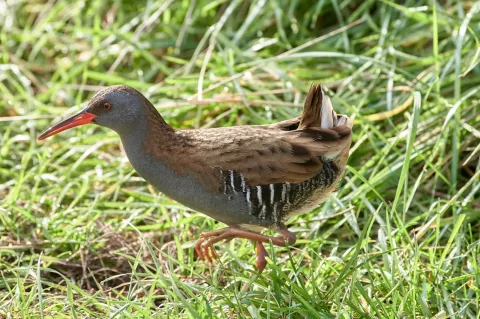
Photo: Kandukuru Nagarjun, CC BY 2.0, via Wikimedia Commons, resized

Photo: Dirk Ingo Franke, CC0, via Wikimedia Commons, resized

The text was written with AI from facts in Wikipedia and may be shared under CC BY-SA 4.0. Sources: Swedish article, English article, German article
Report data: Artportalen (SLU Swedish Species Information Centre) via GBIF.org, 2016 to 2025. Red list: The Swedish Red List 2025, SLU Swedish Species Information Centre via GBIF.org.
Checked against sources on . How we make these pages