Alcedinidae
Common Kingfisher
Alcedo atthis
- Scientific name
- Alcedo atthis
- Family
- Alcedinidae
- In Sweden
- Resident all year
- Size
- 17 to 19.5 cm
- Swedish Red List 2025
- Near threatened (NT)
- Global Red List (IUCN)
- Least concern (LC)
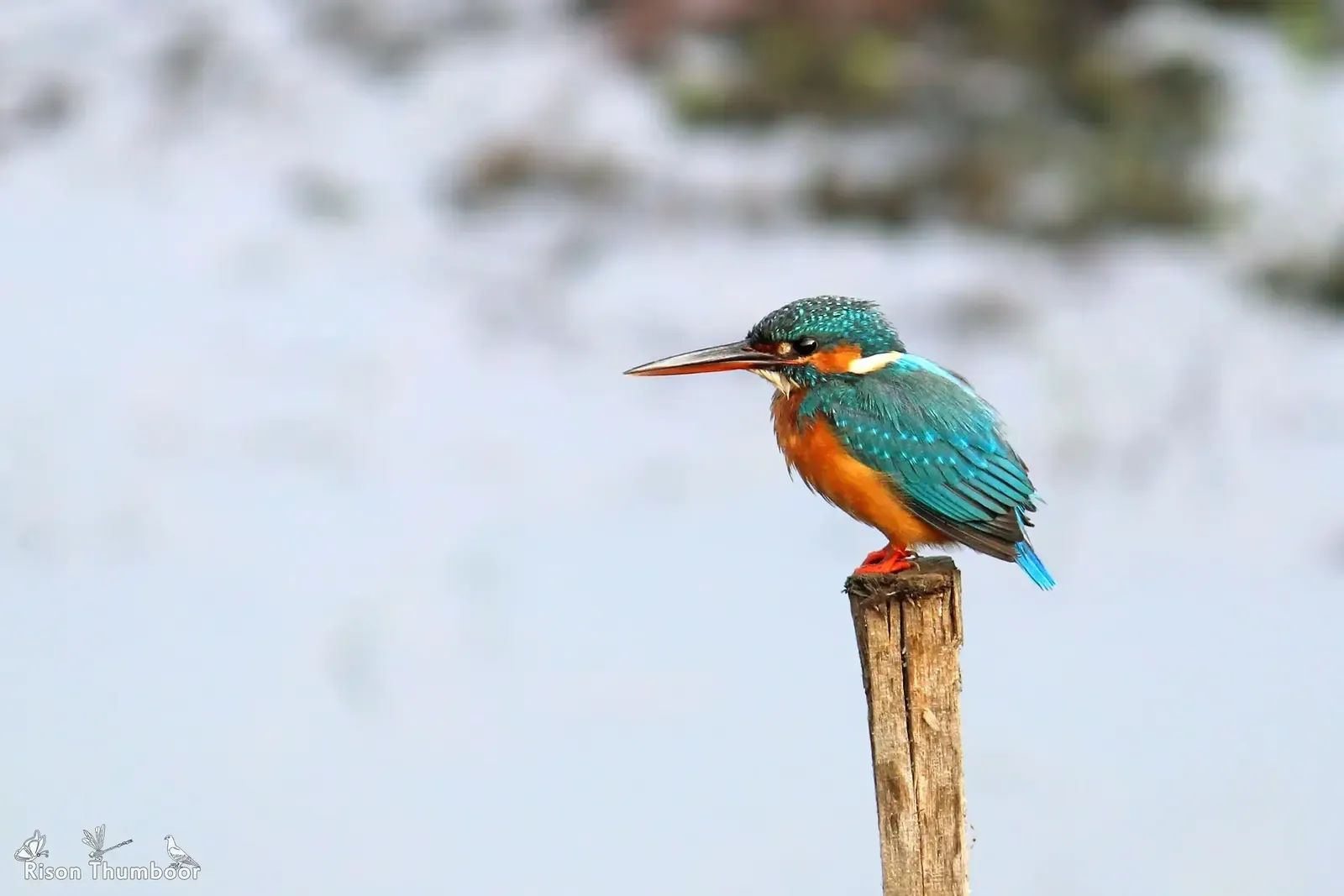
The Common Kingfisher is a blue-green and orange bird with a long, dagger-shaped bill. It lives by clear, slow-flowing rivers, streams and lakes, and in winter turns up more often near the coast.
How to recognise it
- Blue-green upperparts, warm orange underparts and cheek patch, chalk-white throat and neck-side patch
- Compact body, large head, short tail, red feet and long, all-black, dagger-shaped bill
- In the breeding season the female has an orange-red base to the lower mandible
- Fast, straight flight low over water, when the pale blue back shows best
Call and song
The call is often heard in flight: a short, sharp whistled zii or chee, sometimes zii-ti. When excited it repeats the call in short series, which can turn into a harder shrit-it-it.
Where and when
It is resident in Sweden and listed as Near Threatened on the 2025 Red List. Its Swedish breeding core is Östergötland, Småland and Skåne. In winter it avoids the ice and is seen more often at river mouths nearer the coast. It is reported most in December and January, and its share of all bird reports is highest in Östergötland, Skåne and Västmanland.
When is it seen in Sweden?
Where is it reported?
- No reports
- Small share
- Medium share
- Large share
Reported most in December and January. Its share of all bird reports is highest in Östergötland, Skåne and Västmanland.
Food and behaviour
It sits upright and often very still while watching for fish, which it catches by diving straight down. Typical prey are minnow, stickleback, small roach and trout, and it also takes aquatic insects and, in winter, crustaceans. It must eat about 60 percent of its body weight every day and lives alone for most of the year.
Easily confused with
-
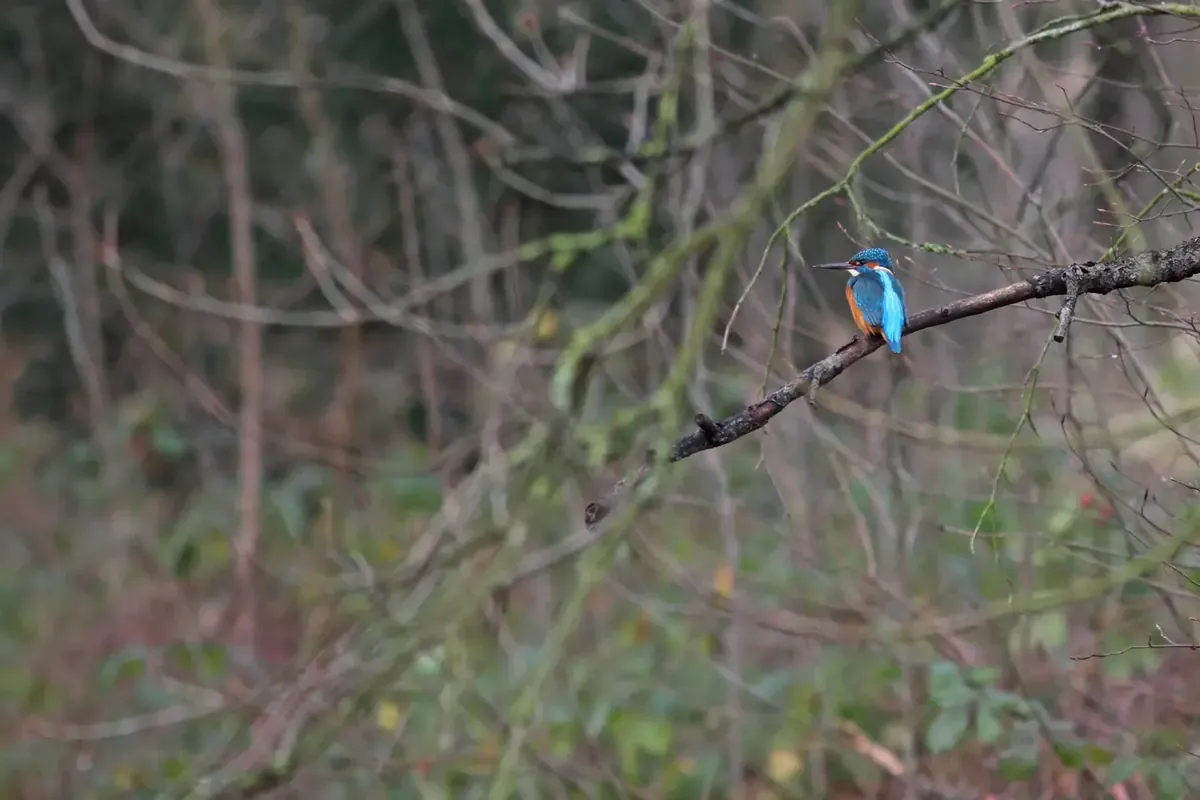
A. meninting
In southern Asia it can be confused with juvenile A. meninting, which also has orange ear coverts. The two are told apart by details of the head pattern.
Photo: Rison Thumboor, CC BY 2.0, via Wikimedia Commons, resized

Photo: Bouke ten Cate, CC BY 4.0, via Wikimedia Commons, resized

The text was written with AI from facts in Wikipedia and may be shared under CC BY-SA 4.0. Sources: Swedish article, English article, German article
Report data: Artportalen (SLU Swedish Species Information Centre) via GBIF.org, 2016 to 2025. Red list: The Swedish Red List 2025, SLU Swedish Species Information Centre via GBIF.org.
Checked against sources on . How we make these pages