Phalacrocoracidae
Great Cormorant
Phalacrocorax carbo
- Scientific name
- Phalacrocorax carbo
- Family
- Phalacrocoracidae
- In Sweden
- Partial migrant, breeds here
- Size
- 80 to 95 cm
- Swedish Red List 2025
- Not red-listed
- Global Red List (IUCN)
- Least concern (LC)
The Great Cormorant is a large, fairly long-necked, glossy black bird that lives by salt, brackish and fresh water. On the coast it is found in sheltered places such as estuaries, deltas and bays.
How to recognise it
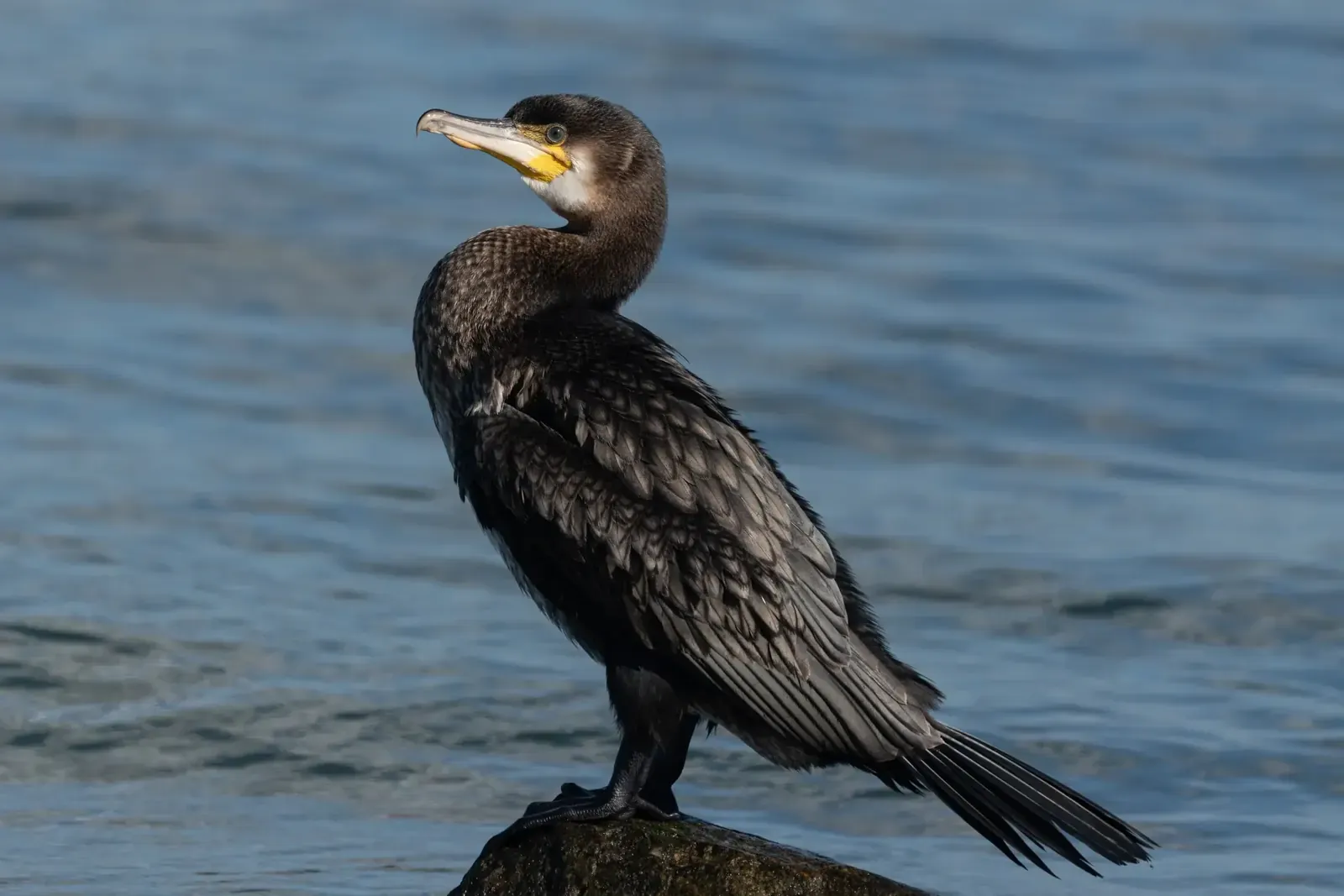
- Glossy black, fairly long-necked, breeding birds with white throat patch, whitish-grey nape, white thigh patch
- Long grey bill with a hooked tip and yellow, sometimes red, bare skin at the base
- Adults have deep sea-green eyes, young birds are brownish black with pale underparts
Call and song
The Great Cormorant is silent except at its breeding colonies. There it gives deep, harsh, croaking guttural calls, the most frequent sounding roughly like "chrochrochro".
Where and when
The Great Cormorant is a partial migrant breeding in Sweden. Mellanskarv breeds along the west, south and east coasts, up the Norrland coast, and at inland lakes and wetlands. Many migrate to the Mediterranean, but more and more winter in southern Sweden. Atlantstorskarv mainly winters on the west coast and in the Baltic, from autumn to March or April. It is reported all year from all 21 counties.
When is it seen in Sweden?
Where is it reported?
- No reports
- Small share
- Medium share
- Large share
Reported all year round. Reported from all 21 counties.
Food and behaviour
It often flies long distances in larger flocks to find food and can also feed in flocks. It takes prey on the bottom, usually in shallow water, diving to at most ten to twelve metres. In Sweden it mainly eats eelpout, perch, roach and shorthorn sculpin. It breeds in colonies of usually 10 to 500 pairs, with nests of seaweed and sticks on steep rock ledges or in trees.
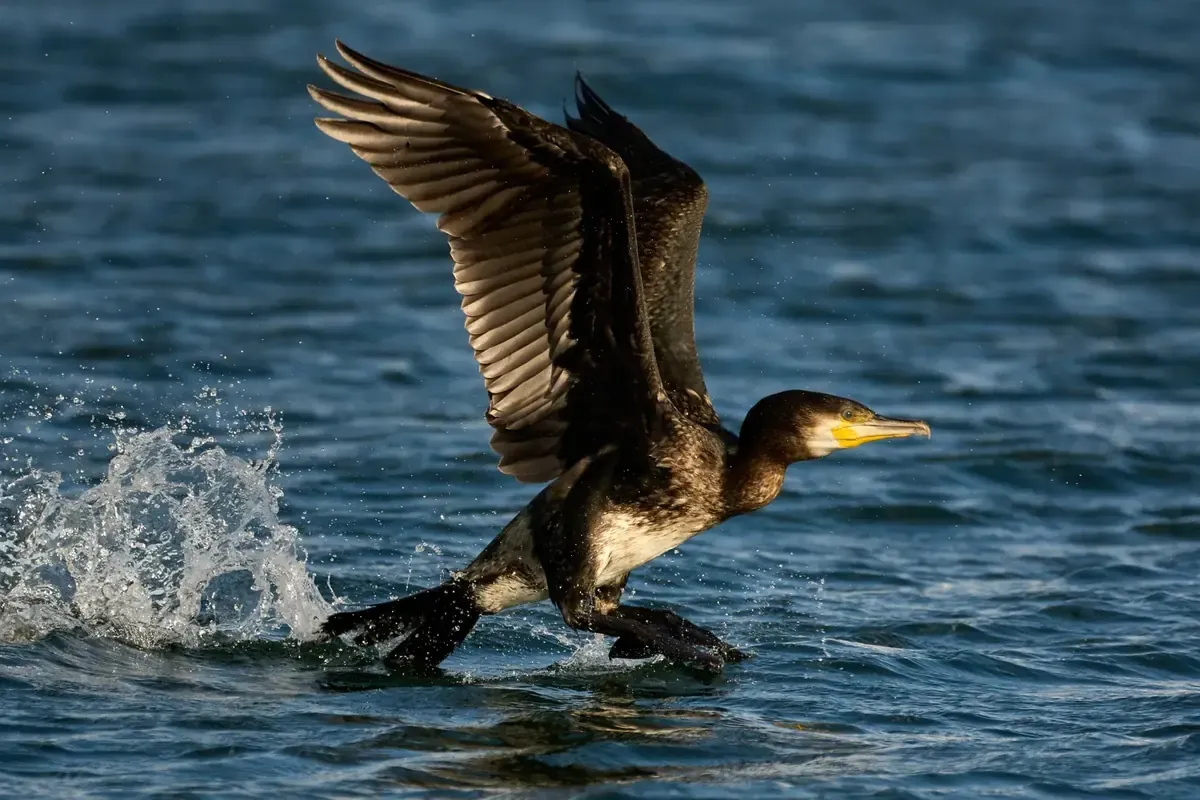
Photo: Hobbyfotowiki, CC0, via Wikimedia Commons, resized

Photo: Hobbyfotowiki, CC0, via Wikimedia Commons, resized

The text was written with AI from facts in Wikipedia and may be shared under CC BY-SA 4.0. Sources: Swedish article, English article, German article
Report data: Artportalen (SLU Swedish Species Information Centre) via GBIF.org, 2016 to 2025. Red list: The Swedish Red List 2025, SLU Swedish Species Information Centre via GBIF.org.
Checked against sources on . How we make these pages