Rallidae
Common Moorhen
Gallinula chloropus
- Scientific name
- Gallinula chloropus
- Family
- Rallidae
- In Sweden
- Partial migrant, breeds here
- Size
- 31 to 33 cm
- Swedish Red List 2025
- Not red-listed
- Global Red List (IUCN)
- Least concern (LC)
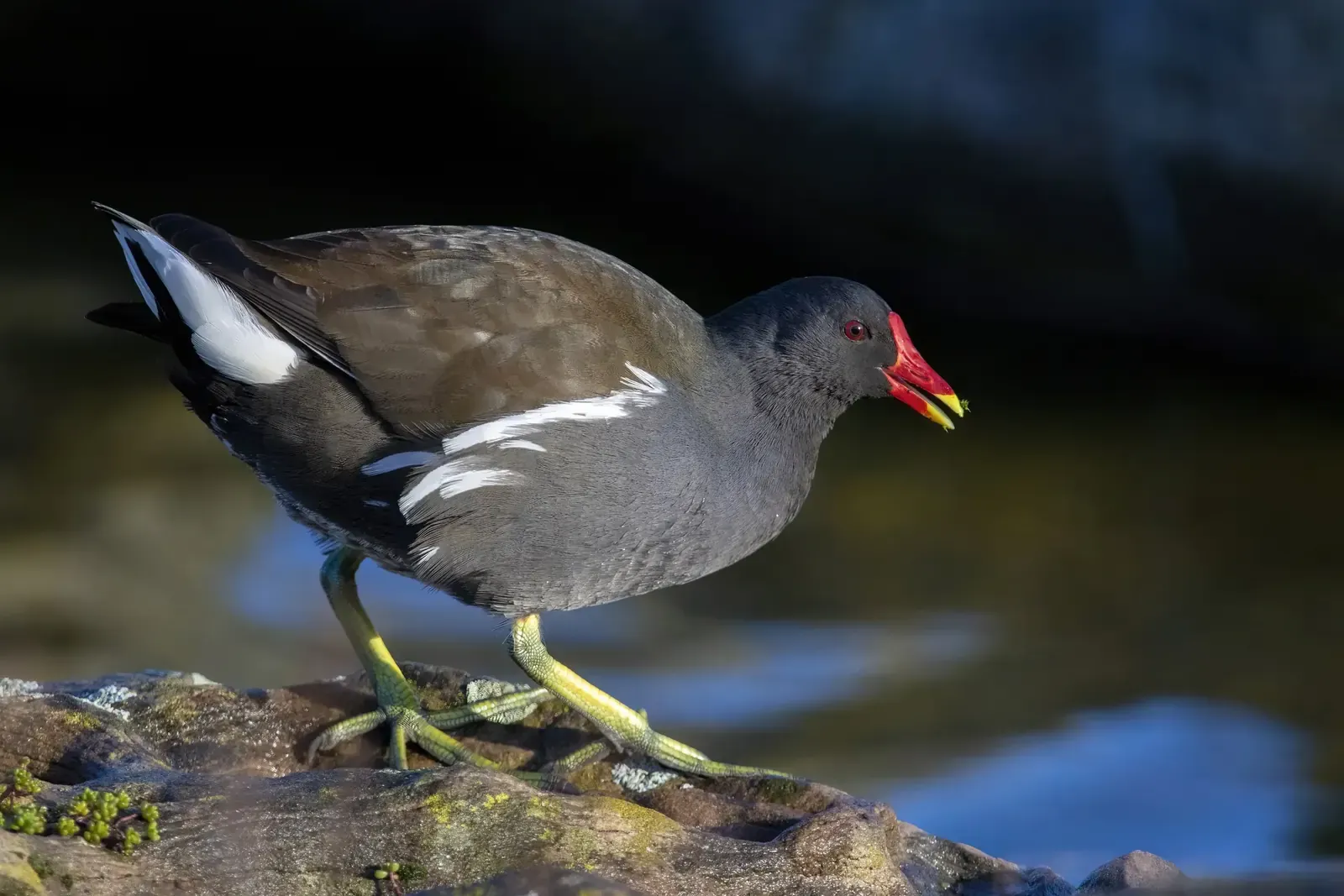
The Common Moorhen is a dark rail that lives along reedy shores of lakes, rivers and ponds and in wetlands. It also turns up in towns, in gardens, parks and zoos with enough water.
How to recognise it
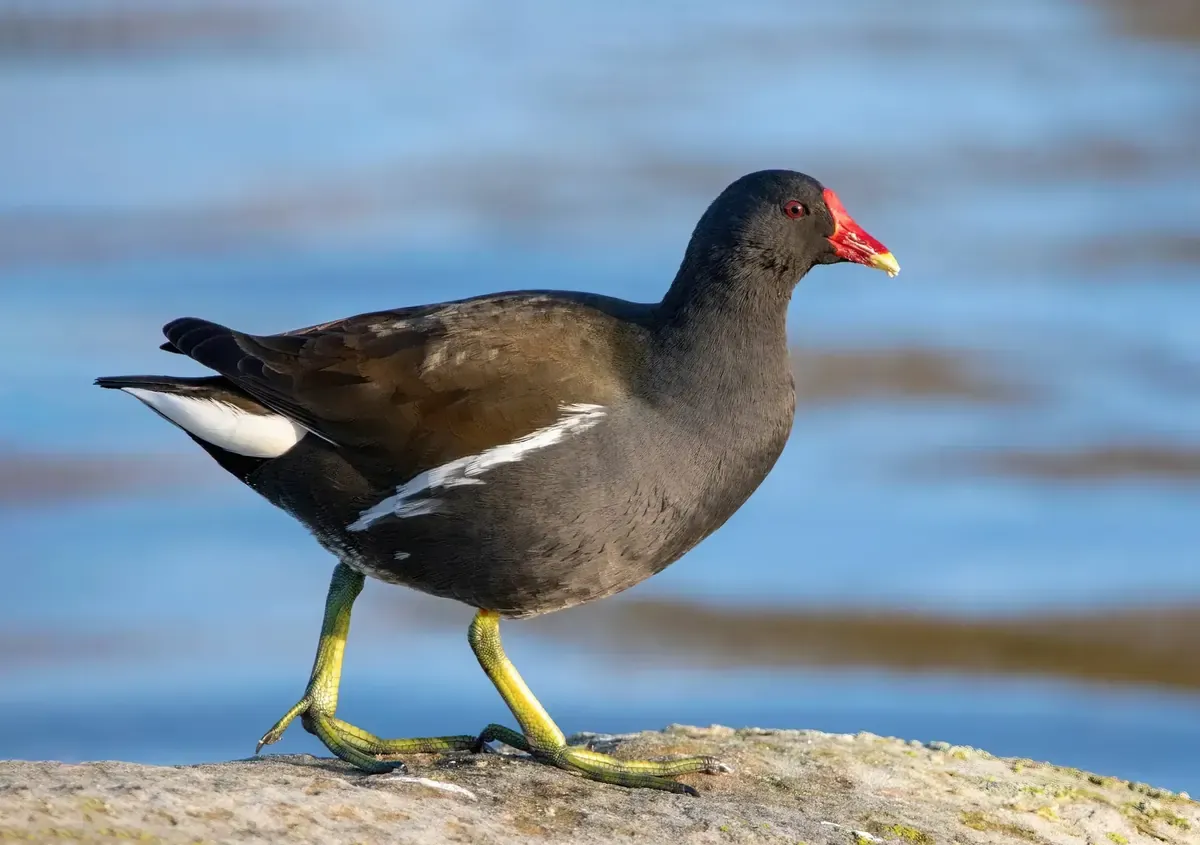
- Dark plumage with white streaks along the flanks and white sides under the tail
- Red bill and red frontal shield reaching far up, with a yellow bill tip
- Yellow-green legs with a red band above the intertarsal joint, and long toes
- Sexes look alike, young birds are grey-brown with a white chin and no red shield
Call and song
Its calls include a gurgling "kjorrrl", a sharp "ki-keck" and a cracked "kreck-kreck-kreck" repeated for a long time, also at night in flight. When it feels threatened it can hiss loudly.
Where and when
The Common Moorhen breeds in Sweden and is a partial migrant. It is most numerous from Skåne to Uppland and occurs in smaller numbers up to Dalarna and northwards along the Baltic coast. Most Swedish birds move south for the winter, mainly to France, Spain and the British Isles, but the species is reported all year round. Its share of all bird reports is highest in Jönköping, Stockholm and Skåne.
When is it seen in Sweden?
Where is it reported?
- No reports
- Small share
- Medium share
- Large share
Reported all year round. Its share of all bird reports is highest in Jönköping, Stockholm and Skåne.
Food and behaviour
It eats many different plant parts and small aquatic animals, which it finds in or near the water. It moves jerkily and often holds its tail fairly high when walking. It often keeps hidden, but in some places it can be fairly tame. The nest is a basket-shaped structure placed directly on the ground in dense vegetation. During migration it flies mainly at night.
Easily confused with
-
The Eurasian Coot has white on the bill and frontal shield, where the Common Moorhen has red. The moorhen also shows white sides on the undertail coverts.
-
Gallinula galeata
The American Moorhen is almost identical but has less yellow on the bill and a taller, more squarely cut frontal shield. Its calls sound like laughter.
More in the Rallidae family
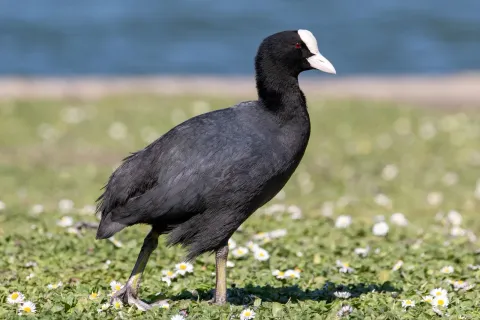
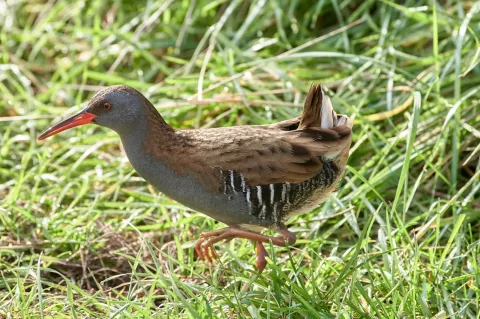
Photo: Alexis Lours, CC BY 4.0, via Wikimedia Commons, resized

Photo: Alexis Lours, CC BY 4.0, via Wikimedia Commons, resized

The text was written with AI from facts in Wikipedia and may be shared under CC BY-SA 4.0. Sources: Swedish article, English article, German article
Report data: Artportalen (SLU Swedish Species Information Centre) via GBIF.org, 2016 to 2025. Red list: The Swedish Red List 2025, SLU Swedish Species Information Centre via GBIF.org.
Checked against sources on . How we make these pages