Rallidae
Eurasian Coot
Fulica atra
- Scientific name
- Fulica atra
- Family
- Rallidae
- In Sweden
- Partial migrant, breeds here
- Size
- 36 to 42 cm
- Swedish Red List 2025
- Not red-listed
- Global Red List (IUCN)
- Least concern (LC)
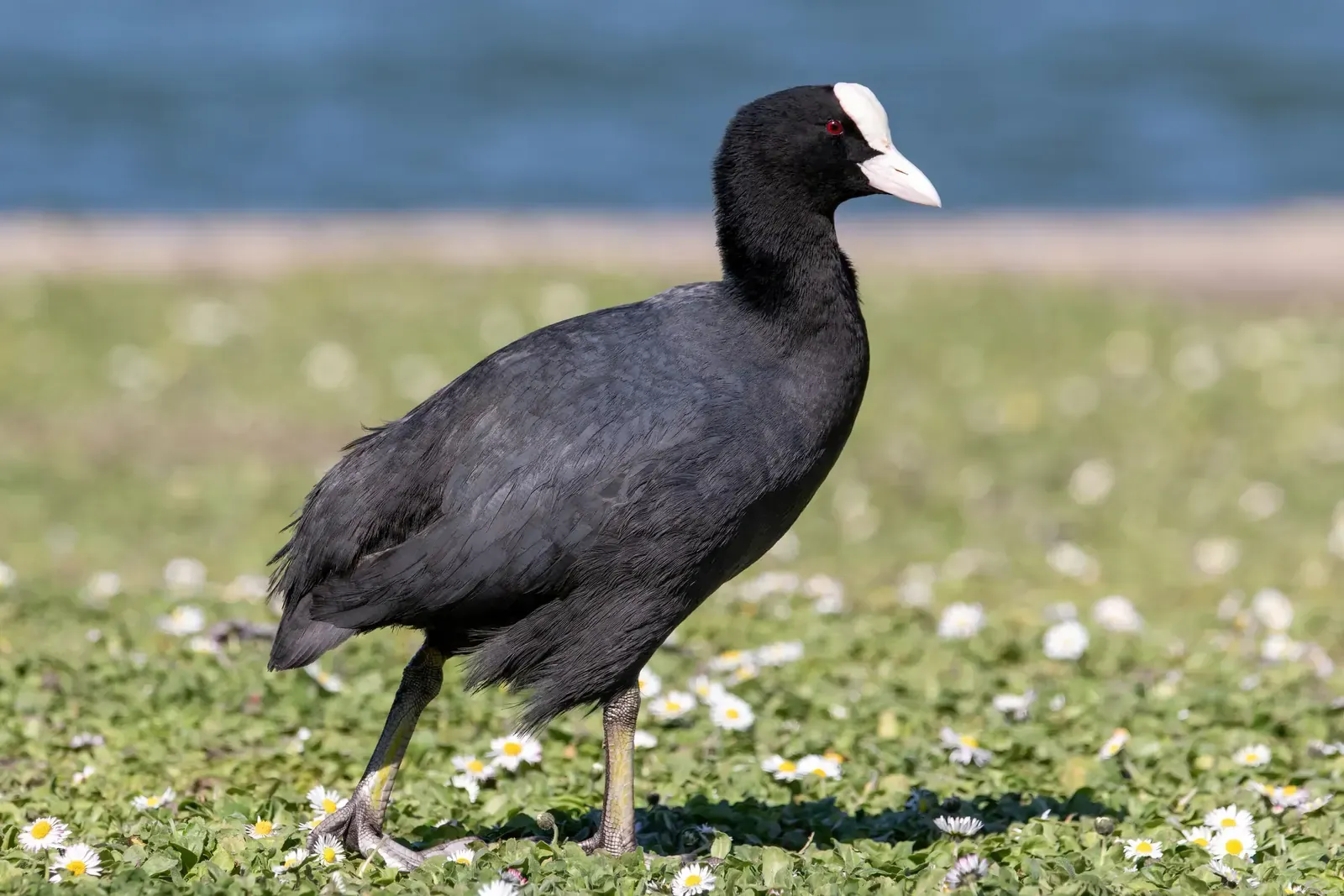
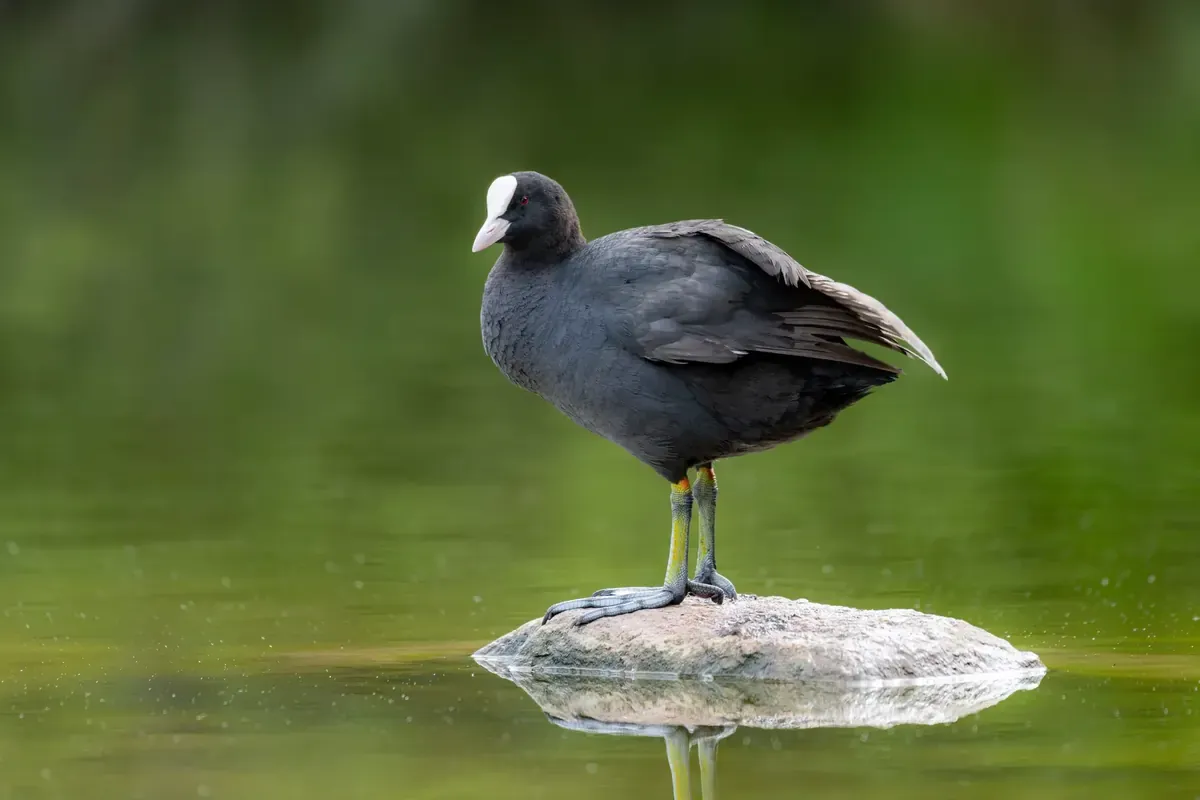
The Eurasian Coot is a slate-black bird with a short, pale bill and a bare, rounded frontal shield. It breeds on shallow lakes, ponds and wetlands with plenty of reeds and is often found in parks with water.
How to recognise it
- Slate-black with a rounded body, small round head and white trailing edge in flight
- Short, thick bill, whitish with a pink tone, running up into a bare frontal shield
- Red iris and sturdy green legs with lobed toes instead of webbed feet
- Male has a larger frontal shield than female, juvenile is greyish brown without a shield
Call and song
The Eurasian Coot is noisy, giving cracked "köck" notes and explosive, sharp "pitts". The typical croaking but somewhat melodic "krök" comes from the female, while the male's calls are toneless and smacking, like a champagne cork popping. On spring nights a trumpeting "pä pä-äu" is heard, often from birds flying around.
Where and when
The Eurasian Coot is a partial migrant that breeds in Sweden. It is common on lakes and sea bays rich in vegetation in Götaland and Svealand and along the southern Norrland coast. Many simply move away from the ice and winter in harbours further south, while others migrate to Western Europe. It is reported all year, and its share of all bird reports is highest in Stockholm, Skåne and Södermanland.
When is it seen in Sweden?
Where is it reported?
- No reports
- Small share
- Medium share
- Large share
Reported all year round. Its share of all bird reports is highest in Stockholm, Skåne and Södermanland.
Food and behaviour
It eats water plants, algae, grass and small animals such as insects and mussels. It nods its head as it swims, and before diving it makes a small jump and usually stays under only briefly. To take off it runs with pattering steps across the water while beating its wings. Outside the breeding season coots can gather in large flocks.
Easily confused with
More in the Rallidae family
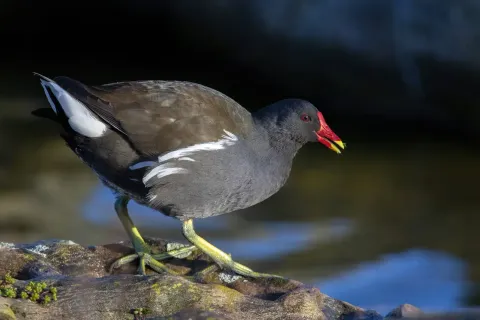
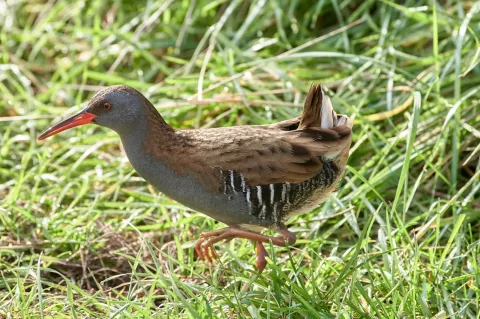
Photo: Alexis Lours, CC BY 4.0, via Wikimedia Commons, resized

Photo: kuhnmi, CC BY 2.0, via Wikimedia Commons, resized

The text was written with AI from facts in Wikipedia and may be shared under CC BY-SA 4.0. Sources: Swedish article, English article, German article
Report data: Artportalen (SLU Swedish Species Information Centre) via GBIF.org, 2016 to 2025. Red list: The Swedish Red List 2025, SLU Swedish Species Information Centre via GBIF.org.
Checked against sources on . How we make these pages