Ardeidae
Grey Heron
Ardea cinerea
- Scientific name
- Ardea cinerea
- Family
- Ardeidae
- In Sweden
- Partial migrant, breeds here
- Size
- 85 to 102 cm
- Swedish Red List 2025
- Not red-listed
- Global Red List (IUCN)
- Least concern (LC)
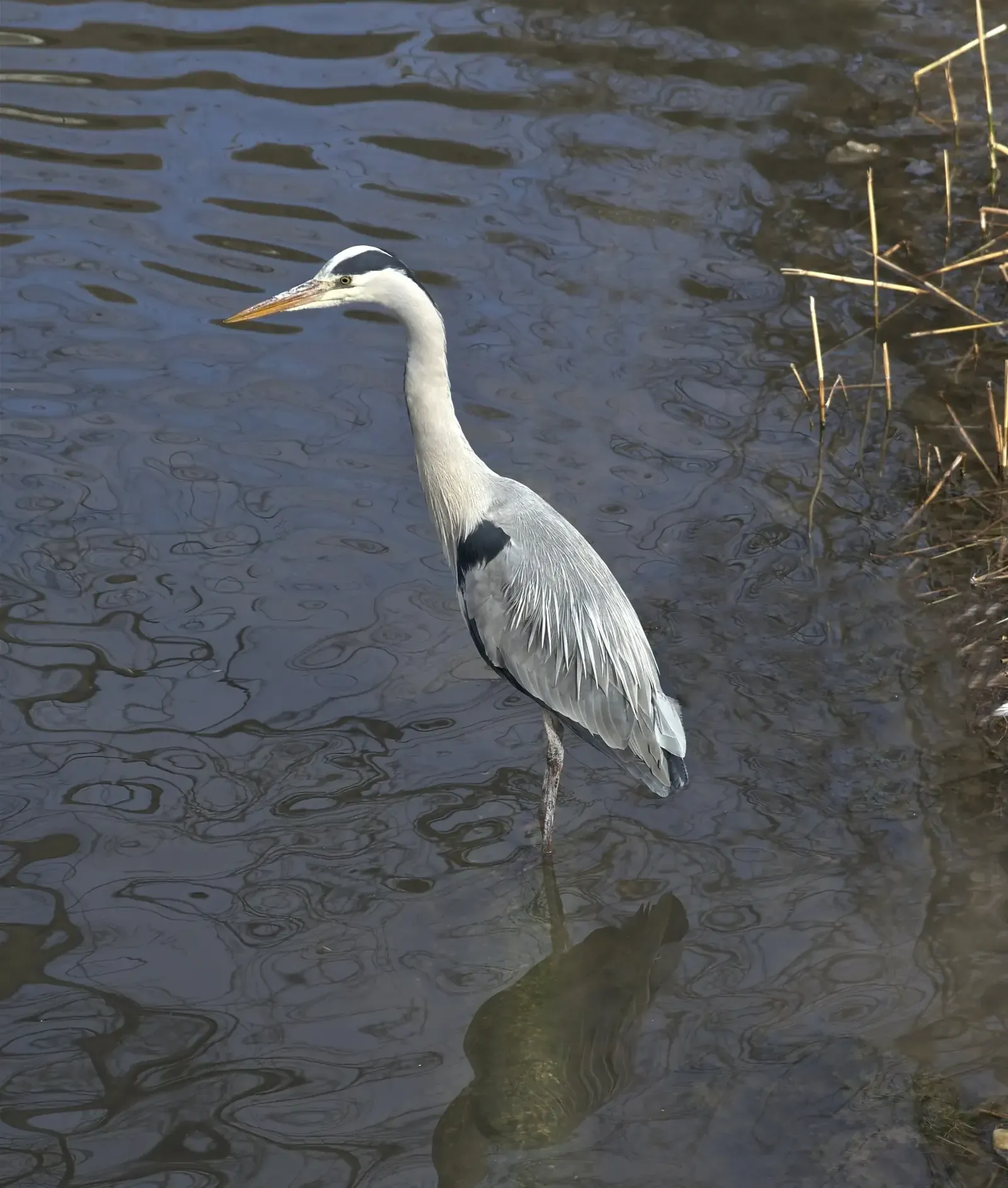
The Grey Heron is a large, heavily built heron with a long S-shaped neck, long legs and a long dagger-shaped bill. It is seen by lakes, rivers, ponds, marshes and sea coasts.
How to recognise it
- Ash-grey upperparts, grey-black flight feathers, white head and throat, white leading edge to the wing
- Black crown and long black plume, greyish neck with rows of black spots in front
- Yellow bill, legs and iris, sexes look alike but males average slightly larger
- In flight the head is drawn in, giving a deep-chested look, with slow wingbeats
Call and song
The most frequent call is a croaking "kah-ährk", mostly heard at dusk from birds flying to their night roost. In breeding colonies there are various croaking and knocking sounds.
Where and when
In Sweden the Grey Heron is a fairly common breeder in the south, north to southern Värmland, southern Dalarna, Västmanland and Hälsingland, and breeds locally in Jämtland. Most migrate, but it is resident in southern Sweden and on the west coast. In late summer it sometimes turns up further north. The population is estimated at 14 000 breeding individuals. It is reported all year from all 21 counties.
When is it seen in Sweden?
Where is it reported?
- No reports
- Small share
- Medium share
- Large share
Reported all year round. Reported from all 21 counties.
Food and behaviour
It feeds mainly on fish, caught by standing motionless in the water and striking fast. It also takes amphibians, crustaceans and insects in shallow water, and sometimes forages on pasture some way from water. Resting at stream or lake edges, it often stands on one leg. At night it roosts in trees or on rocks, often in groups. It nests in colonies, sometimes of 50 to 100 pairs.
Easily confused with
-
Ardea herodias
Great Blue Heron is similar but larger, with chestnut flanks and thighs.
Photo: Jebulon, CC0, via Wikimedia Commons, resized

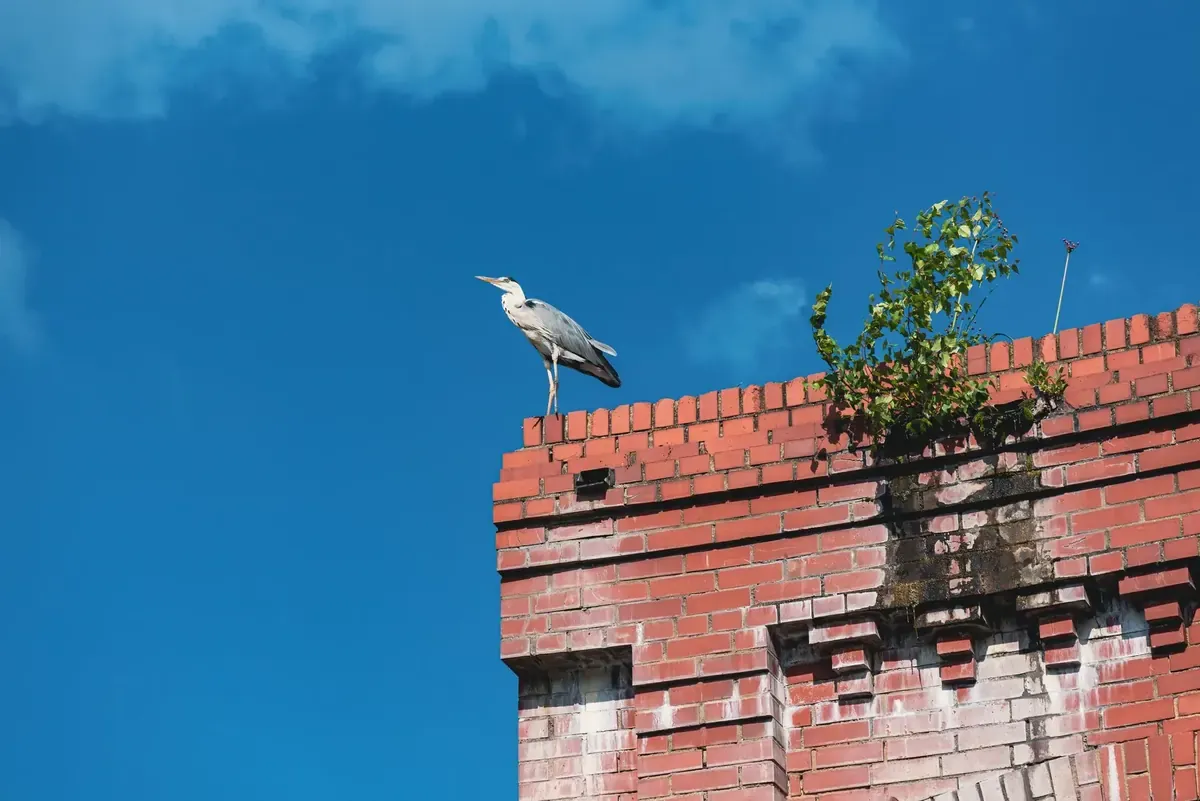
Photo: Flocci Nivis, CC BY 4.0, via Wikimedia Commons, resized

The text was written with AI from facts in Wikipedia and may be shared under CC BY-SA 4.0. Sources: Swedish article, English article, German article
Report data: Artportalen (SLU Swedish Species Information Centre) via GBIF.org, 2016 to 2025. Red list: The Swedish Red List 2025, SLU Swedish Species Information Centre via GBIF.org.
Checked against sources on . How we make these pages