Turdidae
Mistle Thrush
Turdus viscivorus
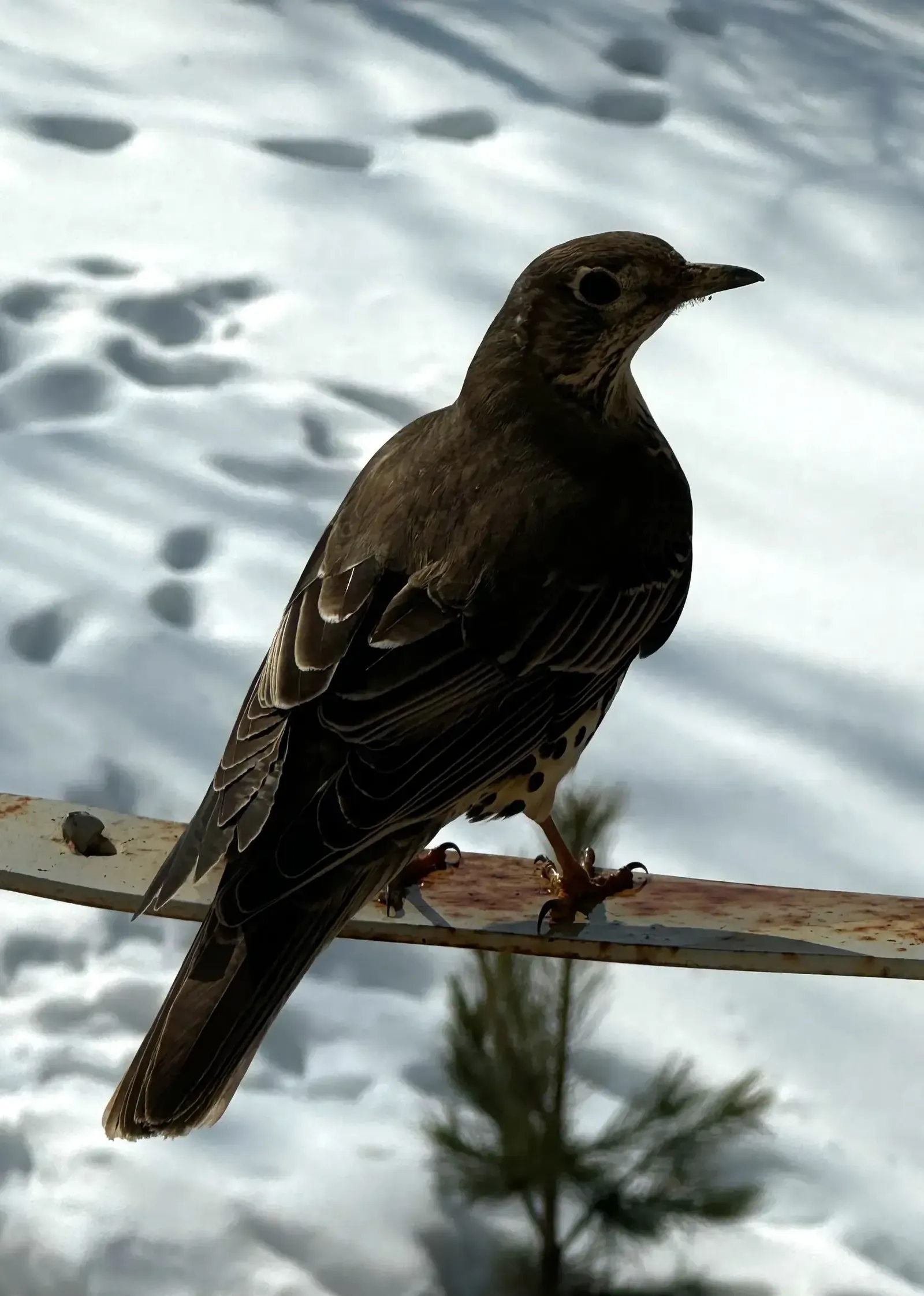
- Scientific name
- Turdus viscivorus
- Family
- Turdidae
- In Sweden
- Summer visitor, breeds here
- Size
- 26 to 29 cm
- Swedish Red List 2025
- Not red-listed
- Global Red List (IUCN)
- Least concern (LC)
The Mistle Thrush is a thrush that breeds in almost all of Sweden and does best in woodland, preferably rocky pine forest with small fields and clearings. Its loud song is delivered from a treetop or another high perch.
How to recognise it
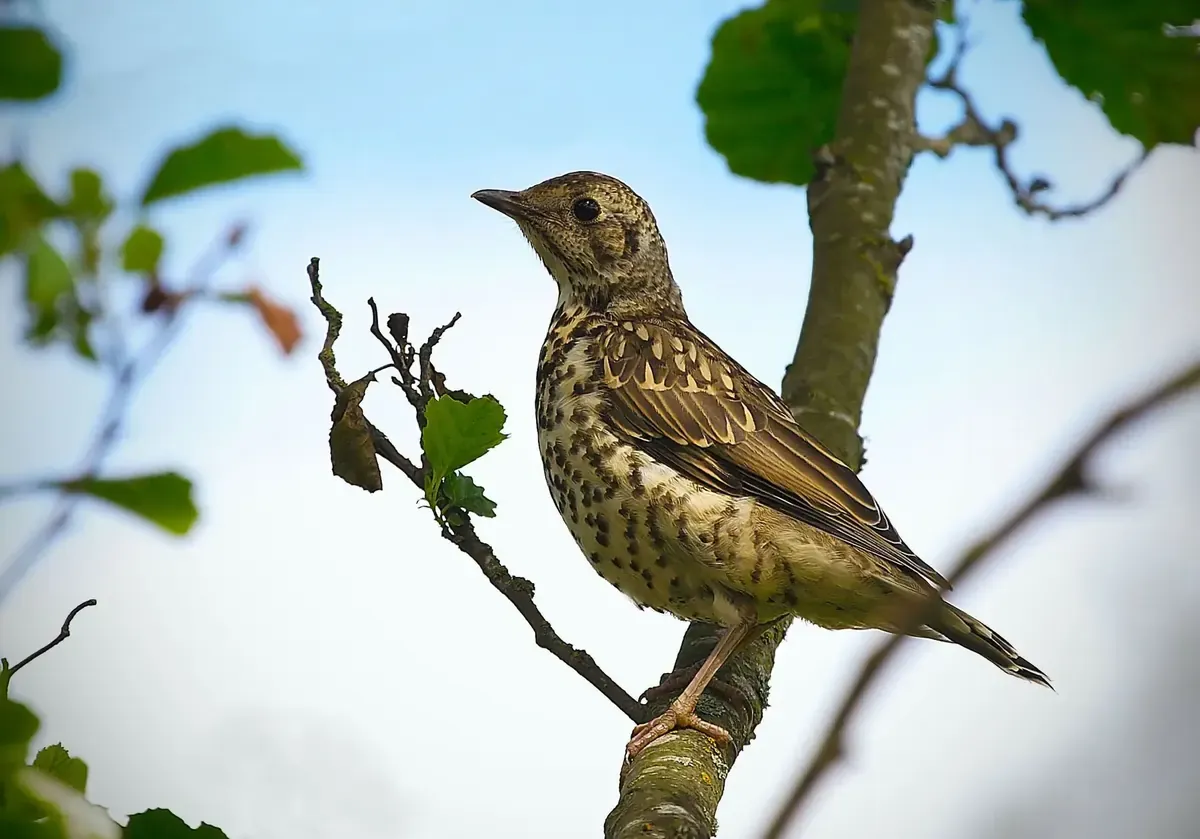
- Larger, longer-tailed and paler than a Song Thrush, standing more upright
- White underparts with blackish spots, plain mid-throat and often a dark patch each side of breast
- Grey-brown back with an olive tinge, white underwing coverts and white tips to outer tail feathers
- Male and female look alike, juveniles have cream teardrop markings above and yellowish underparts
Call and song
The contact call is "trr" or "zrr", and the main call is a dry, laughing krrrr, often likened to a rattle. The very loud song often carries up to two kilometres. It sings from a treetop or other high perch, mainly from November to early June, readily after and sometimes during wind and rain.
Where and when
The Mistle Thrush is a migrant and summer visitor between April and October, breeding in almost all of Sweden except the mountains and the far north. On migration it uses more open ground such as farmland, heaths and grassy hills. Departure towards wintering grounds in southern Europe begins from mid-September. It is reported most in March and from all 21 counties.
When is it seen in Sweden?
Where is it reported?
- No reports
- Small share
- Medium share
- Large share
Reported most in March. Reported from all 21 counties.
Food and behaviour
It feeds on worms, larvae, insects and many kinds of berries, especially mistletoe berries. In winter it defends one or more fruiting trees. On the ground it hops with its head held high and body upright, and its flight is powerful with longer undulations than a Song Thrush's. The male attacks intruders at the nest, including birds of prey, crows and sometimes cats or people.
Easily confused with
-
The Blackbird's song is similar, but the Mistle Thrush's song is shorter and shriller.
More in the Turdidae family
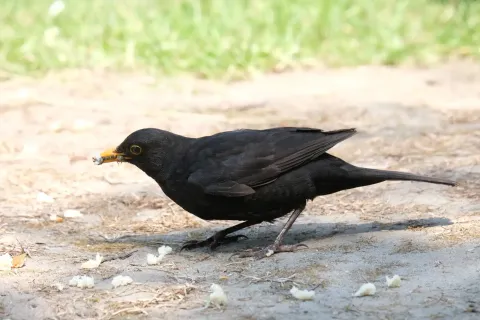
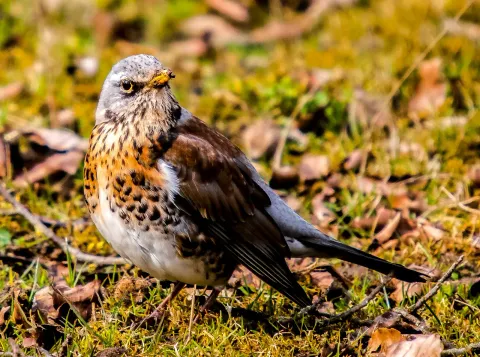
Photo: Jamshid Nurkulov, CC BY 4.0, via Wikimedia Commons, resized

Photo: David Friel, CC BY 2.0, via Wikimedia Commons, resized

The text was written with AI from facts in Wikipedia and may be shared under CC BY-SA 4.0. Sources: Swedish article, English article, German article
Report data: Artportalen (SLU Swedish Species Information Centre) via GBIF.org, 2016 to 2025. Red list: The Swedish Red List 2025, SLU Swedish Species Information Centre via GBIF.org.
Checked against sources on . How we make these pages