Alcidae
Razorbill
Alca torda
- Scientific name
- Alca torda
- Family
- Alcidae
- Size
- 38 to 43 cm
- Swedish Red List 2025
- Not red-listed
- Global Red List (IUCN)
- Least concern (LC)
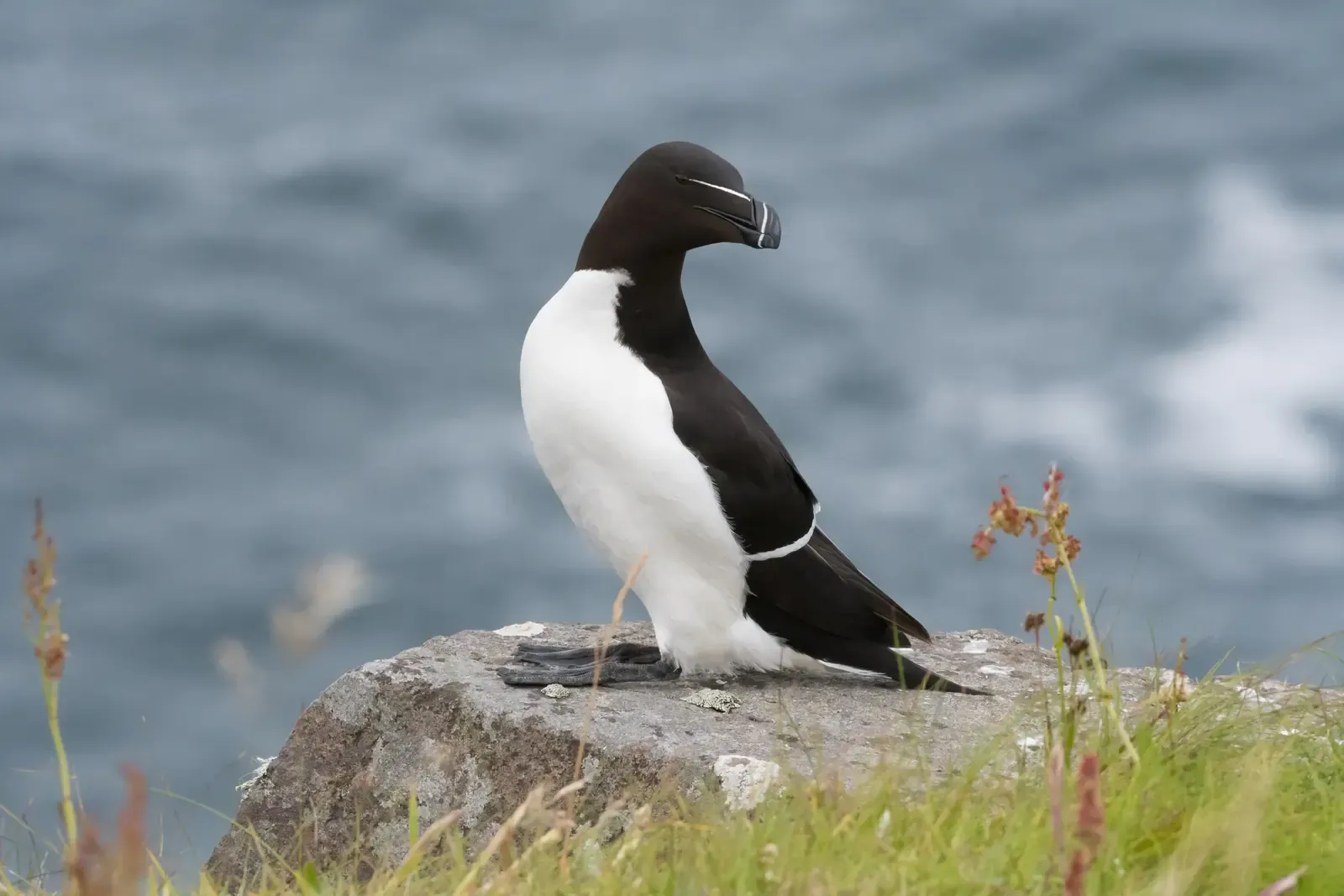
The Razorbill is a black and white auk with a short, heavy, deep bill. It breeds in colonies on cliffs and islands along the coasts of the North Atlantic, in Sweden mainly in the outer Baltic archipelago.
How to recognise it
- Black head and upperparts, white breast and belly, male and female look alike
- Short, deep, blunt black bill with a clear white band across it
- White line from bill base to eye, and a long tail for an auk
- In winter plumage the chin, cheek and parts of the head are white
Call and song
The Razorbill is a fairly quiet auk. In the breeding colonies it gives a deep, grating "urrr".
Where and when
In Sweden it breeds on cliffs and rocky outer skerries, mainly in the Baltic from Gotland and northern Småland to Ångermanland, and in north-west Skåne and Bohuslän. Stora Karlsö off Gotland is the largest colony in the Baltic, with 12 000 pairs in 2014 to 2015. It is reported most in October and November. Its share of all bird reports is highest in Gotland, Kalmar and Blekinge.
When is it seen in Sweden?
Where is it reported?
- No reports
- Small share
- Medium share
- Large share
Reported most in October and November. Its share of all bird reports is highest in Gotland, Kalmar and Blekinge.
Food and behaviour
It often feeds in larger estuaries with lower salinity. Flight is straight with fast, whirring wingbeats, and it sits upright on land. The female lays one egg on a cliff ledge. After 17 to 23 days the chick jumps and the male follows it to sea.
Easily confused with
-
Common Murre
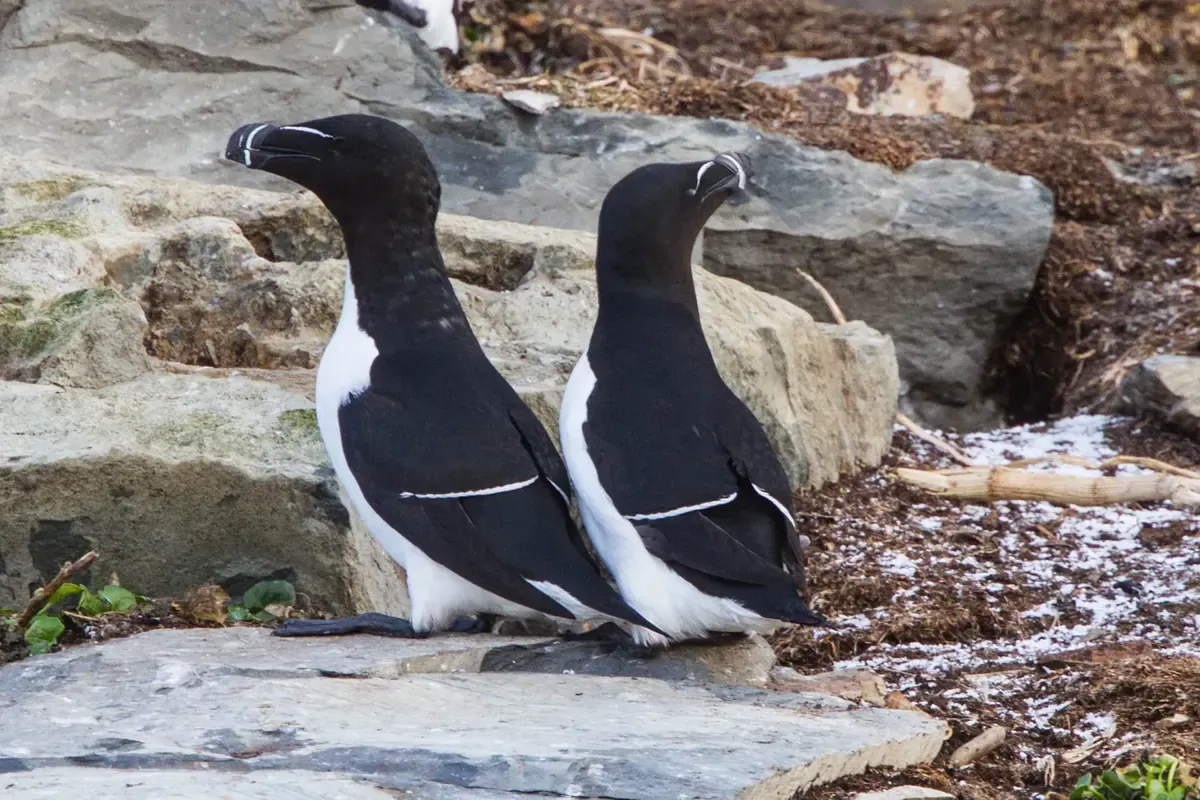
The Razorbill has an all-white armpit, a longer tail and a darker head than the Common Guillemot.
More auks
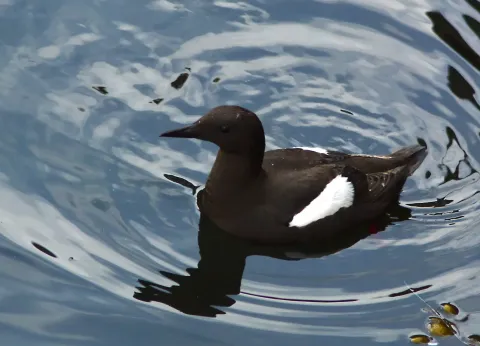
Photo: Chme82, CC BY-SA 4.0, via Wikimedia Commons, resized

Photo: Ron Knight, CC BY 2.0, via Wikimedia Commons, resized

The text was written with AI from facts in Wikipedia and may be shared under CC BY-SA 4.0. Sources: Swedish article, English article, German article
Report data: Artportalen (SLU Swedish Species Information Centre) via GBIF.org, 2016 to 2025. Red list: The Swedish Red List 2025, SLU Swedish Species Information Centre via GBIF.org.
Checked against sources on . How we make these pages