Gaviidae
Red-throated Loon
Gavia stellata
- Scientific name
- Gavia stellata
- Family
- Gaviidae
- In Sweden
- Partial migrant, breeds here
- Size
- 55 to 67 cm
- Swedish Red List 2025
- Not red-listed
- Global Red List (IUCN)
- Least concern (LC)
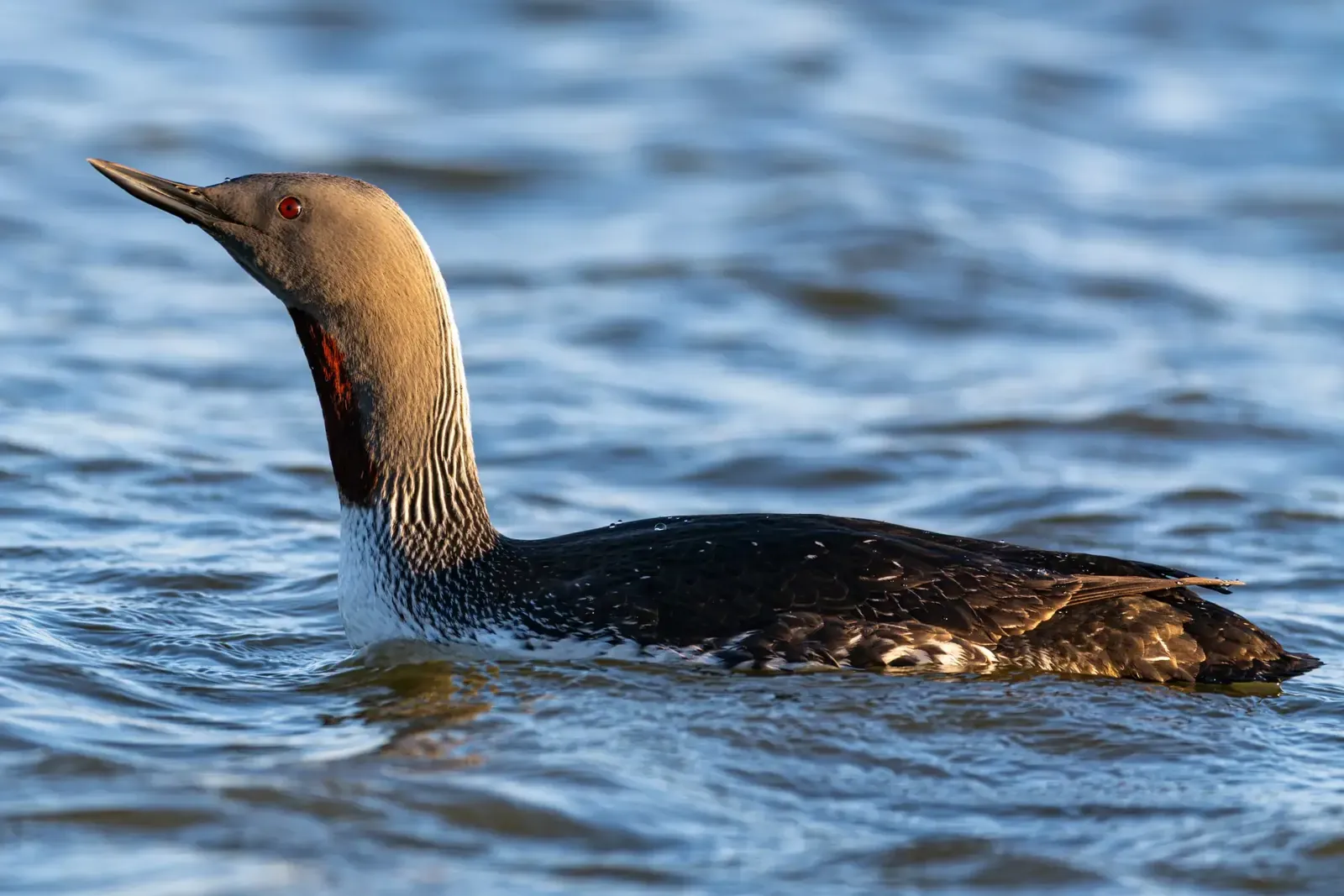
The Red-throated Loon is the smallest and lightest of the loons. It breeds by small forest-ringed waters in northern and central Sweden and winters in coastal areas.
How to recognise it
- Summer plumage: ash-grey head and neck with a large red-brown patch on the foreneck
- The only loon with a wholly dark back in breeding plumage
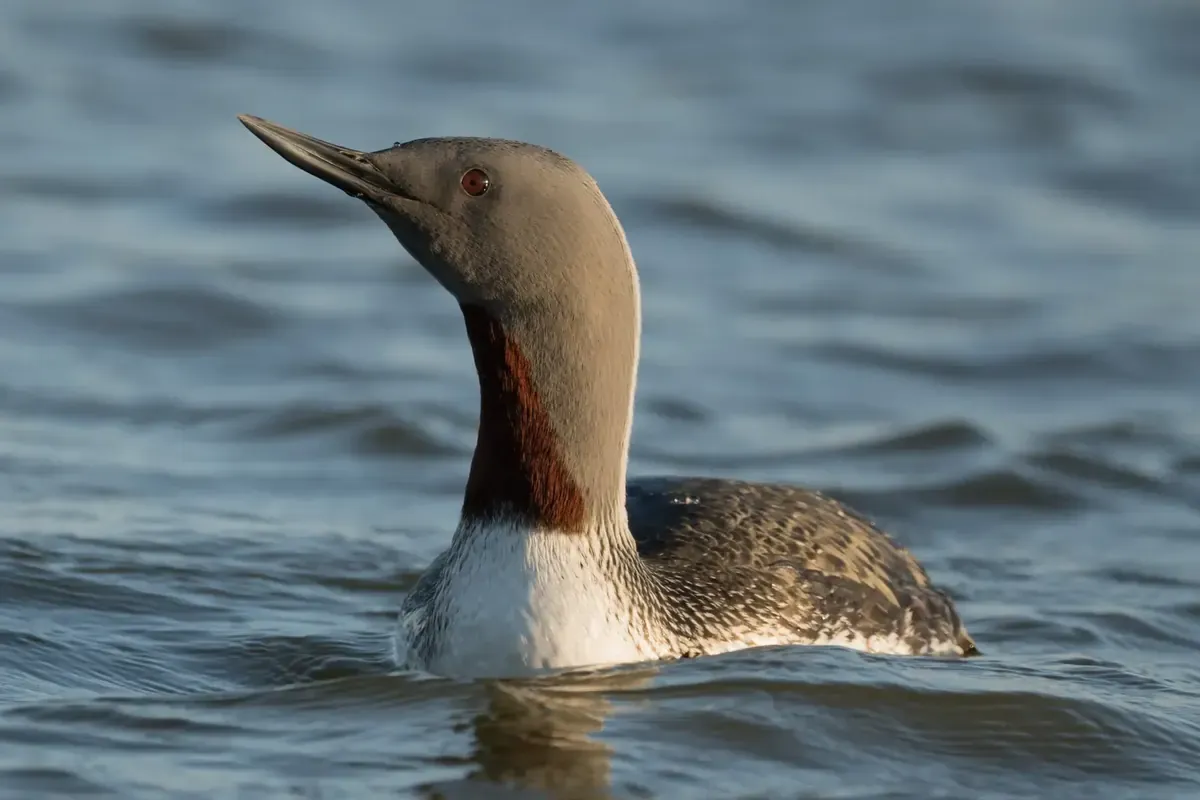
- Winter plumage: dark grey upperparts with small pale spots, white face, throat and underparts
- Thin, straight, pointed bill, often held clearly tilted upwards while swimming
Call and song
In the territorial call the pair calls together: the male a'roo, a'roo and the female a longer aaarooo, aarooo. In flight it gives a fast but rhythmic series of goose-like cackling calls, kak-kak-kak, about five per second. The alarm call is a deep rattle, and in winter it is mostly silent.
Where and when
The Red-throated Loon is a partial migrant that breeds in northern and central Sweden south to central Dalsland. Density is highest in Värmland, Bergslagen and Dalarna. Some winter in southern Sweden, while others move further south. It is reported all year, and its share of all bird reports is highest in Jämtland, Dalarna and Halland.
When is it seen in Sweden?
Where is it reported?
- No reports
- Small share
- Medium share
- Large share
Reported all year round. Its share of all bird reports is highest in Jämtland, Dalarna and Halland.
Food and behaviour
The Red-throated Loon is a dedicated fish-eater that feeds in larger lakes, rivers or the sea, not in its breeding pool. It often flies 4 to 5 km to fetch food. It dives 2 to 9 metres deep and stays under for one minute on average. It is the only loon that can take off directly from land, and in flight it often raises and lowers its head.
More grebes & divers
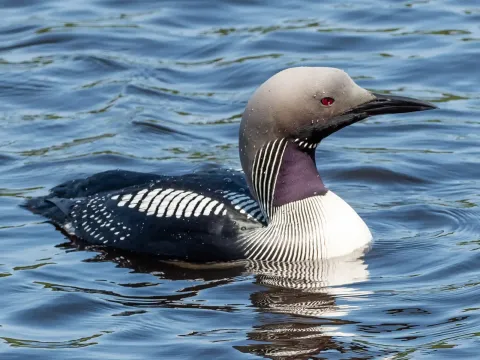
Photo: Hobbyfotowiki, CC0, via Wikimedia Commons, resized

Photo: Hobbyfotowiki, CC0, via Wikimedia Commons, resized

The text was written with AI from facts in Wikipedia and may be shared under CC BY-SA 4.0. Sources: Swedish article, English article, German article
Report data: Artportalen (SLU Swedish Species Information Centre) via GBIF.org, 2016 to 2025. Red list: The Swedish Red List 2025, SLU Swedish Species Information Centre via GBIF.org.
Checked against sources on . How we make these pages