Gaviidae
Black-throated Loon
Gavia arctica
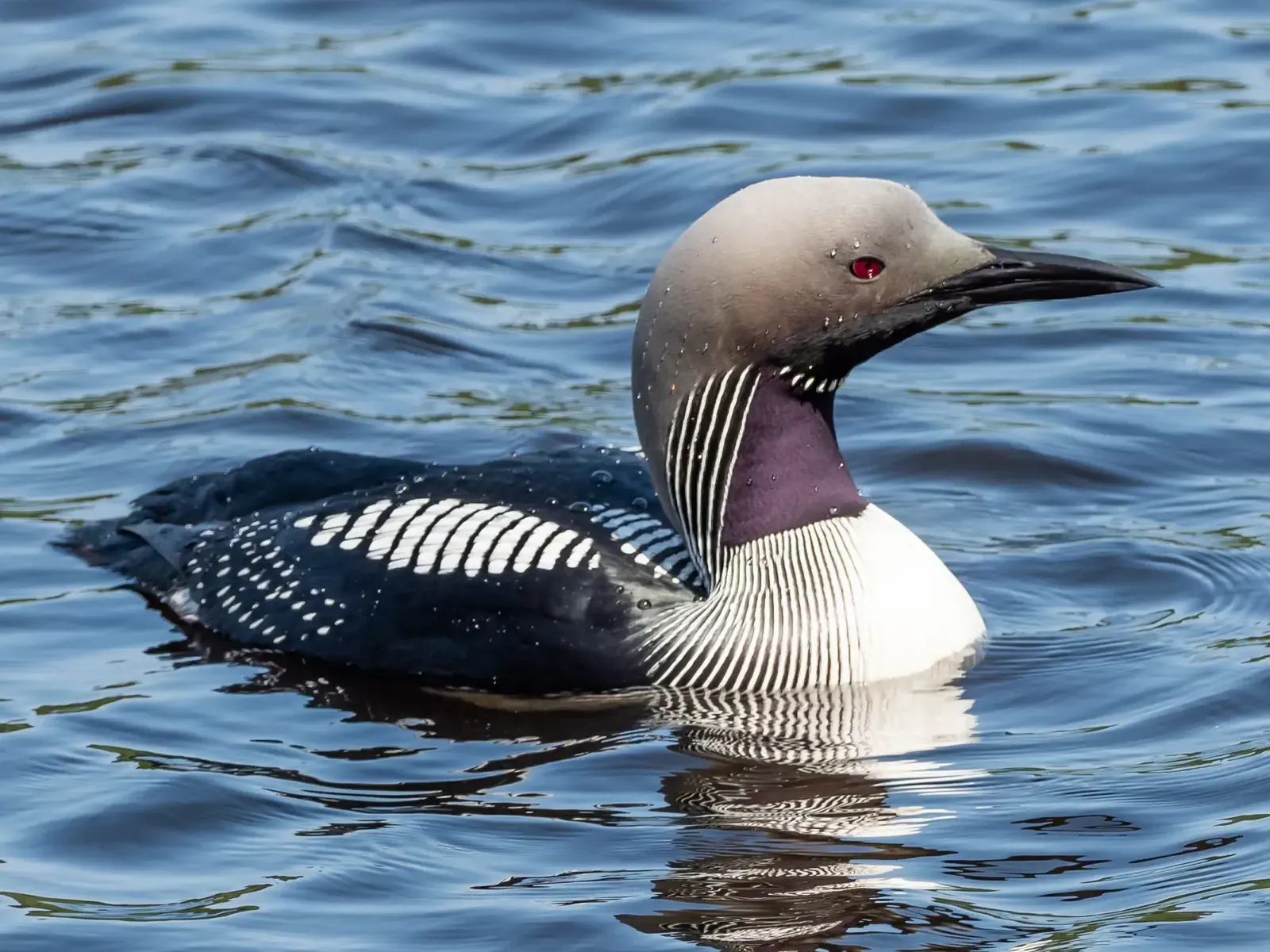
- Scientific name
- Gavia arctica
- Family
- Gaviidae
- Size
- 65 to 74 cm
- Swedish Red List 2025
- Not red-listed
- Global Red List (IUCN)
- Least concern (LC)
The Black-throated Loon is a loon that breeds on secluded, deep freshwater lakes. In winter it usually lives in coastal waters along sheltered coasts.
How to recognise it
- Slightly larger than a Mallard but much more slender
- Summer: ash-grey head and neck, purple-glossed black throat, black back with white spot patches
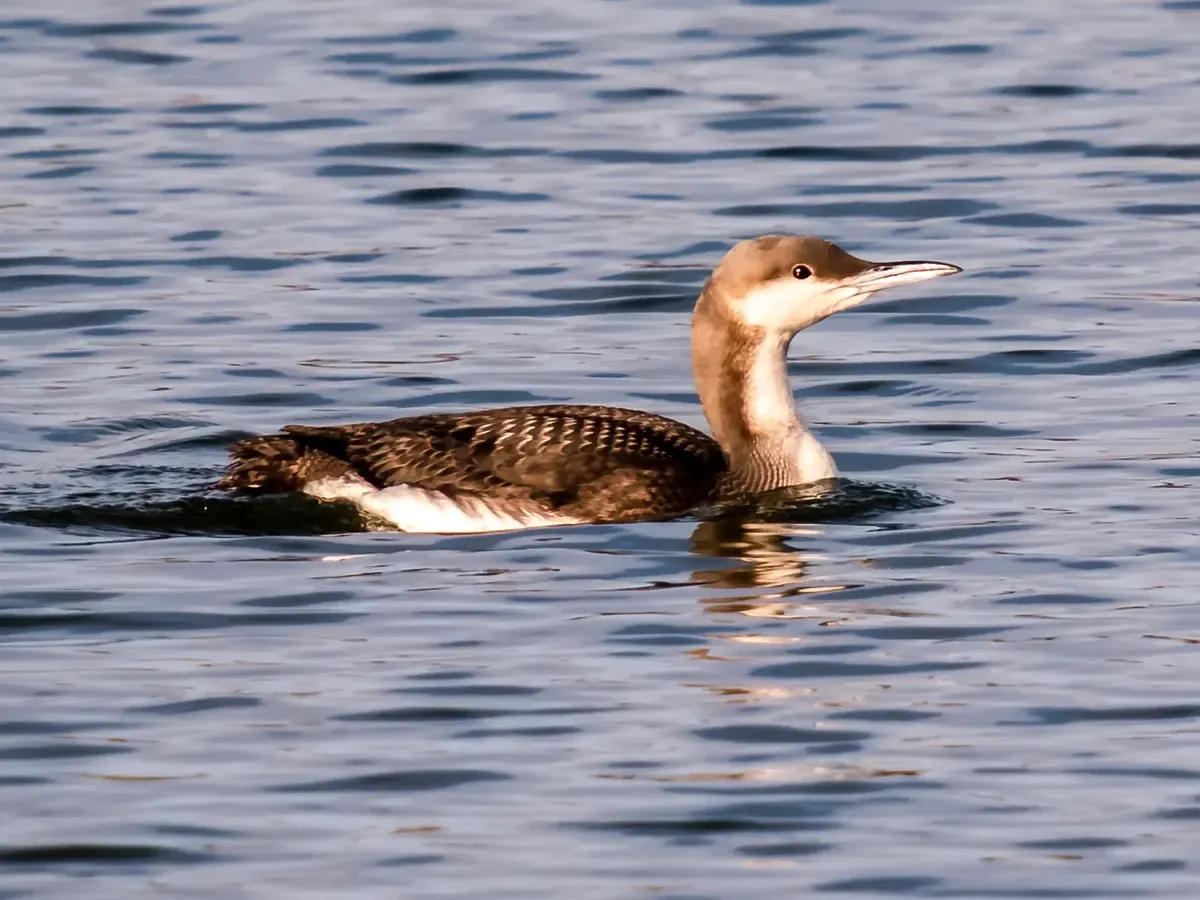
- Winter: pale grey crown and nape, dark upperparts, white throat and underparts
- Dagger-shaped bill usually held horizontal when swimming, male and female look alike
Call and song
The territorial call sounds like ku-u-í-ki, kuí-ki, kuí-ki. In the breeding season the male sings a high, rhythmic, whistling song. The alarm call is a deep creaking, and in flight it gives a barking “kwow”.
Where and when
The Black-throated Loon breeds throughout Sweden except on Öland, Gotland and in Skåne. It is reported most in April and from July to September, and rarely reported in February. Its share of all bird reports is highest in Dalarna, Kronoberg and Jämtland. It is the provincial bird of Gästrikland.
When is it seen in Sweden?
Where is it reported?
- No reports
- Small share
- Medium share
- Large share
Reported most in April and July to September. Rarely reported in February. Its share of all bird reports is highest in Dalarna, Kronoberg and Jämtland.
Food and behaviour
It eats fish and sometimes insects, molluscs, crustaceans and plant material. It dives from the surface for food, never deeper than 5 metres. Loons sit fairly low in the water, and it takes off by running along the surface as if on a runway. In flight the feet stick out far, so the wings look placed mid-body. It lives in pairs, usually for life.
More grebes & divers
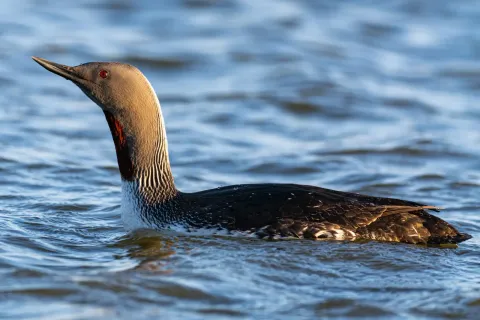
Photo: Bengt Nyman, CC BY 2.0, via Wikimedia Commons, resized

Photo: Kathy Büscher, CC BY 2.0, via Wikimedia Commons, resized

The text was written with AI from facts in Wikipedia and may be shared under CC BY-SA 4.0. Sources: Swedish article, English article, German article
Report data: Artportalen (SLU Swedish Species Information Centre) via GBIF.org, 2016 to 2025. Red list: The Swedish Red List 2025, SLU Swedish Species Information Centre via GBIF.org.
Checked against sources on . How we make these pages