Falconidae
Common Kestrel
Falco tinnunculus
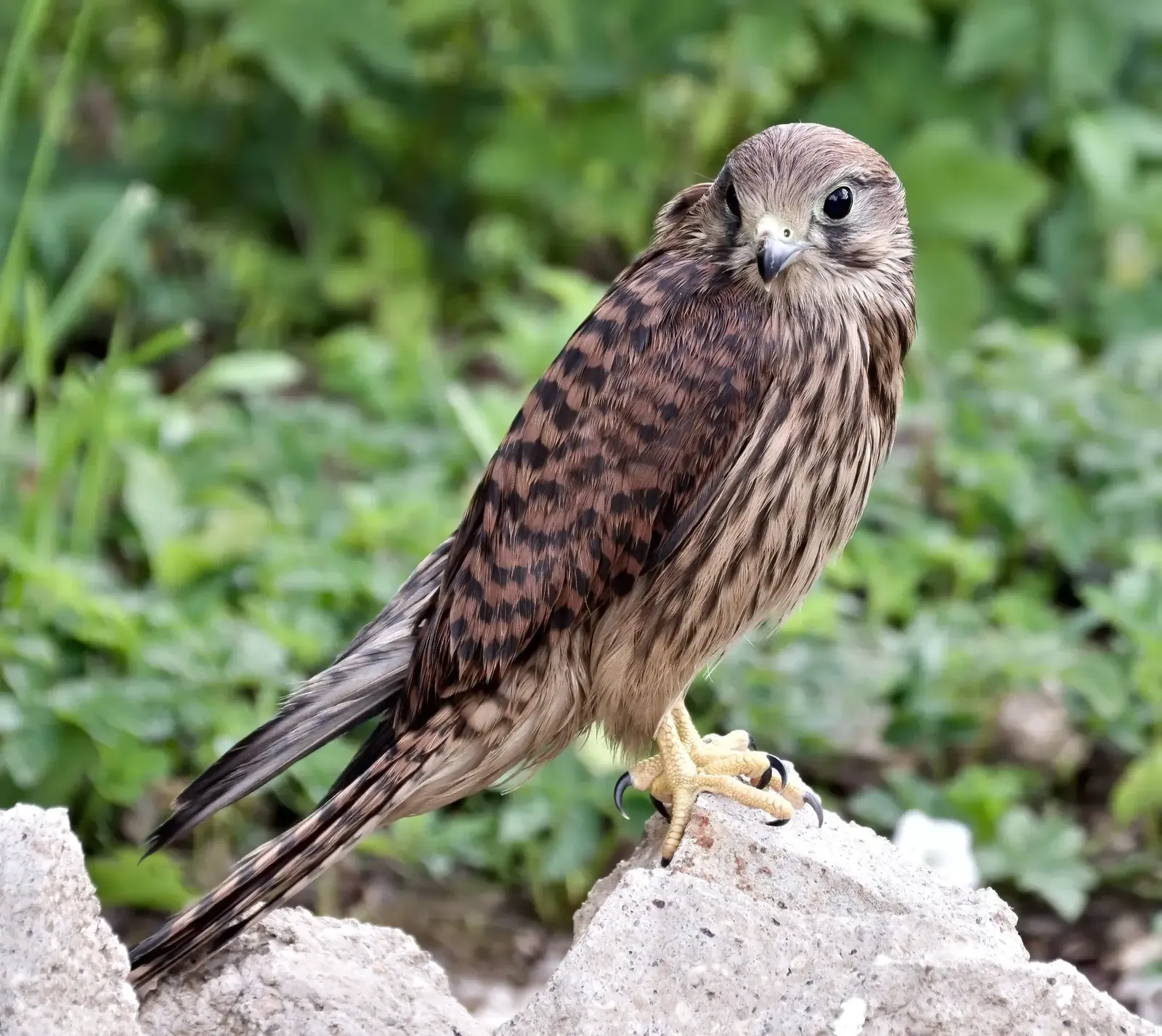
- Scientific name
- Falco tinnunculus
- Family
- Falconidae
- In Sweden
- Partial migrant, breeds here
- Size
- Male on average 34.5 cm, female 36 cm
- Swedish Red List 2025
- Not red-listed
- Global Red List (IUCN)
- Least concern (LC)
The Common Kestrel is a medium-sized falcon with a long tail and long wings, and the most common falcon in Sweden. It is often seen hovering over fields and open ground such as clear-fellings and bogs.
How to recognise it
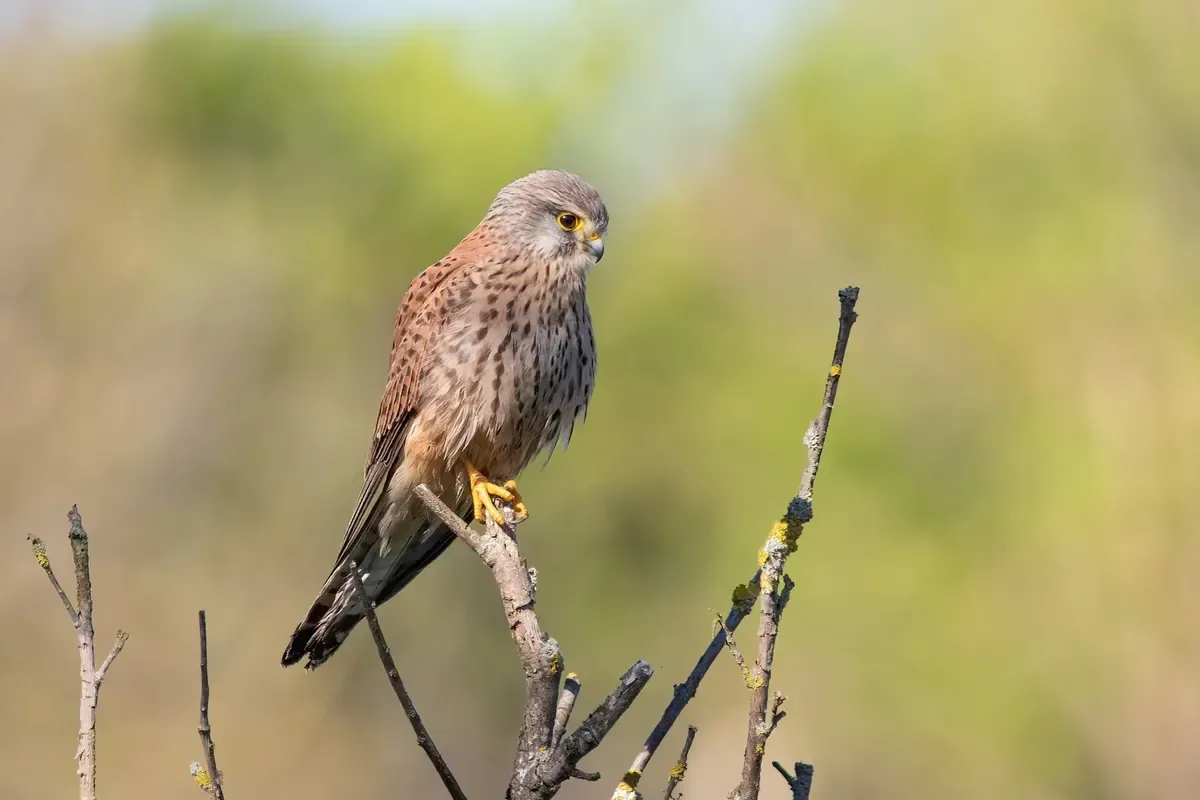
- Pale rufous-brown back with black spots and black flight feathers
- Male has a grey head and plain grey rump and tail
- Female has a rufous-brown head and a tail barred black and rufous-brown
- Dark tail band with a narrow white tip, and a fairly dark moustache stripe
Call and song
The most common call is a fast, shrill series, ki-ki-ki-ki, used as an alarm call. The female and young birds beg with a trilling kirrl, kirrl repeated several times.
Where and when
The Common Kestrel is a partial migrant that breeds in Sweden. It uses open country such as fields, heaths, scrub and wetlands, and has recently spread north as far as the mountain birch forest. It winters in Skåne and on the west coast; elsewhere it moves south in August to November and returns in March to April. It is reported from all 21 counties, mostly in August and September.
When is it seen in Sweden?
Where is it reported?
- No reports
- Small share
- Medium share
- Large share
Reported most in August and September. Reported from all 21 counties.
Food and behaviour
It feeds mainly on mice and other small rodents, and also takes amphibians, lizards, beetles and grasshoppers. When hovering it holds itself about 20 metres above the ground with fast wingbeats and a fanned tail. It also hunts from fence posts, telephone poles and branches, and is often seen hunting along roadsides and motorways.
Easily confused with
-
Falco naumanni
The Lesser Kestrel looks like a smaller Common Kestrel but lacks black on the upperparts except on the wings and tail.
More birds of prey
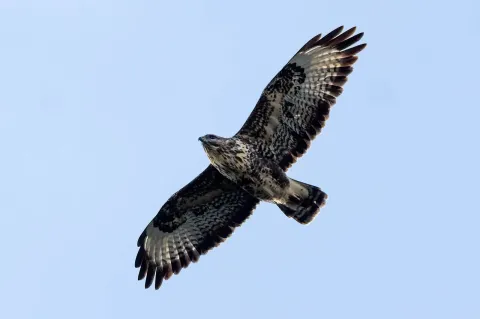
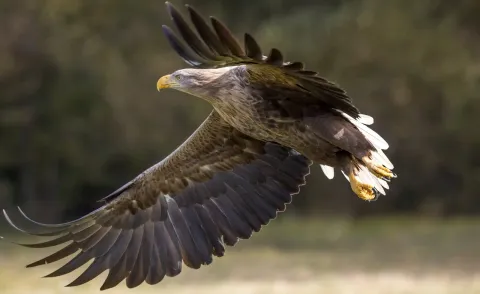
Photo: Alexey V. Kurochkin, CC BY-SA 4.0, via Wikimedia Commons, resized

Photo: Alexis Lours, CC BY 4.0, via Wikimedia Commons, resized

The text was written with AI from facts in Wikipedia and may be shared under CC BY-SA 4.0. Sources: Swedish article, English article, German article
Report data: Artportalen (SLU Swedish Species Information Centre) via GBIF.org, 2016 to 2025. Red list: The Swedish Red List 2025, SLU Swedish Species Information Centre via GBIF.org.
Checked against sources on . How we make these pages