Scolopacidae
Eurasian Curlew
Numenius arquata
- Scientific name
- Numenius arquata
- Family
- Scolopacidae
- Size
- 50 to 55 cm
- Swedish Red List 2025
- Endangered (EN)
- Global Red List (IUCN)
- Near threatened (NT)
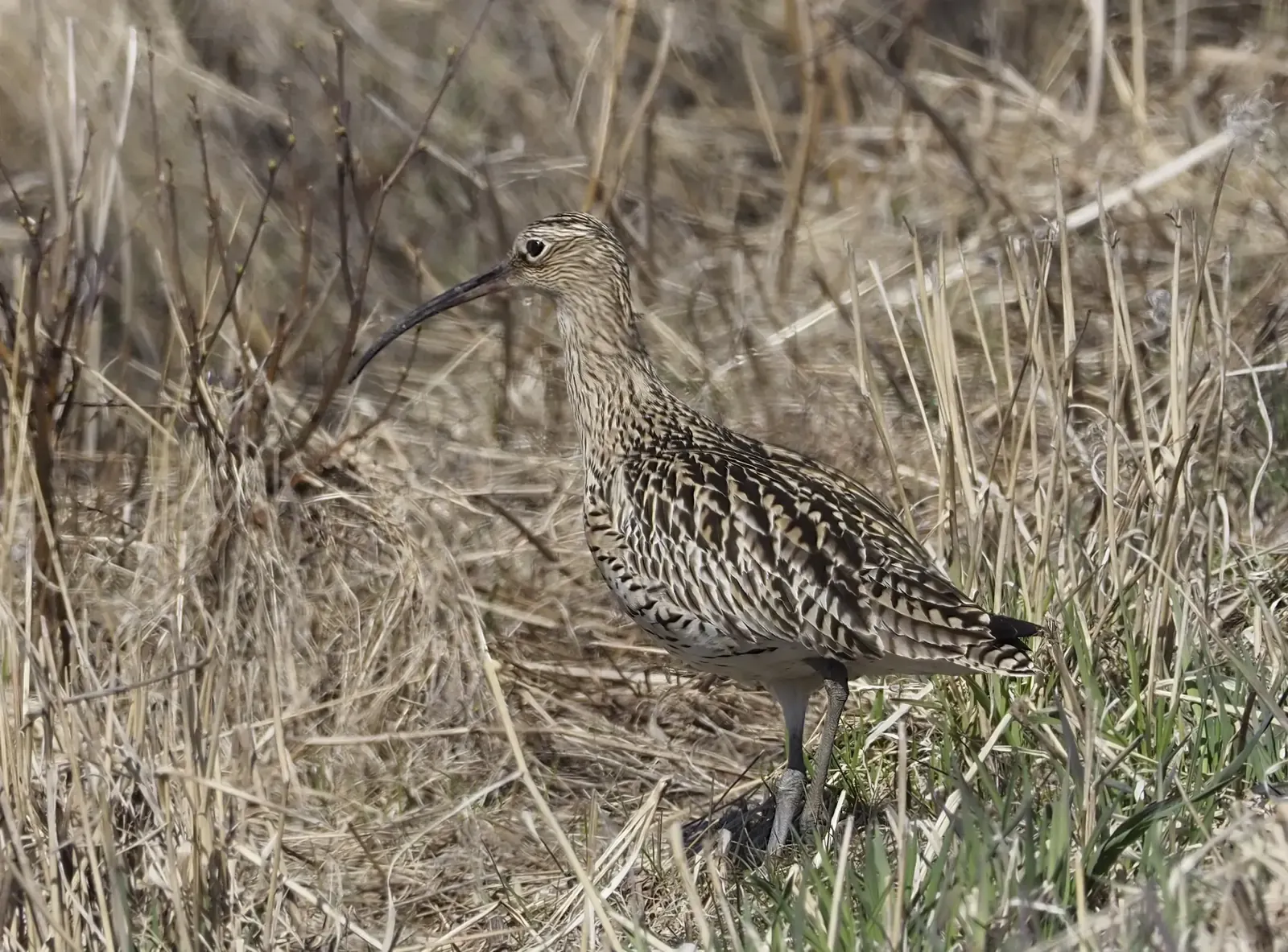
The Eurasian Curlew is a wader with long legs and a long bill that curves downwards. In Sweden it breeds on open bogs, meadows, heaths and farmland across most of the country.
How to recognise it
- Long, downcurved bill and long, grey-blue legs
- Brownish-grey speckled plumage with dark-streaked cheeks against a pale chin and throat
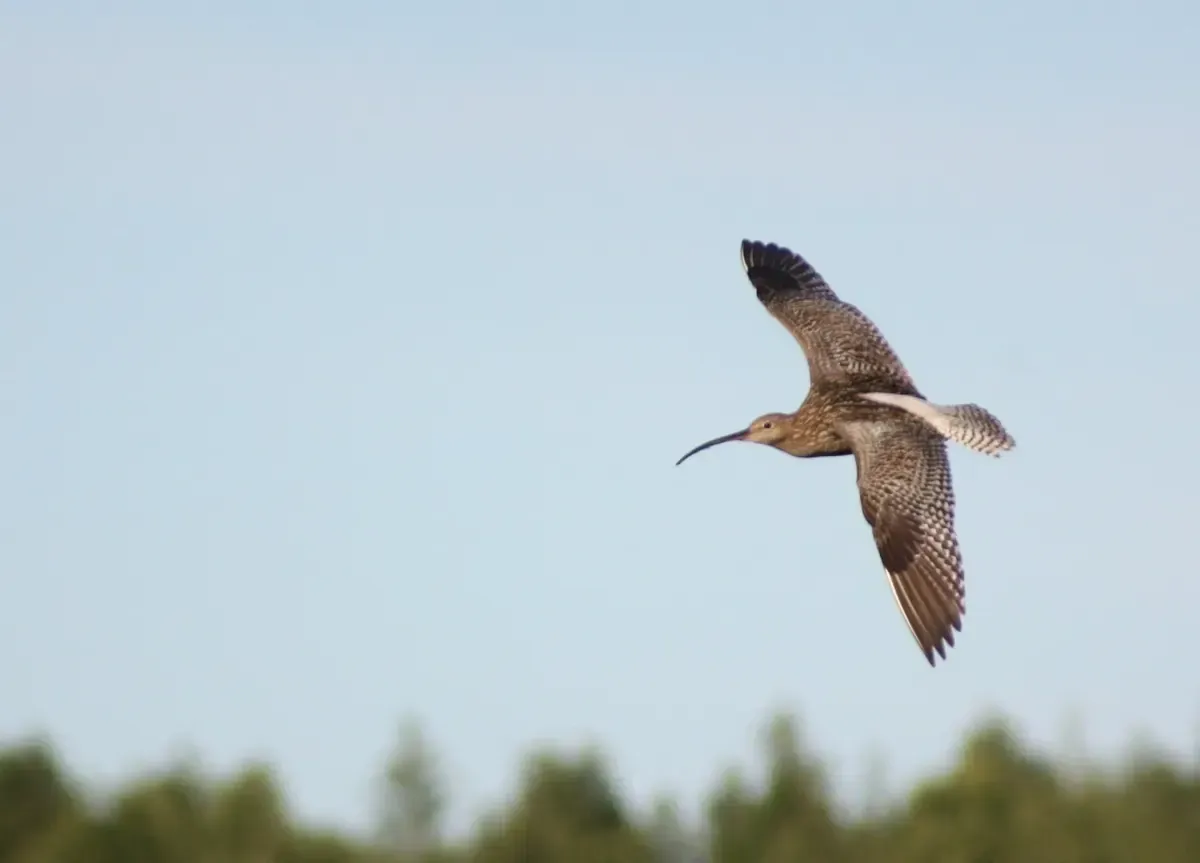
- In flight a white wedge shows from the rump up onto the back
- Sexes look alike, but the female is slightly larger with a longer, more curved bill
Call and song
The well-known call is a loud "curloo-oo". The song is strong and rhythmically trilling, opening with a few lonely, mournful notes. The contact call is a strong, upward-curving whistle with a lonely ring. In flight it gives "tlüih", which becomes "tüi-tüi-tüi" when the bird is excited.
Where and when
In Sweden it breeds across most of the country but is absent from the mountains and nearby areas. It is reported most in April. Its share of all bird reports is highest in Halland, Västerbotten and Norrbotten. The population was estimated at 9 000 pairs in 2008, against 22 000 to 25 000 in the mid 1980s. On the 2025 Swedish Red List it is Endangered.
When is it seen in Sweden?
Where is it reported?
- No reports
- Small share
- Medium share
- Large share
Reported most in April. Its share of all bird reports is highest in Halland, Västerbotten and Norrbotten.
Food and behaviour
It mainly searches for invertebrates in soft mud with its long, curved bill, and can also take crabs and earthworms. It is fairly shy of people. Outside the breeding season it is very social and is often seen with several others. It is often seen higher up on fields and farmland than many other waders.
Easily confused with
-
Numenius phaeopus
The Whimbrel is smaller and has a shorter bill with a kink instead of the curlew's even curve.
-
Limosa lapponica
The Bar-tailed Godwit can look similar in flight but has a smaller body, a slightly upturned bill and legs that do not project beyond the tail.
More waders
Photo: Matti Virtala, CC0, via Wikimedia Commons, resized

Photo: Estormiz, CC0, via Wikimedia Commons, resized

The text was written with AI from facts in Wikipedia and may be shared under CC BY-SA 4.0. Sources: Swedish article, English article, German article
Report data: Artportalen (SLU Swedish Species Information Centre) via GBIF.org, 2016 to 2025. Red list: The Swedish Red List 2025, SLU Swedish Species Information Centre via GBIF.org.
Checked against sources on . How we make these pages