Scolopacidae
Eurasian Woodcock
Scolopax rusticola
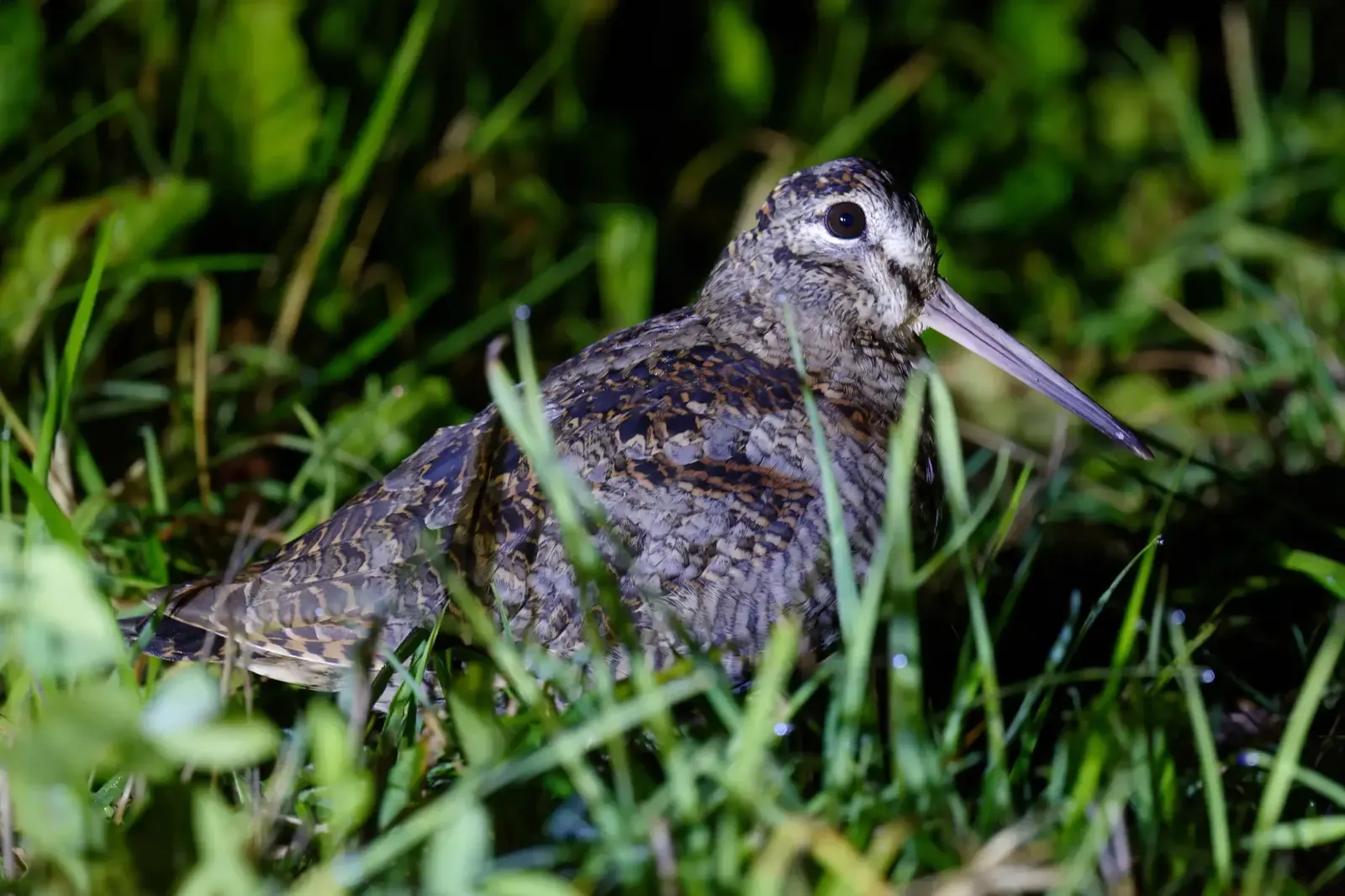
- Scientific name
- Scolopax rusticola
- Family
- Scolopacidae
- In Sweden
- Summer visitor, breeds here
- Size
- 33 to 38 cm
- Swedish Red List 2025
- Not red-listed
- Global Red List (IUCN)
- Least concern (LC)
The Eurasian Woodcock is a round, stocky bird with a long, straight bill that lives in woodland and scrub, in both deciduous and coniferous forest. It is a migrant that breeds throughout Sweden.
How to recognise it
- Round and stocky with a long, straight, pale flesh-coloured bill with a black tip
- Upperparts mottled black, ash-grey and rufous, with black bars across head and nape
- Large eyes set very far back on the head
- Male and female share the same plumage and cannot be told apart in the field
Call and song
In the display flight it gives three to four muffled, grunting notes ending in a sharp, explosive sound: "oårt oårt oårt pissp". The call is sharp and loud, roughly "ziwitz", alternating with a drawn-out, frog-like "quorr".
Where and when
The Eurasian Woodcock is a migrant that breeds throughout Sweden but is commoner in the central parts. It returns to Skåne in late March and central Sweden in early April, and moves south in October and November. It is reported most in June and rarely in January, August and September. Only a few individuals try to winter in southern Sweden in some winters.
When is it seen in Sweden?
Where is it reported?
- No reports
- Small share
- Medium share
- Large share
Reported most in June. Rarely reported in January, August and September. Reported from all 21 counties.
Food and behaviour
The Eurasian Woodcock is active at night and spends the day hidden in bushes and thickets. Adults flush only at the last moment when a person approaches and fly off with a whirring wing sound. During roding the male flies back and forth over the territory several times at dusk, calling. It feeds mainly on earthworms, and also takes insects and their larvae, freshwater molluscs and some seeds.
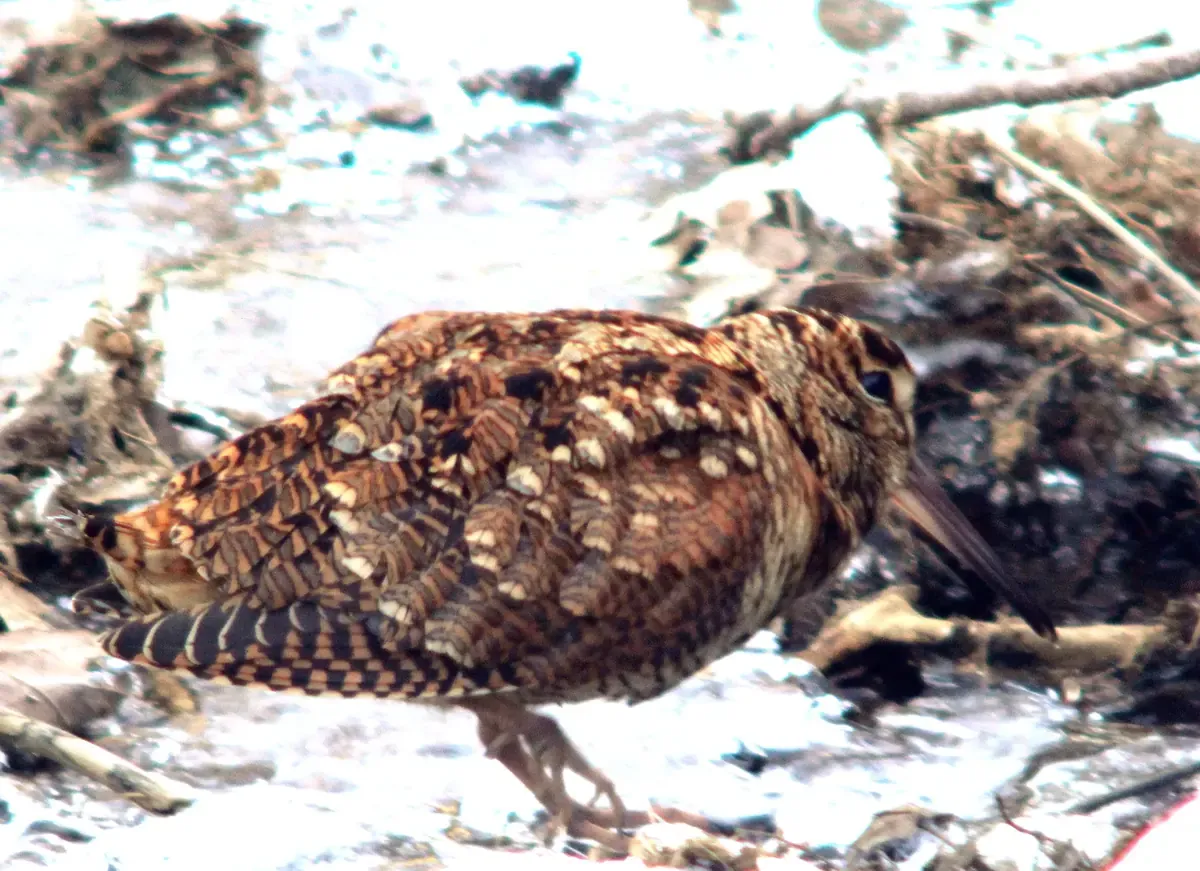
More waders
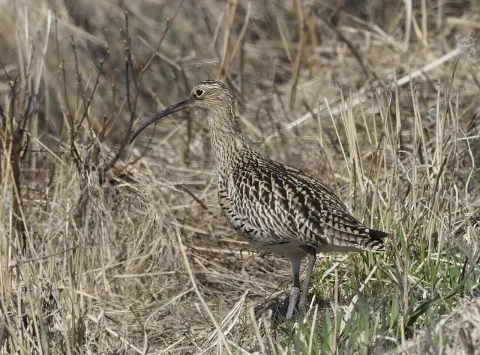
Photo: tcager, CC0, via Wikimedia Commons, resized

Photo: Blondinrikard Fröberg, CC BY 2.0, via Wikimedia Commons, resized

The text was written with AI from facts in Wikipedia and may be shared under CC BY-SA 4.0. Sources: Swedish article, English article, German article
Report data: Artportalen (SLU Swedish Species Information Centre) via GBIF.org, 2016 to 2025. Red list: The Swedish Red List 2025, SLU Swedish Species Information Centre via GBIF.org.
Checked against sources on . How we make these pages