Picidae
Great Spotted Woodpecker
Dendrocopos major
- Scientific name
- Dendrocopos major
- Family
- Picidae
- Size
- 23 to 25 cm
- Swedish Red List 2025
- Not red-listed
- Global Red List (IUCN)
- Least concern (LC)
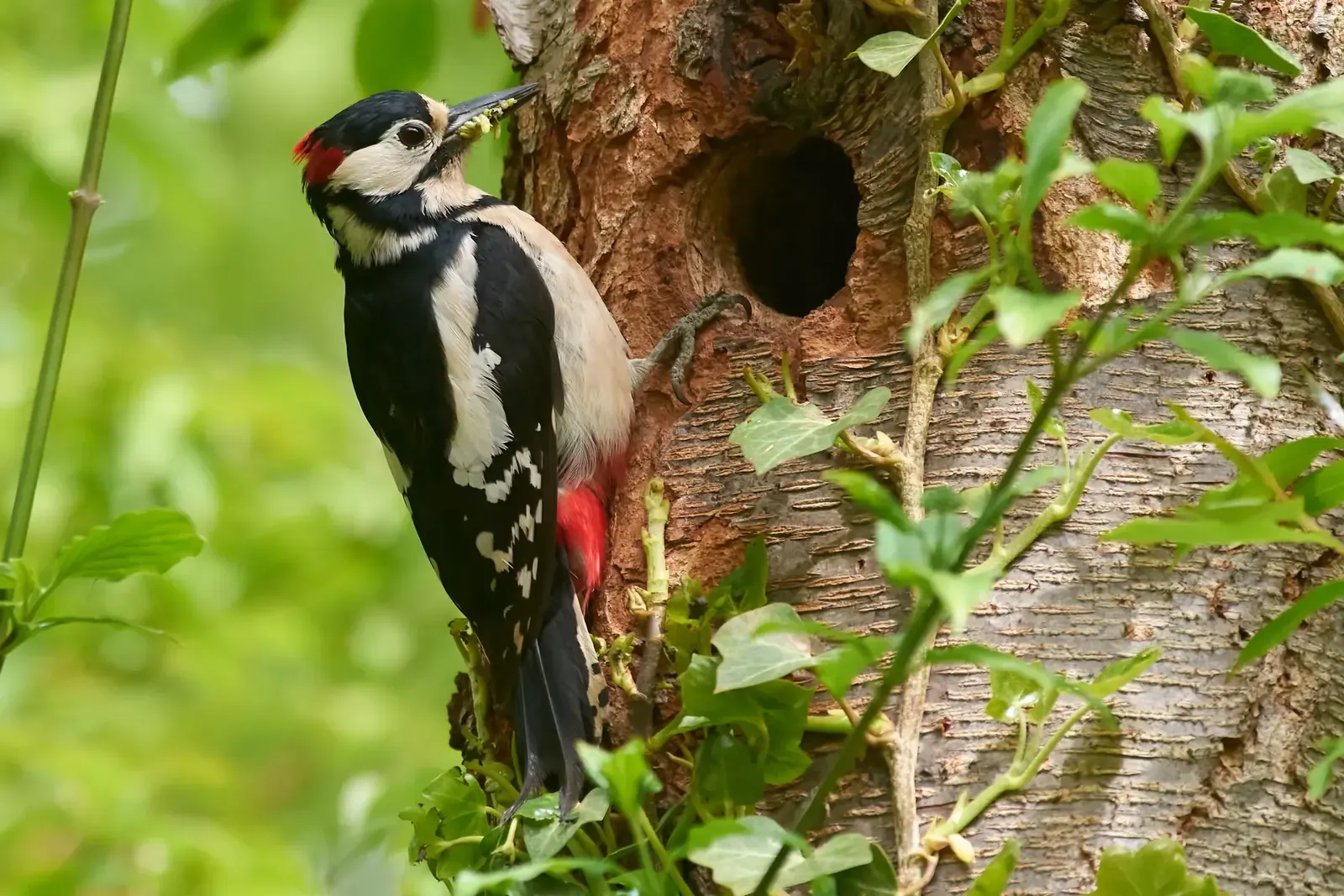
The Great Spotted Woodpecker is a woodpecker with glossy blue-black upperparts, white shoulder patches and a red vent. It lives in deciduous, coniferous and mixed woodland as well as parks and gardens, and in winter it readily visits bird tables.
How to recognise it
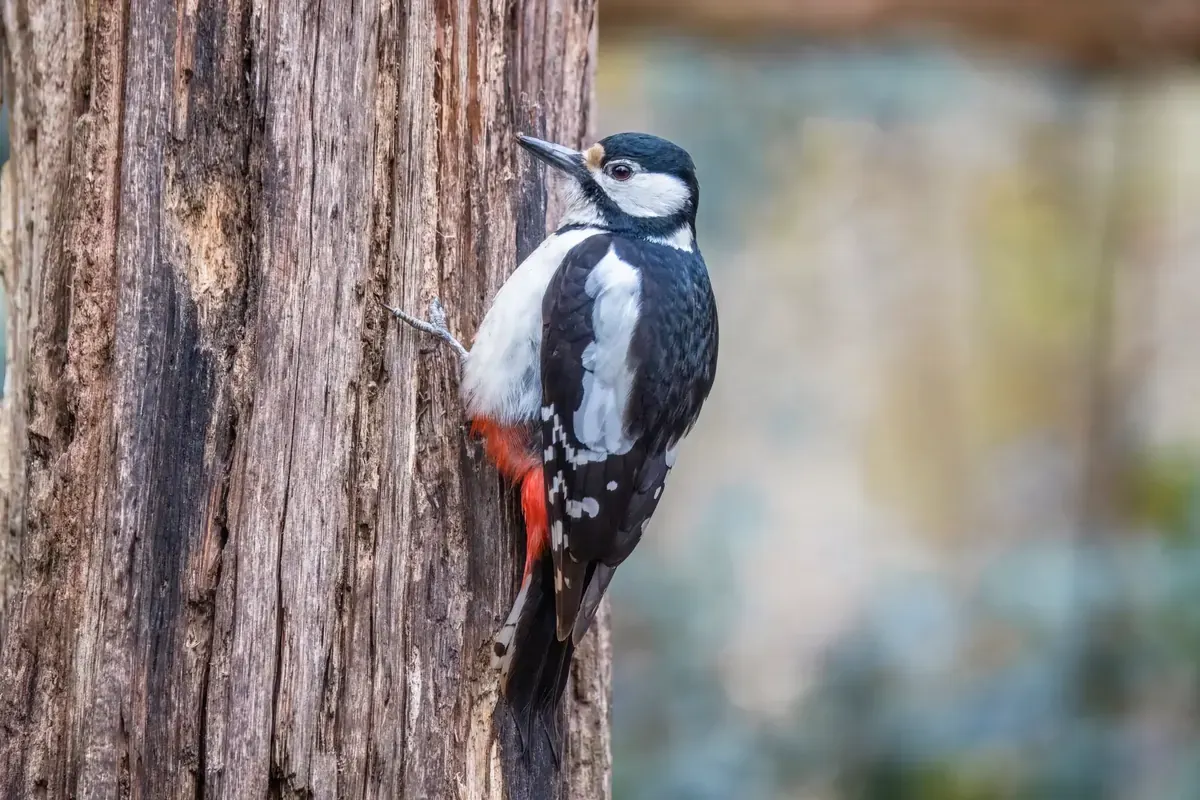
- Two long white shoulder patches and a red vent
- Glossy blue-black above, white face sides, black stripes from shoulder to bill base and breast
- Males have a red nape patch, females no red on the head, juveniles a red crown
- Flies in clear rising and falling arcs
Call and song
The call is a sharp "kik", which can be repeated as a wooden rattling "krrarraarr" when the bird is disturbed. The drumming is faster than in other woodpeckers in the area, about 10 to 16 strokes per second in often repeated one-second bursts. Both sexes drum, but the male does so far more often.
Where and when
In Sweden it lives mainly in deciduous and mixed woodland, sometimes coniferous forest, from Skåne to Lapland. In the far north it is less common or rare. It is reported from all 21 counties and most often from December to February. Drumming is heard from late winter and above all in early spring.
When is it seen in Sweden?
Where is it reported?
- No reports
- Small share
- Medium share
- Large share
Reported most in December to February. Reported from all 21 counties.
Food and behaviour
It eats beetles, ants, aphids and other insects, berries such as bilberries and lingonberries, and sometimes nestlings and eggs. In winter it feeds mainly on seeds from spruce and pine cones, which it hacks open on an anvil, and readily visits bird tables for suet balls and peanuts. It holds a territory of about 5 hectares all year, defended mainly by the male.
Easily confused with
More in the Picidae family
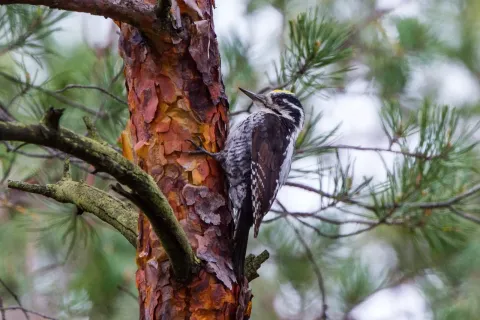
Photo: Hobbyfotowiki, CC0, via Wikimedia Commons, resized

Photo: Charles J. Sharp, CC BY-SA 4.0, via Wikimedia Commons, resized

The text was written with AI from facts in Wikipedia and may be shared under CC BY-SA 4.0. Sources: Swedish article, English article, German article
Report data: Artportalen (SLU Swedish Species Information Centre) via GBIF.org, 2016 to 2025. Red list: The Swedish Red List 2025, SLU Swedish Species Information Centre via GBIF.org.
Checked against sources on . How we make these pages