Picidae
Eurasian Three-toed Woodpecker
Picoides tridactylus
- Scientific name
- Picoides tridactylus
- Family
- Picidae
- Size
- 21.5 to 24 cm
- Swedish Red List 2025
- Near threatened (NT)
- Global Red List (IUCN)
- Least concern (LC)
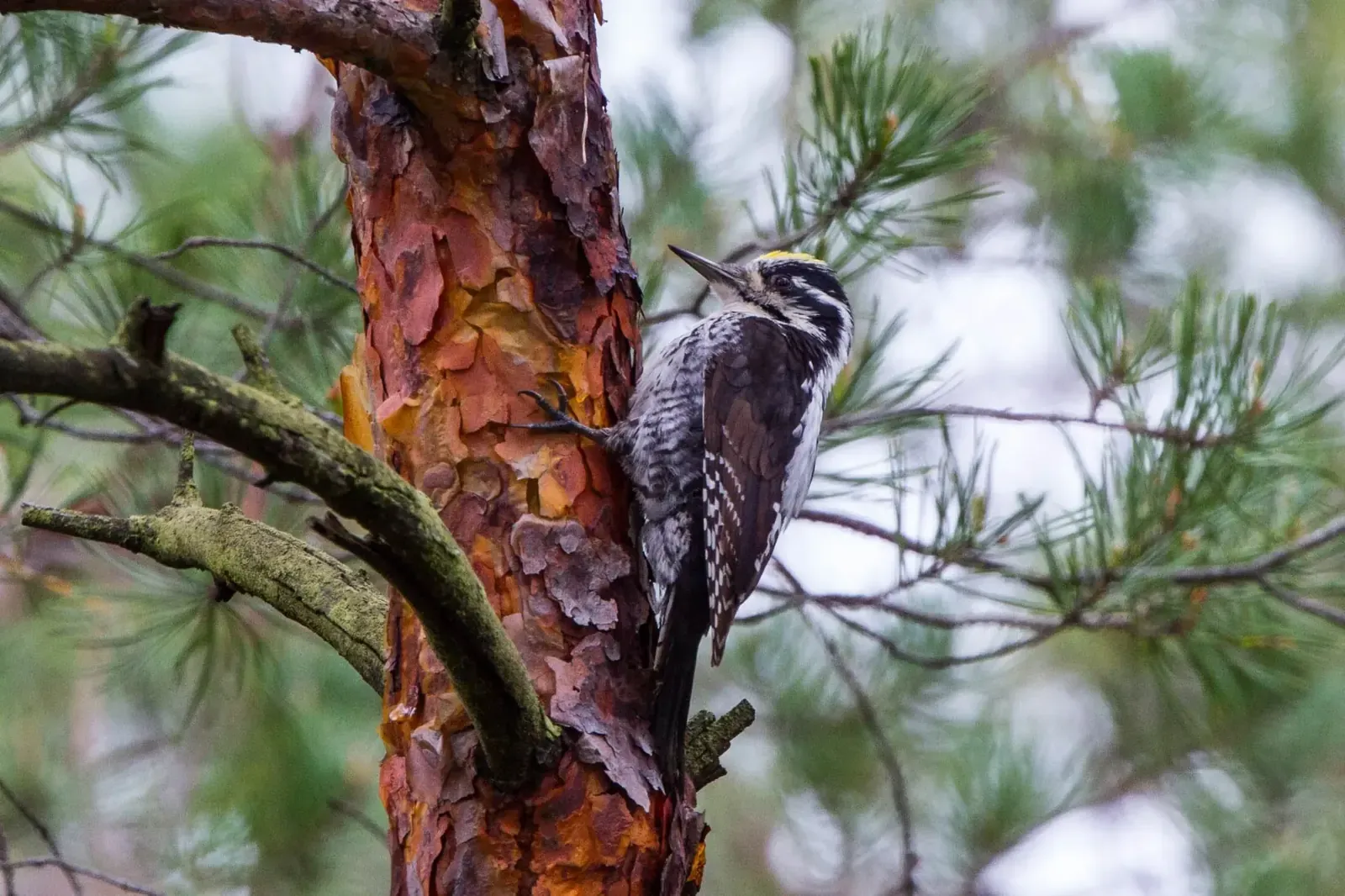
The Eurasian Three-toed Woodpecker is a black-and-white woodpecker with no red at all in its plumage. It is strongly tied to spruce and in Sweden breeds in coniferous and mixed forest with plenty of dead and dying trees.
How to recognise it
- Black-and-white plumage with no red or pink at all
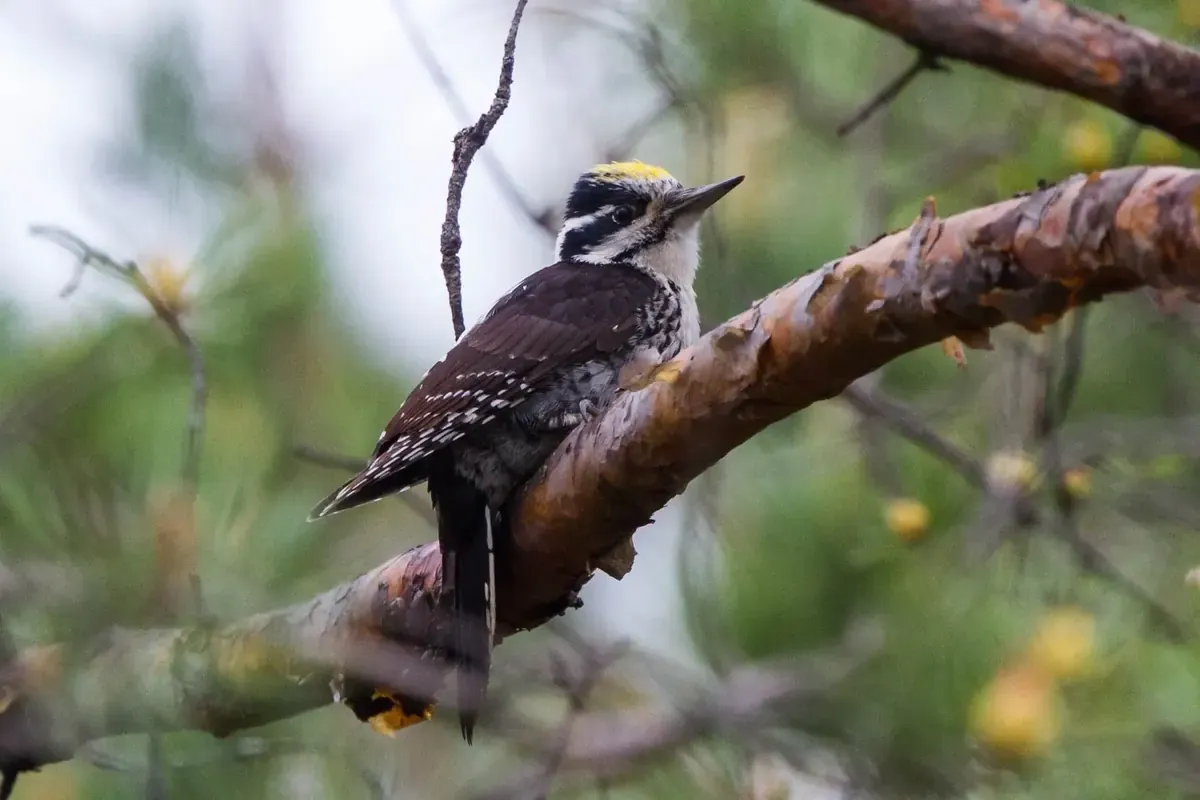
- White back with black bars, dark flanks and a white stripe above the eye
- Male has a yellow to orange-yellow crown, female blackish grey, juveniles yellow
- Strongly undulating flight
Call and song
The commonest call resembles a Great Spotted Woodpecker's but is more muted, roughly gyg or gygg, sometimes a harder kyk. It is heard less often than Great Spotted Woodpecker and its calls are softer. The drum rolls are very long, often 1.1 to 1.4 seconds for 20 strikes, and have an accelerating rhythm.
Where and when
In Sweden it breeds regularly south to a line from northern Dalsland through Närke and Västmanland to central Uppland. About 45 percent of the Swedish population is estimated to live in Lappland. It is reported most in September and October, and its share of all bird reports is highest in Jämtland. It is red-listed in Sweden as Near Threatened.
When is it seen in Sweden?
Where is it reported?
- No reports
- Small share
- Medium share
- Large share
Reported most in September and October. Its share of all bird reports is highest in Jämtland.
Food and behaviour
Its main food is larvae, pupae and immature adult insects of bark beetles, weevils, jewel beetles and longhorn beetles, among others. It rings spruces by pecking small holes in the trunk and sucking out the sap. The pair usually excavates a new nest hole each year in a dead or dying conifer. It is not particularly shy and often lets people come within five metres before flying off.
Easily confused with
-
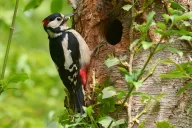
The Eurasian Three-toed Woodpecker is slightly smaller than Great Spotted Woodpecker and is easily told apart by having no red at all in its plumage.
More in the Picidae family
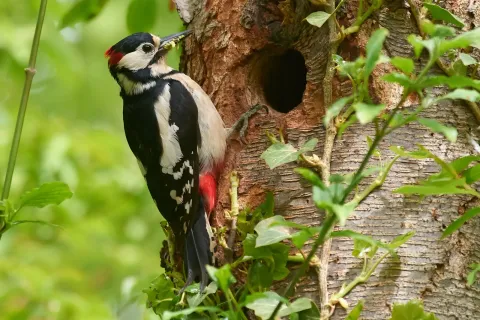
Photo: Ron Knight, CC BY 2.0, via Wikimedia Commons, resized

Photo: Ron Knight, CC BY 2.0, via Wikimedia Commons, resized

The text was written with AI from facts in Wikipedia and may be shared under CC BY-SA 4.0. Sources: Swedish article, English article, German article
Report data: Artportalen (SLU Swedish Species Information Centre) via GBIF.org, 2016 to 2025. Red list: The Swedish Red List 2025, SLU Swedish Species Information Centre via GBIF.org.
Checked against sources on . How we make these pages