Laridae
Black-legged Kittiwake
Rissa tridactyla
- Scientific name
- Rissa tridactyla
- Family
- Laridae
- Size
- 37 to 42 cm
- Swedish Red List 2025
- Endangered (EN)
- Global Red List (IUCN)
- Vulnerable (VU)
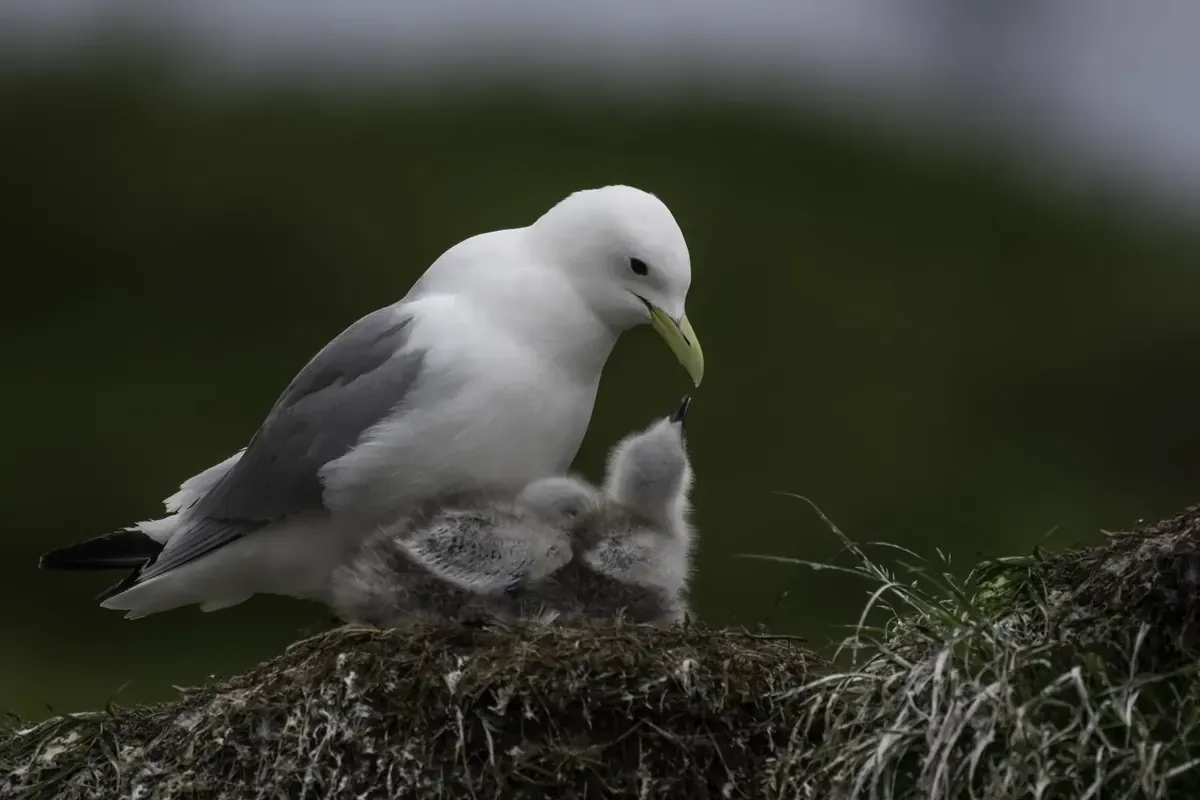
The Black-legged Kittiwake is a gull that breeds in colonies on steep cliffs, known as bird cliffs, and spends the time outside the breeding season out on the open sea.
How to recognise it
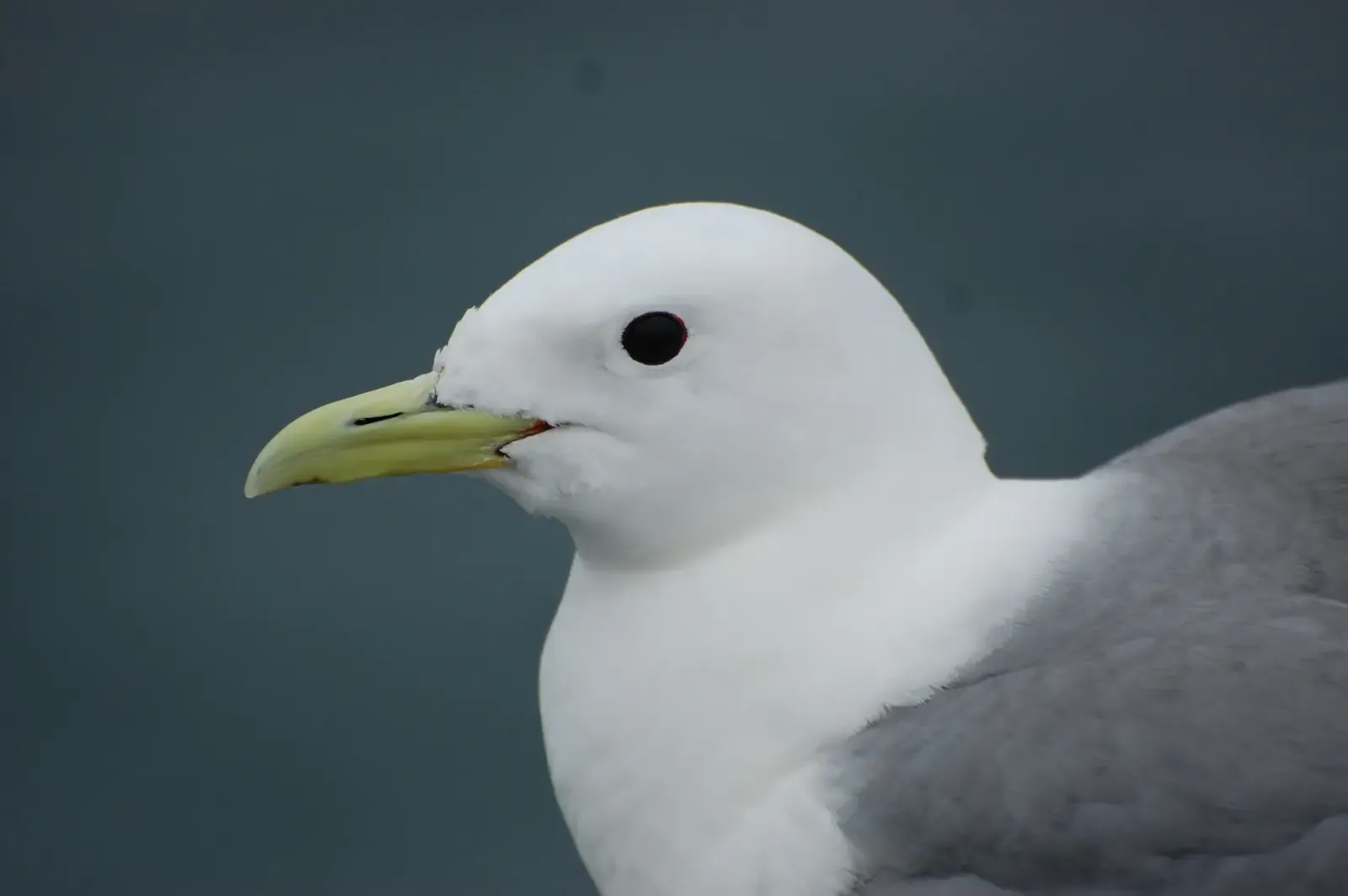
- White head and underparts, upperwing in two shades of grey and all-black wingtips
- Plain greenish yellow bill and short legs, dark to black
- Young birds have a blackish grey bill and a large black W across the upperwing
- Sexes look alike, but males are on average slightly larger and heavier
Call and song
The call sounds roughly like "kittee-wa-aaake, kitte-wa-aaake", which gave the species its English name Kittiwake. The alarm call is a plaintive "ök ök". Outside the breeding season and out on the open sea it is mostly silent.
Where and when
In Sweden it breeds only on Nidingen off northern Halland: just 90 breeding individuals. In autumn, up to about 10 000 birds a day are sometimes seen along the west coast in strong westerly winds. It is reported most in November and rarely in March to June. Its share of all bird reports is highest in Halland. It is Endangered on the Swedish Red List.
When is it seen in Sweden?
Where is it reported?
- No reports
- Small share
- Medium share
- Large share
Reported most in November. Rarely reported in March to June. Its share of all bird reports is highest in Halland.
Food and behaviour
It feeds mainly on small pelagic fish such as herring, sprat, sand eels and small cod fish, and also takes molluscs and crustaceans. Its most common hunting method is plunge-diving from a search flight 10 to 25 metres up. It also follows fishing boats and takes fish and fish waste. The flight is stiff and springy, more like a tern's than other gulls'.
Easily confused with
-
Rissa brevirostris
Adult Rissa brevirostris has coral-red legs, darker grey upperparts and a shorter, stouter bill.
More in the Laridae family
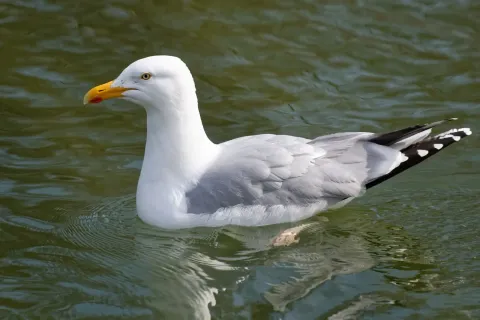
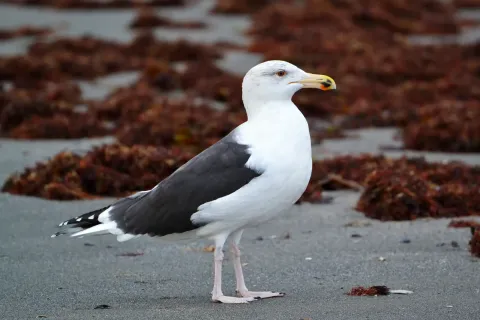
Photo: Alaska Region U.S. Fish & Wildlife Service, public domain, via Wikimedia Commons, resized

Photo: TRinaud, CC BY 4.0, via Wikimedia Commons, resized

The text was written with AI from facts in Wikipedia and may be shared under CC BY-SA 4.0. Sources: Swedish article, English article, German article
Report data: Artportalen (SLU Swedish Species Information Centre) via GBIF.org, 2016 to 2025. Red list: The Swedish Red List 2025, SLU Swedish Species Information Centre via GBIF.org.
Checked against sources on . How we make these pages