Laridae
European Herring Gull
Larus argentatus
- Scientific name
- Larus argentatus
- Family
- Laridae
- In Sweden
- Partial migrant, breeds here
- Size
- 55 to 67 cm
- Swedish Red List 2025
- Vulnerable (VU)
- Global Red List (IUCN)
- Least concern (LC)
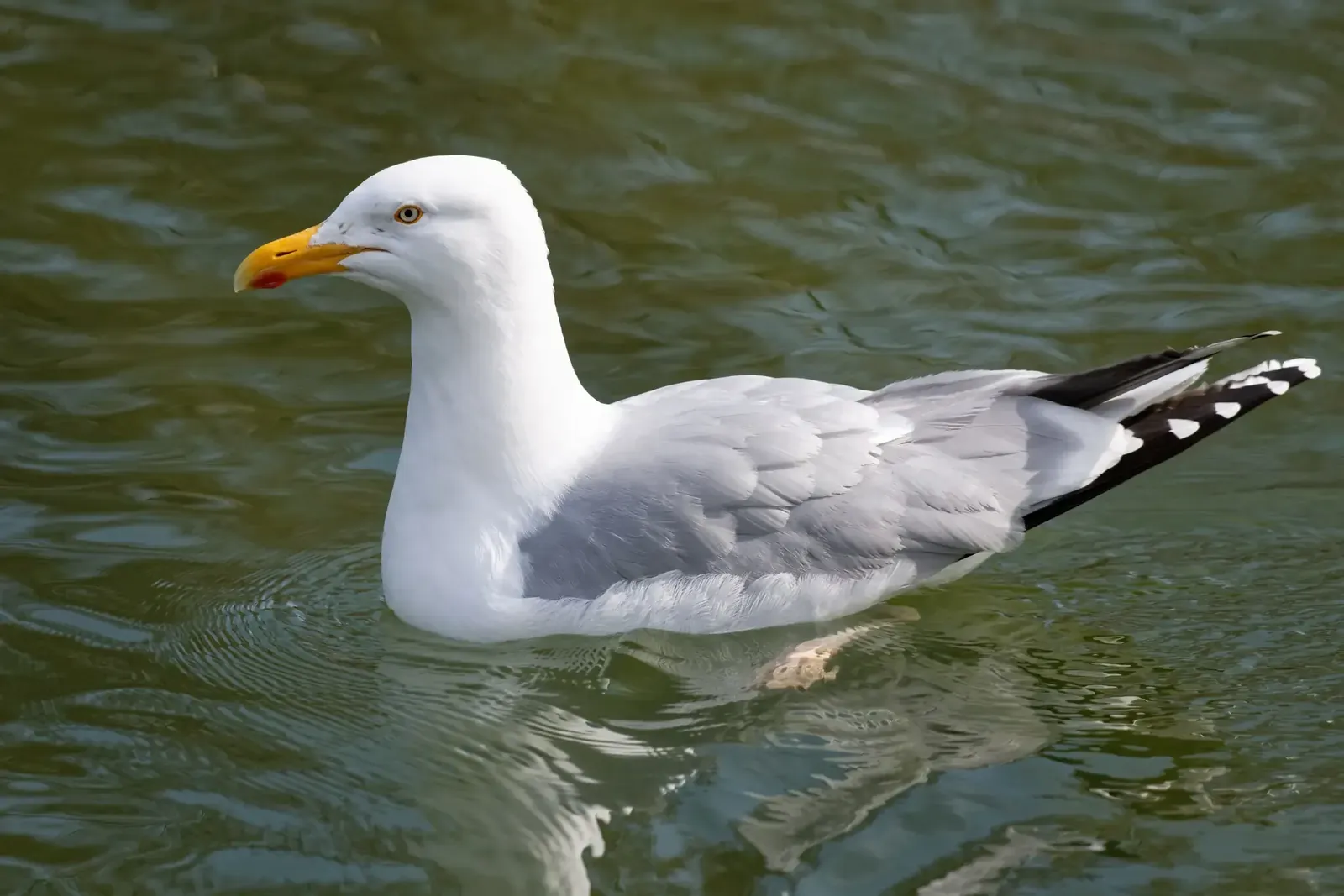
The European Herring Gull is a gull with a white head and grey wings that breeds commonly around the Swedish coasts. It is met along coasts, in harbours, by large lakes and in wetlands, and also in coastal towns and at rubbish tips.
How to recognise it
- White head and underparts, pale grey back and wings, black wingtips with small white spots
- Yellow bill with a red spot, yellow ring around the pale eye, usually pink legs
- Juveniles are brown-speckled with dark bill and dark eyes, adult plumage after four years
- Sexes look alike, adult males often larger, brown streaks on head and neck outside breeding season
Call and song
The main call is a high to shrill, falling “kiu” or “kiau”. Its high, laughing call is especially well known. Alarm calls include a deep, cackling “ha-ha-ha” and a dog-like “wauff” warning chicks. A drawn-out, cat-like mewing is heard mainly in colonies. In winter it is mostly silent except when fighting over food.
Where and when
A partial migrant, it breeds commonly around the coasts and by lakes and rivers in Sweden, often wintering in central and southern Sweden. It is reported all year and from all 21 counties. Migrating Scandinavian birds move mainly between September and November. The population, estimated at 61 000 pairs, has fallen by 56 to 72 percent in 30 years and is red-listed as Vulnerable (VU).
When is it seen in Sweden?
Where is it reported?
- No reports
- Small share
- Medium share
- Large share
Reported all year round. Reported from all 21 counties.
Food and behaviour
It eats fish and fish waste, crayfish, mussels, worms, insects, birds' eggs and chicks, and in towns mainly waste and discarded food. It often drops shelled prey from a height to crack the shell. It breeds from late April to early May in a rock crevice or on a cliff ledge and almost always lays three eggs. Chicks beg by pecking the red spot on the parent's lower bill.
Easily confused with
-
Larus cachinnans
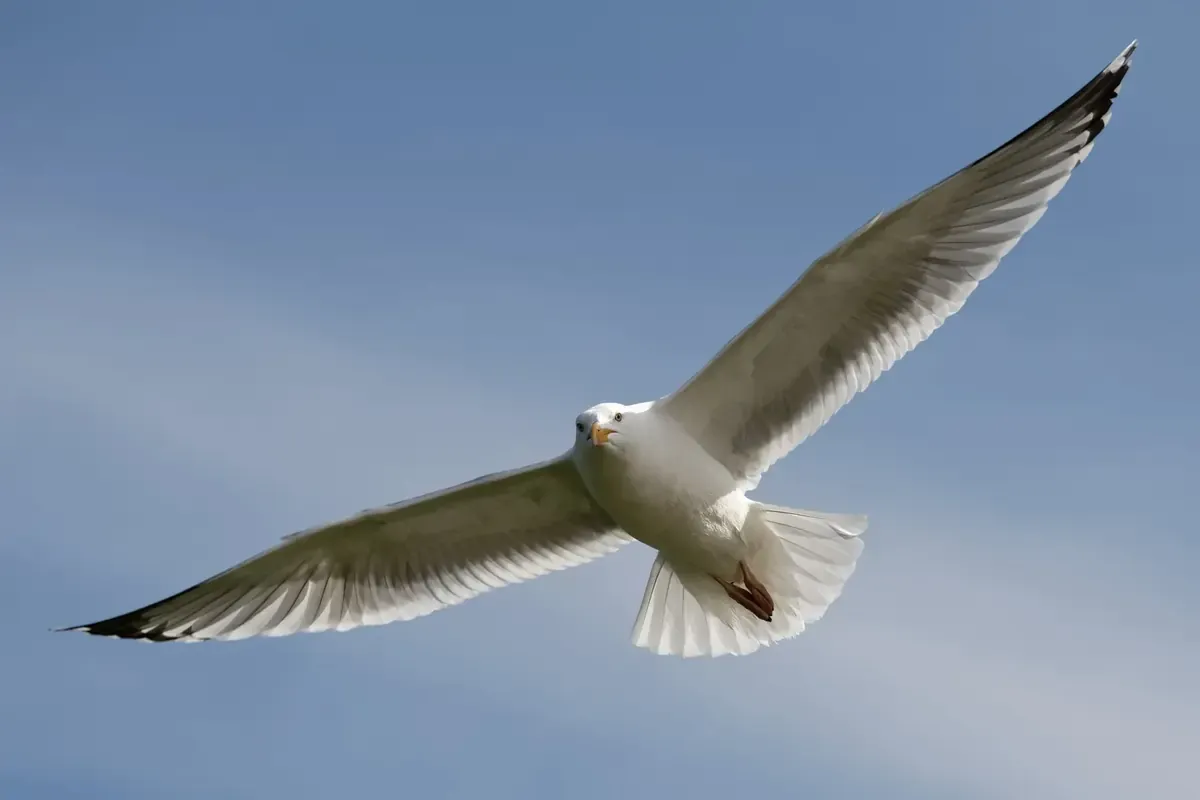
The Caspian Gull is slimmer, with a smaller head, longer wings and longer, yellowish legs instead of pink ones.
-
Larus smithsonianus
Young American Herring Gulls differ from young European Herring Gulls by their darker plumage and all-black tail.
More in the Laridae family
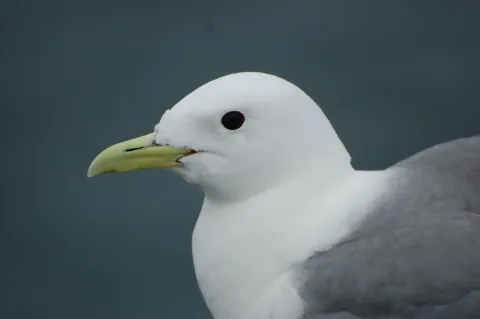
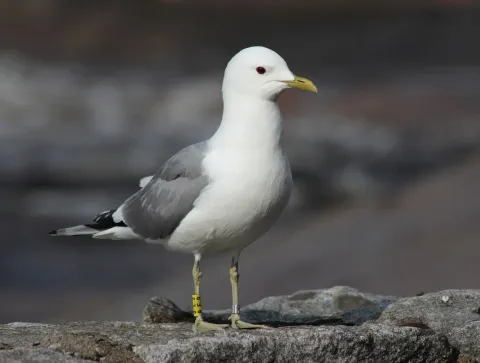
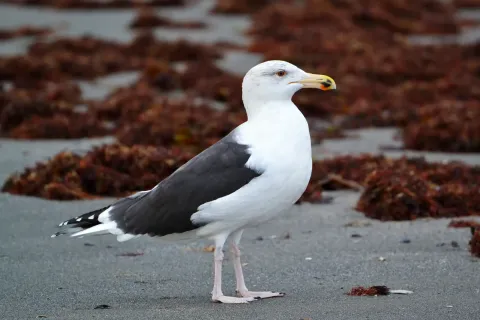
Photo: Marie-Lan Taÿ Pamart, CC BY 4.0, via Wikimedia Commons, resized

Photo: Marie-Lan Taÿ Pamart, CC BY 4.0, via Wikimedia Commons, resized

The text was written with AI from facts in Wikipedia and may be shared under CC BY-SA 4.0. Sources: Swedish article, English article, German article
Report data: Artportalen (SLU Swedish Species Information Centre) via GBIF.org, 2016 to 2025. Red list: The Swedish Red List 2025, SLU Swedish Species Information Centre via GBIF.org.
Checked against sources on . How we make these pages