Laridae
Great Black-backed Gull
Larus marinus
- Scientific name
- Larus marinus
- Family
- Laridae
- In Sweden
- Partial migrant, breeds here
- Size
- 61 to 74 cm
- Swedish Red List 2025
- Endangered (EN)
- Global Red List (IUCN)
- Least concern (LC)
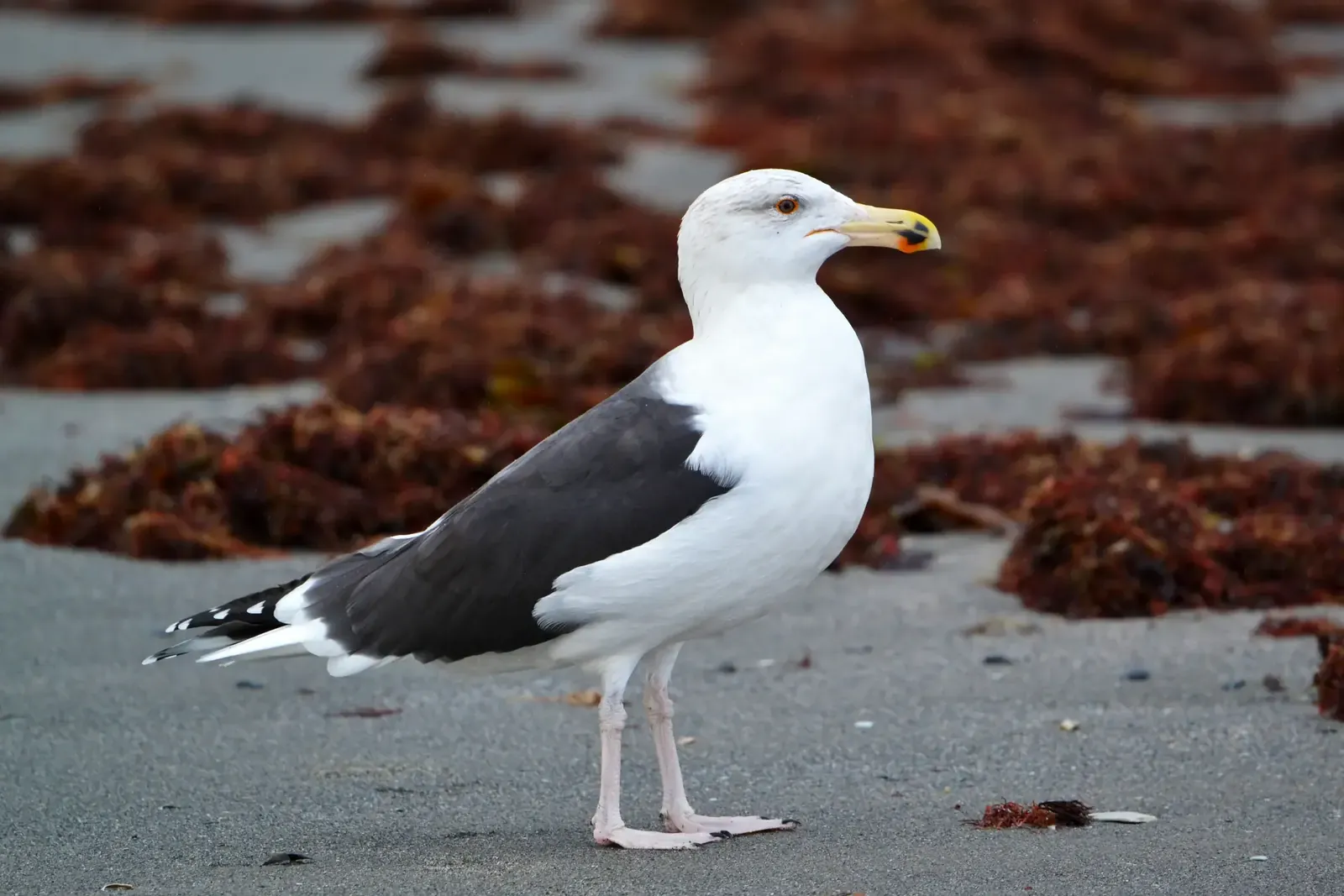
The Great Black-backed Gull is a large, broad-winged and heavily built gull with a thick neck and a very heavy bill. In Sweden it breeds along the coasts and prefers the outer islets and skerries.
How to recognise it
- Adults have blackish upperparts and white underparts, breast, head, tail and rump
- Yellow bill with a clear red spot at the gonys, red orbital ring and yellow iris
- Large white spots on the flight feathers show when the bird is perched
- Sexes look alike, but females are often only as large as Herring Gulls
Call and song
The main call is a deep, often hoarse and sometimes loud "kau" or "krau". It resembles the calls of Lesser Black-backed and Herring Gulls but is much darker, typically hoarse and gravelly. The laughing display call is shorter and slower than in Lesser Black-backed and Herring Gulls.
Where and when
A partial migrant, it breeds on Swedish coasts, preferably on outer islets and skerries. Inland it is found less often, but it breeds by the larger lakes. In winter it occurs at sea and along the coasts, as long as there is open water. It is reported all year and from all 21 counties. The Swedish Red List 2025 lists it as Endangered (EN).
When is it seen in Sweden?
Where is it reported?
- No reports
- Small share
- Medium share
- Large share
Reported all year round. Reported from all 21 counties.
Food and behaviour
It feeds mainly on fish caught alive, but adapts its diet to conditions. It can kill weakened seabirds such as auks, smaller gulls and shearwaters. It is shy and watchful, and more of a loner than many other gulls. In flight it looks calm, with slow wingbeats.
Easily confused with
-
Lesser Black-backed Gull
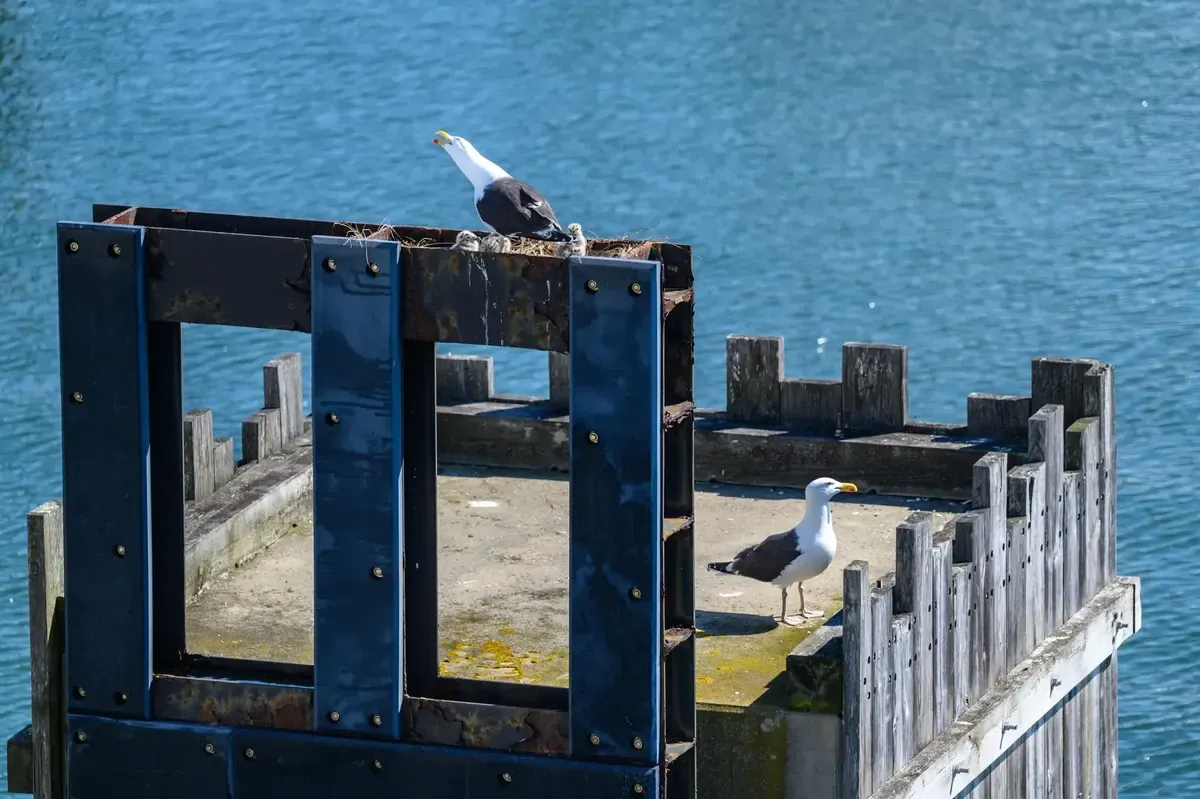
The Great Black-backed Gull has greyish pink legs at all ages, while the adult Lesser Black-backed Gull has yellow legs.
-
Young Great Black-backed Gulls are clearly chequered black and white, not dull greyish like young Herring Gulls.
More in the Laridae family
Photo: Andrew C, CC BY 2.0, via Wikimedia Commons, resized

Photo: Gordon Leggett, CC BY 4.0, via Wikimedia Commons, resized

The text was written with AI from facts in Wikipedia and may be shared under CC BY-SA 4.0. Sources: Swedish article, English article, German article
Report data: Artportalen (SLU Swedish Species Information Centre) via GBIF.org, 2016 to 2025. Red list: The Swedish Red List 2025, SLU Swedish Species Information Centre via GBIF.org.
Checked against sources on . How we make these pages