Paridae
Coal Tit
Periparus ater
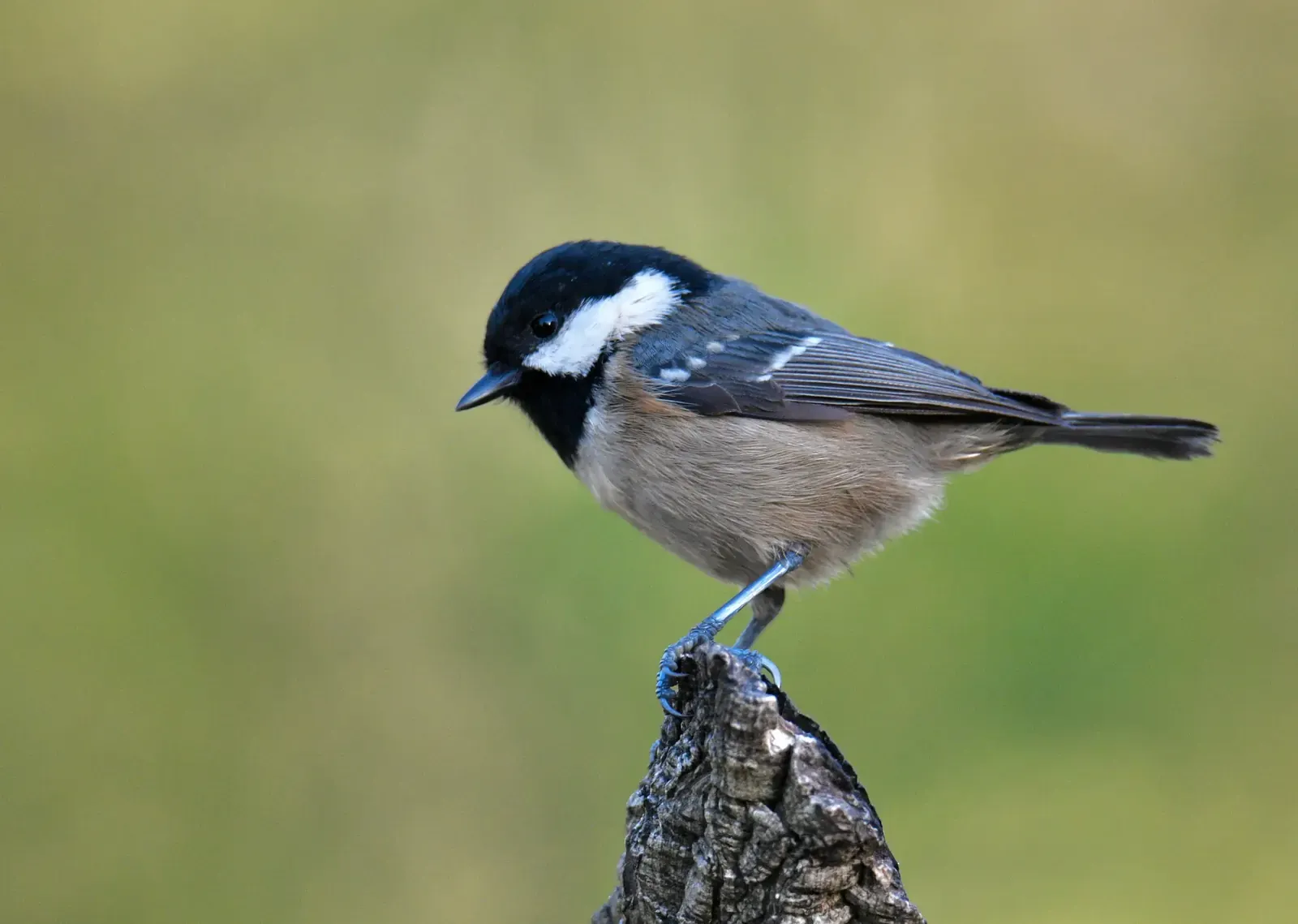
- Scientific name
- Periparus ater
- Family
- Paridae
- Swedish Red List 2025
- Not red-listed
- Global Red List (IUCN)
- Least concern (LC)
The Coal Tit is the smallest tit in Sweden and prefers conifer forest. It occurs throughout Sweden except the far north and often visits gardens for sunflower seeds.
How to recognise it
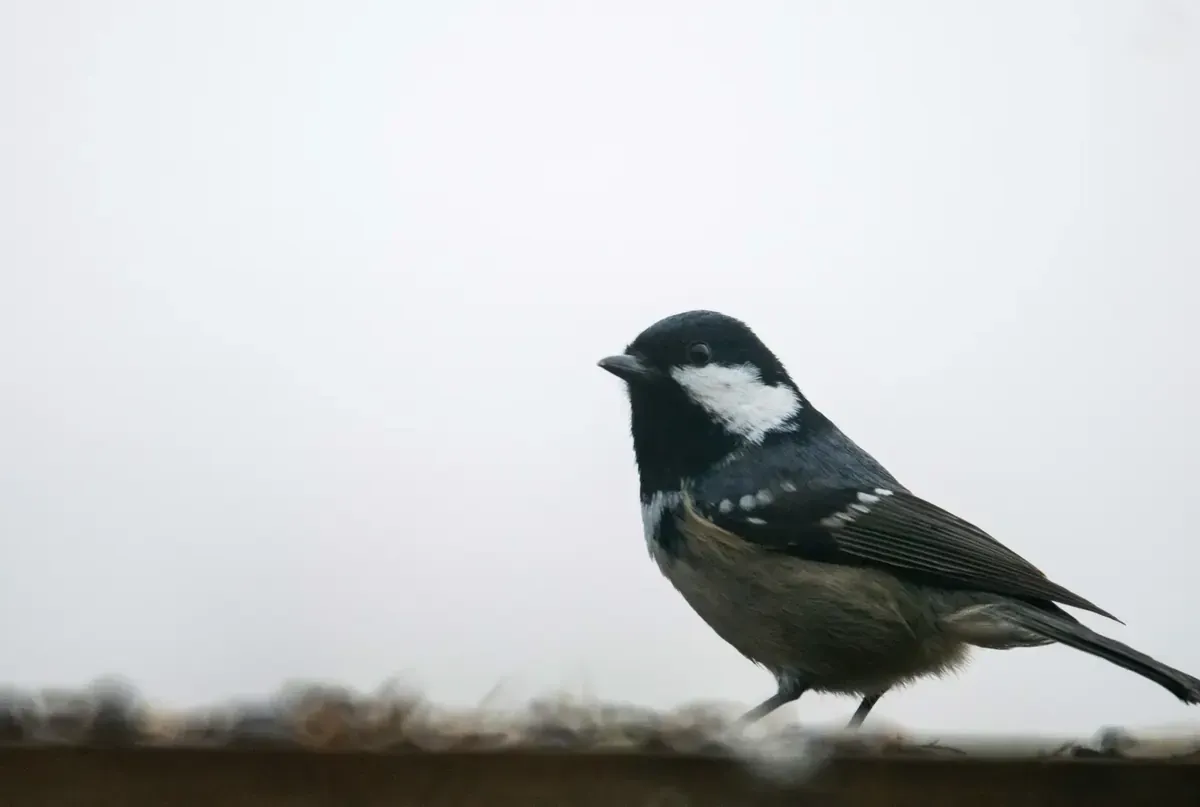
- Black head with a clear white nape patch, whitish cheeks and a black bib
- Bluish black back and two white wing bars
- Whitish underparts turning beige to rusty brown on the flanks, short tail
- Male and female look alike, young birds are duller with a yellowish nape patch and cheeks
Call and song
The call is a tuii or sii. The song is a shrill, repeated if-he, if-he, if-he, faster and higher than the Great Tit's, heard mostly from January to June and in autumn as well. Foraging flocks keep in touch with constant short dee or see-see calls.
Where and when
The Coal Tit occurs throughout Sweden except the far north and is reported from all 21 counties. It is reported most in December to February. It keeps to conifer forest, and in mixed woodland it seeks out the conifers. The Swedish population has fallen by 32 to 49 percent over 30 years but has been roughly stable for the last ten years.
When is it seen in Sweden?
Where is it reported?
- No reports
- Small share
- Medium share
- Large share
Reported most in December to February. Reported from all 21 counties.
Food and behaviour
The Coal Tit eats seeds, insects and spiders and visits gardens for food, especially sunflower seeds. It often stays high in the trees and perches on tree trunks more often than other tits, where its small hops recall a treecreeper. In winter it forms small flocks with other tit species and joins redpolls and siskins in alder and birch.
More in the Paridae family
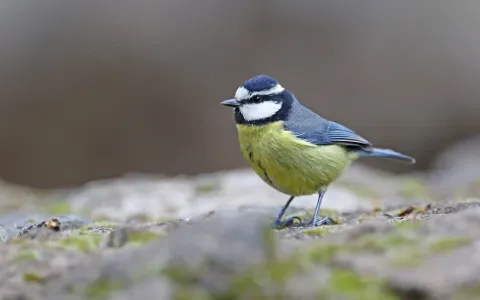
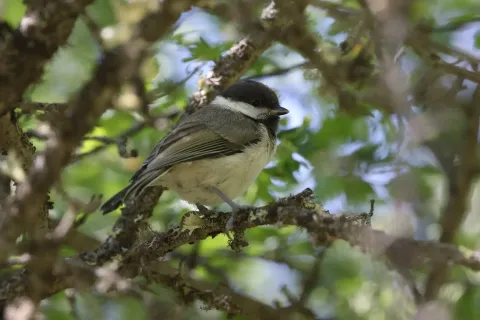
Photo: Luiz Lapa, CC BY 2.0, via Wikimedia Commons, resized

Photo: TRinaud, CC BY 4.0, via Wikimedia Commons, resized

The text was written with AI from facts in Wikipedia and may be shared under CC BY-SA 4.0. Sources: Swedish article, English article, German article
Report data: Artportalen (SLU Swedish Species Information Centre) via GBIF.org, 2016 to 2025. Red list: The Swedish Red List 2025, SLU Swedish Species Information Centre via GBIF.org.
Checked against sources on . How we make these pages