Emberizidae
Common Reed Bunting
Emberiza schoeniclus
- Scientific name
- Emberiza schoeniclus
- Family
- Emberizidae
- In Sweden
- Partial migrant, breeds here
- Size
- 13.5 to 15.5 cm
- Swedish Red List 2025
- Not red-listed
- Global Red List (IUCN)
- Least concern (LC)
The Common Reed Bunting is a medium-sized bunting that breeds in Sweden. It favours scrub and reed beds by lakes, ponds and streams, and marshes with plenty of bushes.
How to recognise it
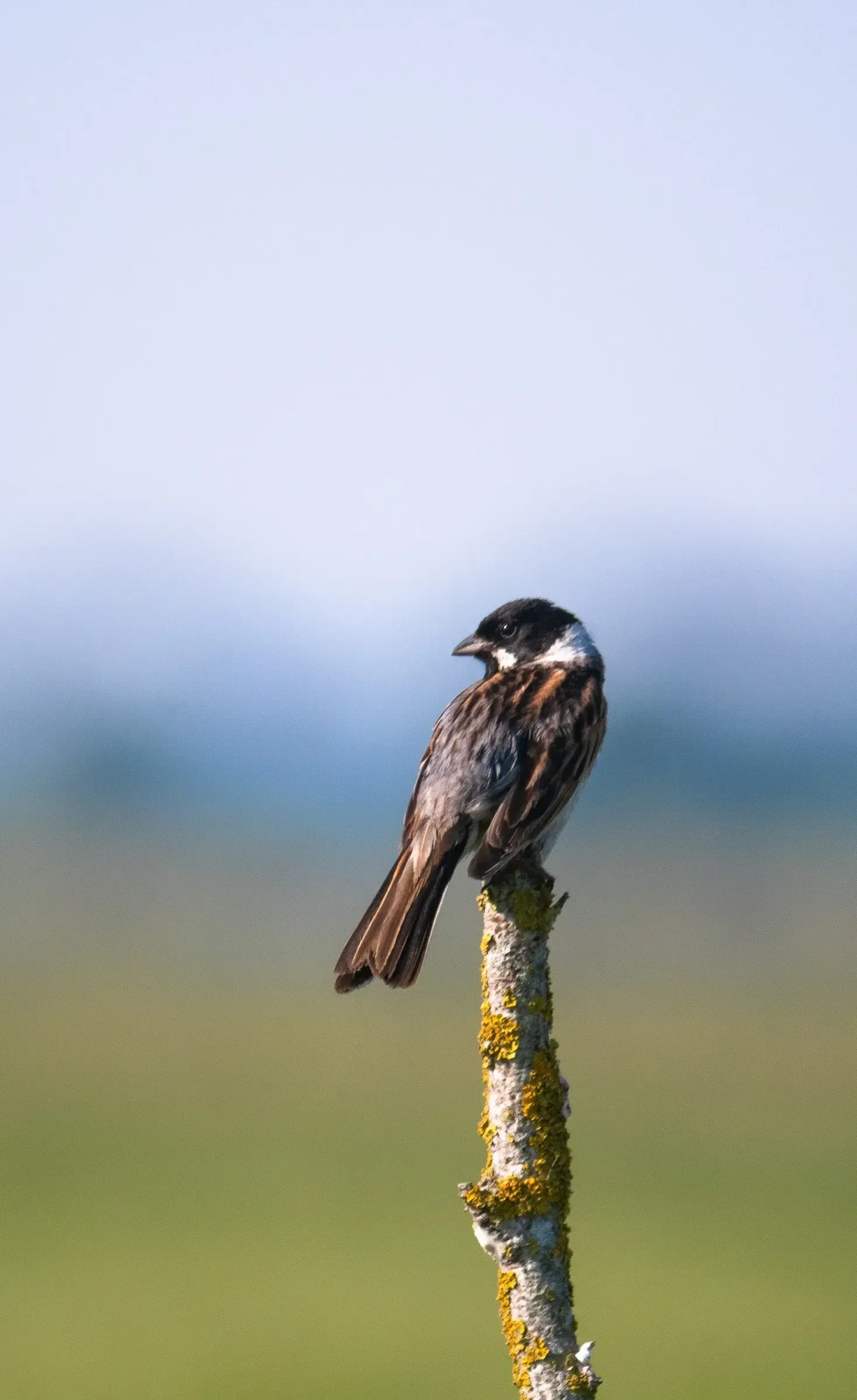
- Breeding male has a black head, white collar and white moustachial stripe
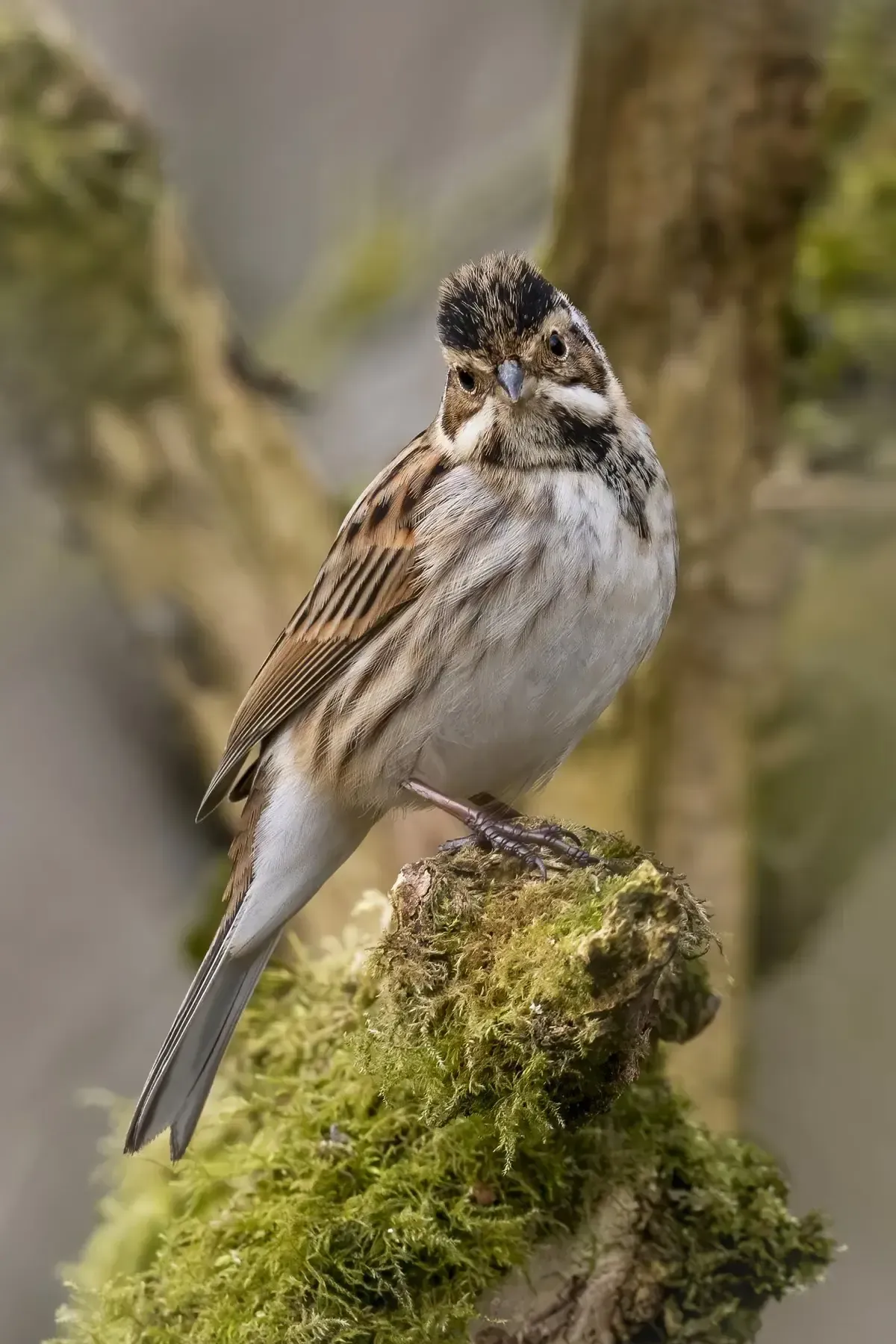
- Female has an unspotted buff-white throat with black throat-side stripes, young birds look like her
- Mostly brown and buff-white plumage with dark streaking and white tail sides
- Rufous lesser wing coverts and a dark, usually small bill
Call and song
The song is a fairly monotonous, repeated "zripp zripp zryy". Calls include a soft "siy" and a rough "bzy". The male sings from a raised perch, often clinging at an angle to a stem with his tail spread.
Where and when
It is a partial migrant that breeds in Sweden. It arrives around March to April and leaves for the Mediterranean countries in October to November. It is reported most in March to June and September, and from all 21 counties. The highest density is in the mountains, where it is numerous in mountain birch forest. Locally, very dense populations occur at lowland lakes in southern and central Sweden.
When is it seen in Sweden?
Where is it reported?
- No reports
- Small share
- Medium share
- Large share
Reported most in March to June and September. Reported from all 21 counties.
Food and behaviour
In summer it eats insects, and seeds the rest of the year. Like other seed-eaters, it migrates by day. During courtship the male sometimes raises his white collar. To lure predators away from the nest, it flutters along the ground as if it had an injured wing.
More songbirds
Photo: TRinaud, CC BY 4.0, via Wikimedia Commons, resized

Photo: caroline legg, CC BY 2.0, via Wikimedia Commons, resized

The text was written with AI from facts in Wikipedia and may be shared under CC BY-SA 4.0. Sources: Swedish article, English article, German article
Report data: Artportalen (SLU Swedish Species Information Centre) via GBIF.org, 2016 to 2025. Red list: The Swedish Red List 2025, SLU Swedish Species Information Centre via GBIF.org.
Checked against sources on . How we make these pages