Bombycillidae
Bohemian Waxwing
Bombycilla garrulus
- Scientific name
- Bombycilla garrulus
- Family
- Bombycillidae
- Size
- 18 to 21 cm
- Swedish Red List 2025
- Not red-listed
- Global Red List (IUCN)
- Least concern (LC)
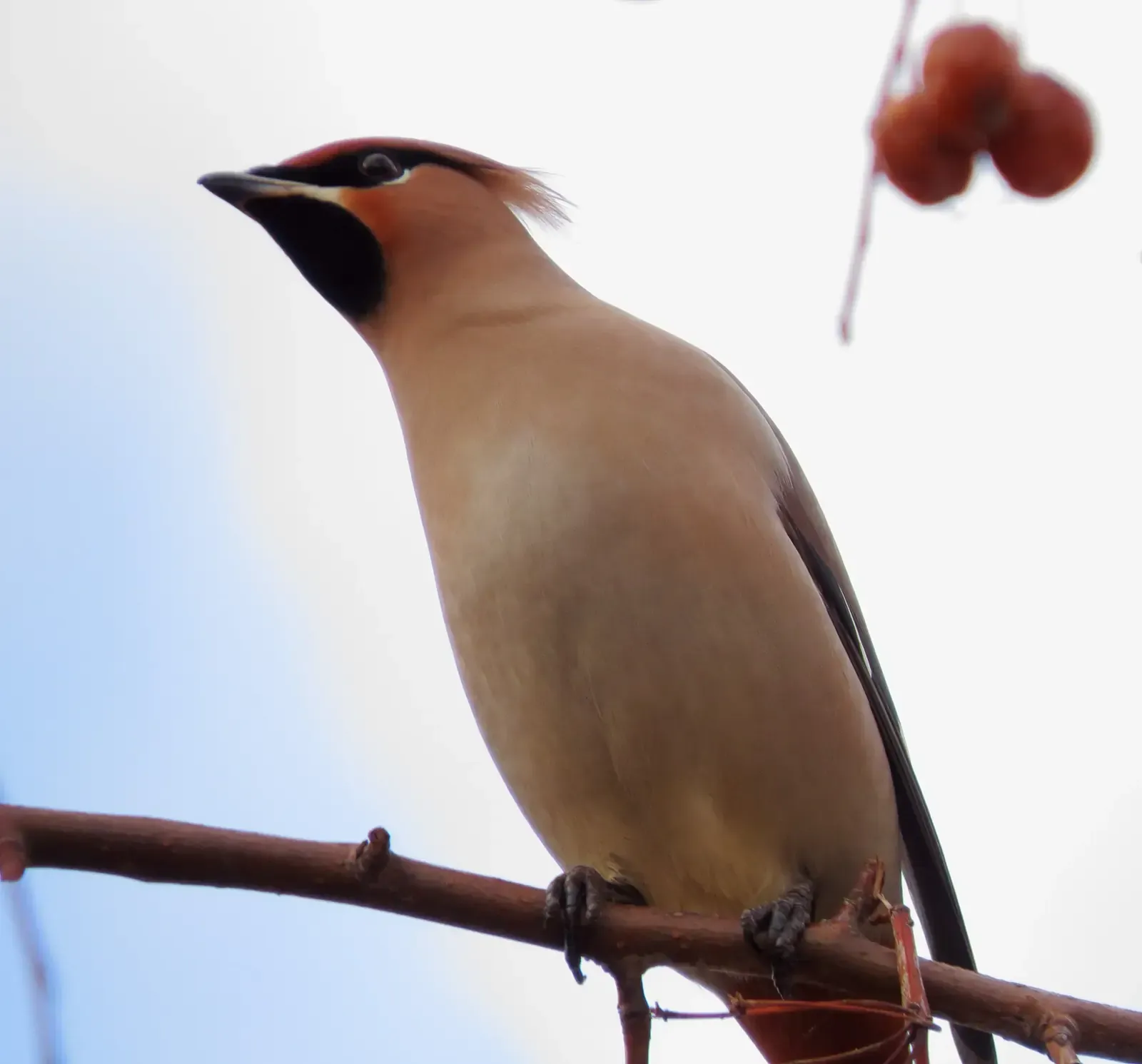
The Bohemian Waxwing is a compact, reddish-grey bird with a very long crest on its head. In winter it roams in large flocks and comes into towns and gardens looking for food.
How to recognise it
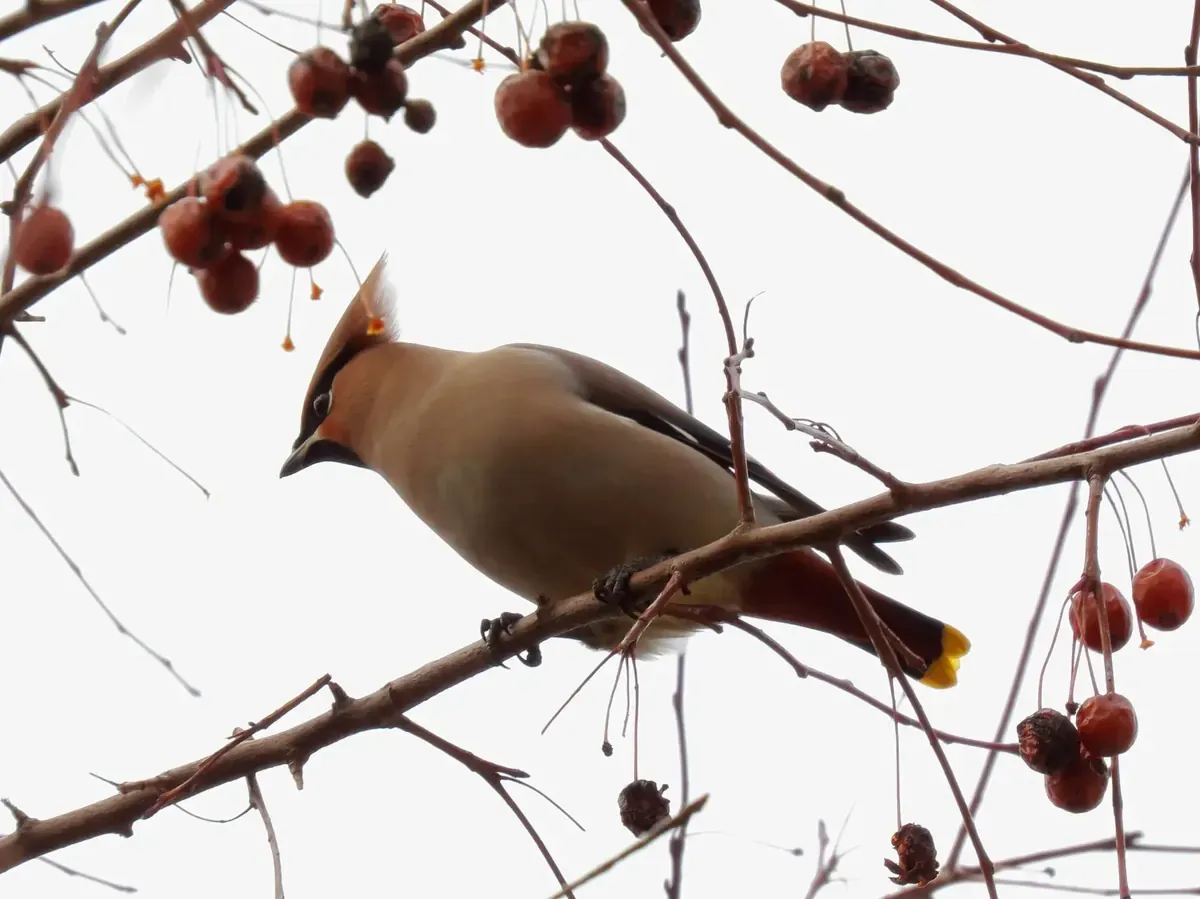
- Reddish-grey with a long crest, black throat and a black band through each eye
- The size of a Starling but looks bigger, with a compact body and large head
- Bright yellow tail band with a broad black band above, sealing-wax red tips on the secondaries
- The female has a narrower yellow tail band and a less sharply defined black throat
Call and song
The call is a high trill, "sirrrr", which can sound like a jingling bunch of keys. It is often heard from flocks flying over and is described as a tinkling of silver bells. When a flock takes off or lands, the wings make a rattling sound that can be heard 30 metres away.
Where and when
It breeds in older conifer forest, mainly in the north of Norrland and also along the coasts of Norrbotten and Västerbotten. Outside the breeding season it can be seen along roads, in parks and gardens, and along hedges and woodland edges. It is reported most in November and December and rarely from April to September. Its share of all bird reports is highest in Västerbotten, Norrbotten and Västernorrland.
When is it seen in Sweden?
Where is it reported?
- No reports
- Small share
- Medium share
- Large share
Reported most in November and December. Rarely reported in April to September. Its share of all bird reports is highest in Västerbotten, Norrbotten and Västernorrland.
Food and behaviour
In the breeding season it eats insects, mainly caught by flying out from an open perch. In winter it eats mostly berries and fruit, with rowan berries a favourite. In winter it roams in large flocks and moves south when berries are scarce in the breeding area. It can then be very tame and comes into towns and gardens for food.
More songbirds
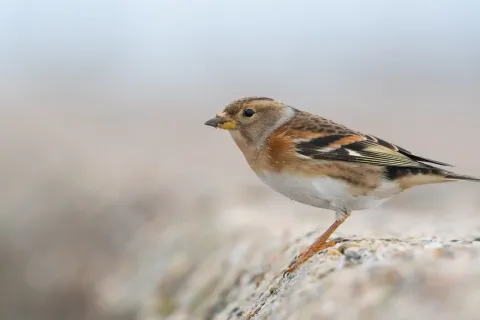
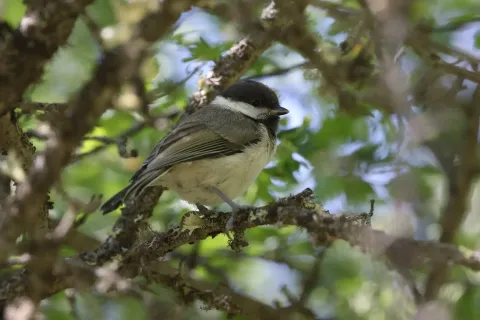
Photo: Аимаина хикари, CC0, via Wikimedia Commons, resized

Photo: Аимаина хикари, CC0, via Wikimedia Commons, resized

The text was written with AI from facts in Wikipedia and may be shared under CC BY-SA 4.0. Sources: Swedish article, English article, German article
Report data: Artportalen (SLU Swedish Species Information Centre) via GBIF.org, 2016 to 2025. Red list: The Swedish Red List 2025, SLU Swedish Species Information Centre via GBIF.org.
Checked against sources on . How we make these pages