Columbidae
Common Wood Pigeon
Columba palumbus
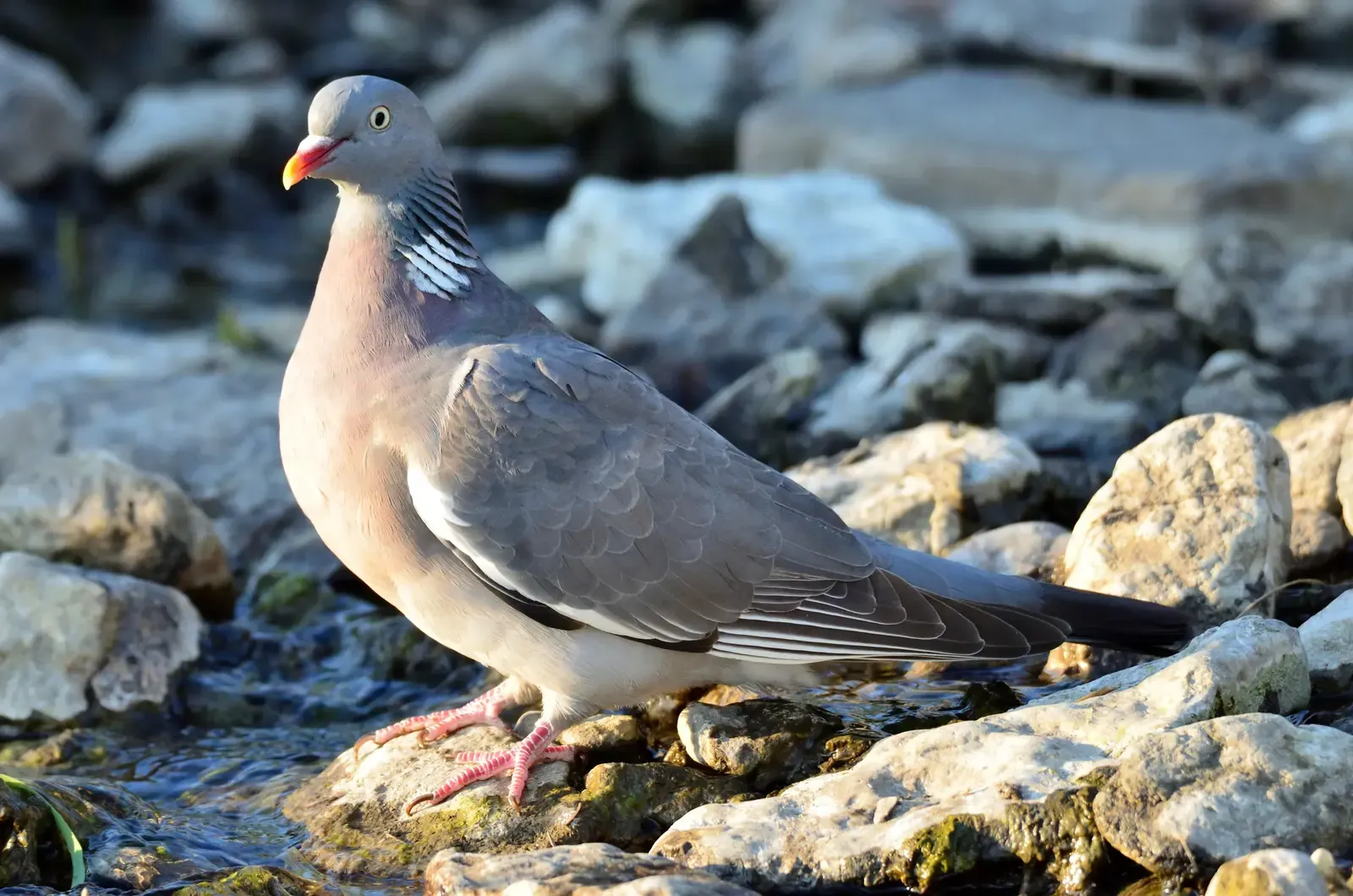
- Scientific name
- Columba palumbus
- Family
- Columbidae
- In Sweden
- Partial migrant, breeds here
- Size
- Up to 45 cm
- Swedish Red List 2025
- Not red-listed
- Global Red List (IUCN)
- Least concern (LC)
The Common Wood Pigeon is Europe's largest pigeon and lives in most kinds of woodland. In recent years it has moved into parks and gardens.
How to recognise it
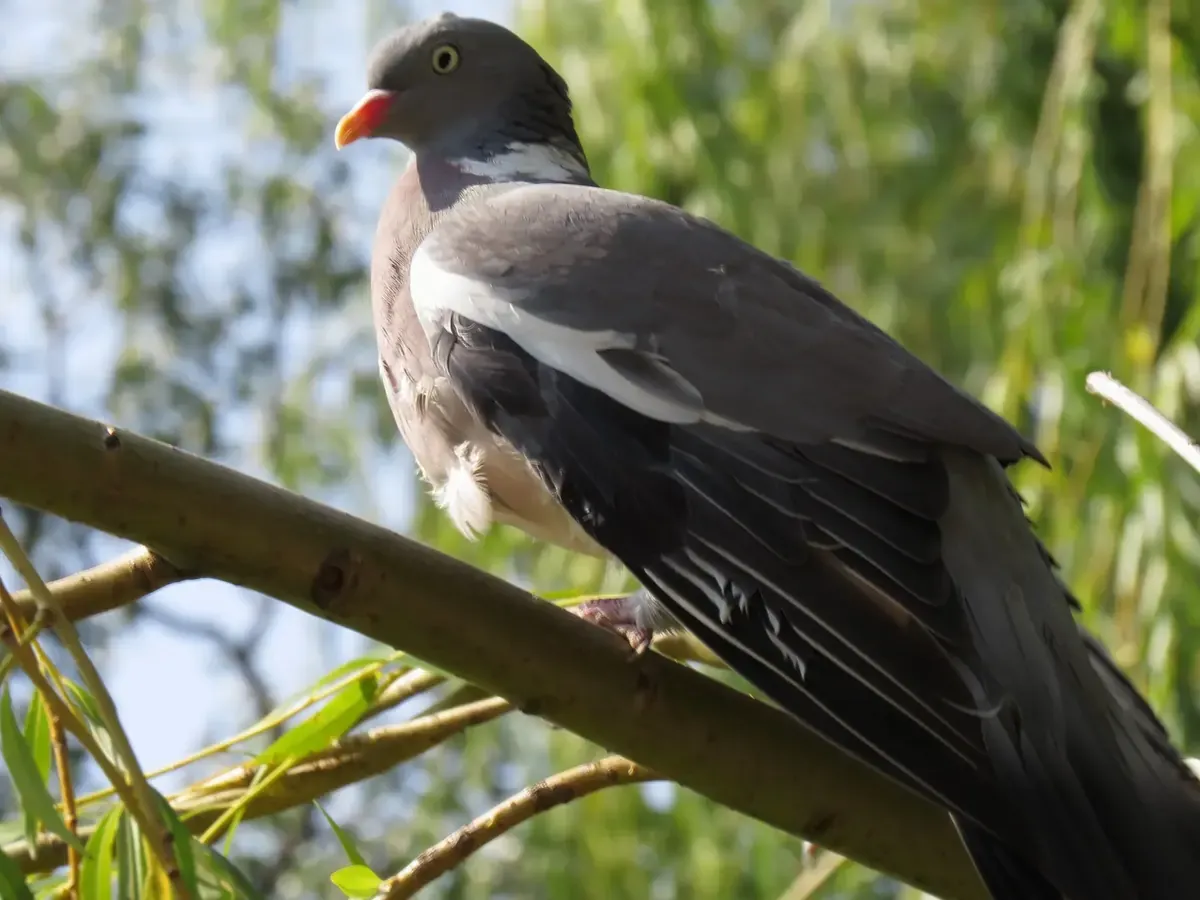
- Mostly grey plumage with a blue-green sheen on head and neck, pink breast
- White patches on the neck sides but no true ring, missing in young birds
- White bars across the upper wing show clearly in flight
- Sexes look alike, but females show less red on the breast and slightly smaller neck patches
Call and song
The song is a rather muffled five-syllable cooing, stressed on the first syllable. The phrase is repeated about three to five times without a pause and ends with a 'ko'. When it takes off, the wings make an intense clattering sound that serves as a warning.
Where and when
The Common Wood Pigeon is a partial migrant that breeds in Sweden. It is common in forest and farmland from Skåne to Norrbotten and southern Lapland, and is reported from all 21 counties. Autumn migration peaks in October, when large numbers leave Sweden via Falsterbo. It is reported most in March and April. It is not red-listed in the Swedish Red List 2025.
When is it seen in Sweden?
Where is it reported?
- No reports
- Small share
- Medium share
- Large share
Reported most in March and April. Reported from all 21 counties.
Food and behaviour
Food is almost all plant matter: grain, fruit, peas, seeds, berries, shoots and buds, with beechnuts and acorns popular in winter. It usually feeds in flocks on open fields and farmland, and in winter often visits bird tables. Outside the breeding season it is often seen in larger flocks. In display flight it climbs steeply with loud wing clapping, then glides on stiff wings with its tail spread.
More in the Columbidae family
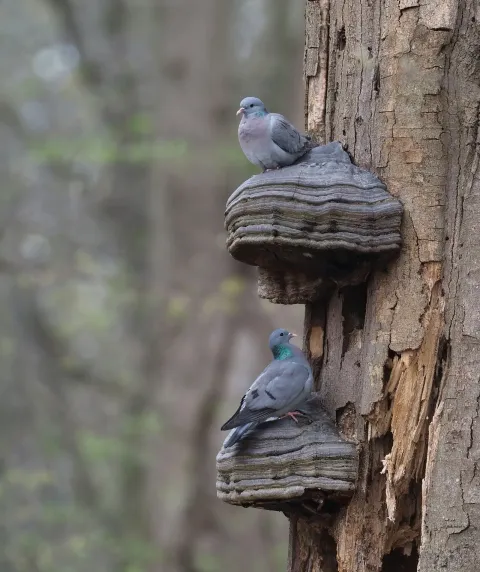
Photo: Ott Rebane, CC BY 2.0, via Wikimedia Commons, resized

Photo: Аимаина хикари, CC0, via Wikimedia Commons, resized

The text was written with AI from facts in Wikipedia and may be shared under CC BY-SA 4.0. Sources: Swedish article, English article, German article
Report data: Artportalen (SLU Swedish Species Information Centre) via GBIF.org, 2016 to 2025. Red list: The Swedish Red List 2025, SLU Swedish Species Information Centre via GBIF.org.
Checked against sources on . How we make these pages