Columbidae
Stock Dove
Columba oenas
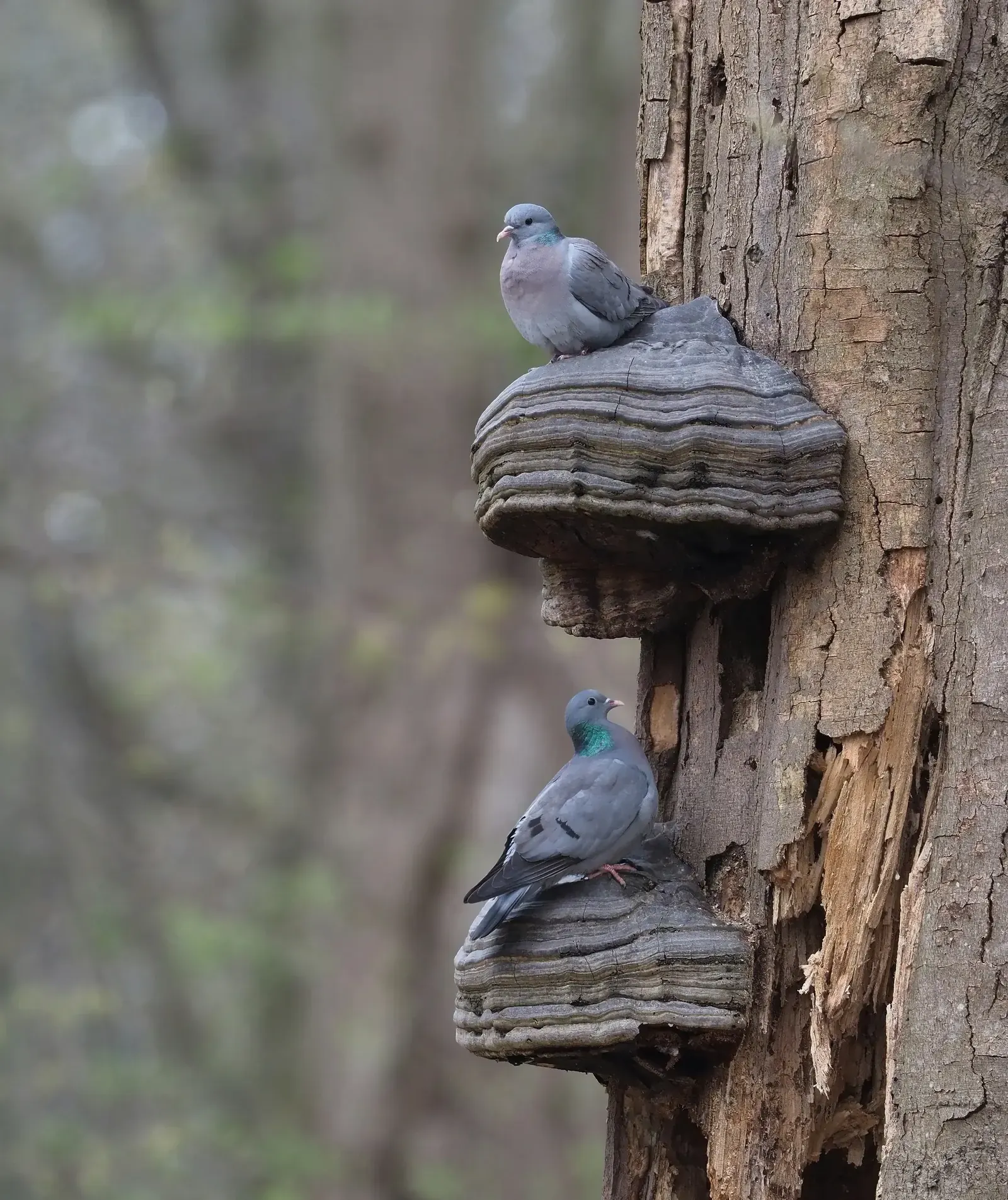
- Scientific name
- Columba oenas
- Family
- Columbidae
- In Sweden
- Partial migrant, breeds here
- Size
- 30 to 35 cm
- Swedish Red List 2025
- Not red-listed
- Global Red List (IUCN)
- Least concern (LC)
The Stock Dove is a blue-grey dove that breeds in larger deciduous and mixed woods and on coasts where cliffs offer nest sites. It feeds mainly on open fields and farmland.
How to recognise it
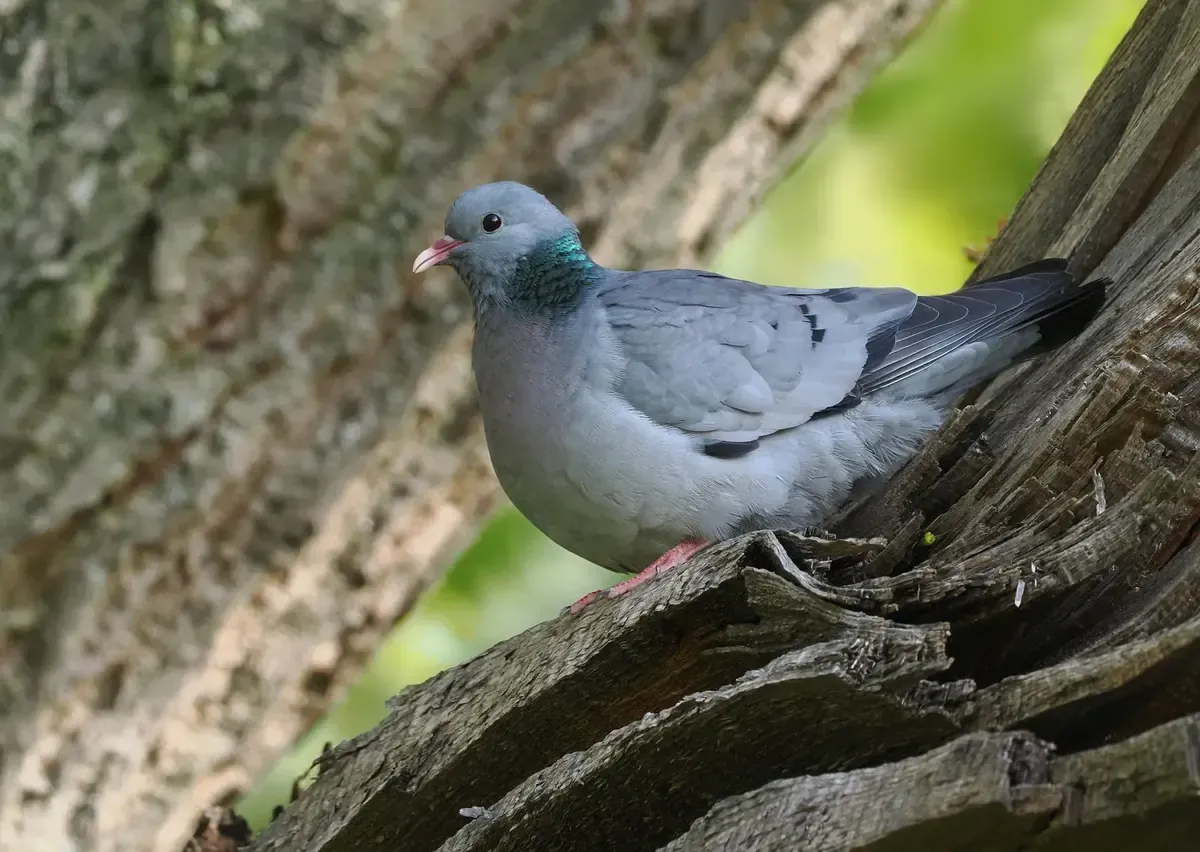
- Blue-grey with green neck sheen, greyish purple-red foreneck, white underparts and pink bill with yellow tip
- Two short dark wing bars, grey rump and a broad dark band at the tail tip
- In flight a dark trailing edge and dark grey underwing, not white as in Rock Dove
- Sexes look alike, the male slightly larger; juveniles lack the glossy neck patch
Call and song
The call is a short "hu", often repeated. This short, deep, grunting call is clearly different from the modulated cooing of the Woodpigeon.
Where and when
In Sweden the Stock Dove breeds sparsely from Skåne to central Värmland, south-eastern Dalarna and Gästrikland, and is much commoner in the south and east than in the west. It returns in March and April and leaves in September and October for southern France and northern Spain, though a few winter in southern Sweden. It is reported most in March, rarely in December, and from all 21 counties.
When is it seen in Sweden?
Where is it reported?
- No reports
- Small share
- Medium share
- Large share
Reported most in March. Rarely reported in December. Reported from all 21 counties.
Food and behaviour
It eats seeds such as rape and arable weeds, along with berries, grain and peas, and feeds mainly on open fields and farmland. It is fairly shy and usually seen in flocks of a few to a few dozen birds, often with Woodpigeons. The nest is usually in a tree hole, and in the circling spring flight the wings crack like a whip.
More in the Columbidae family
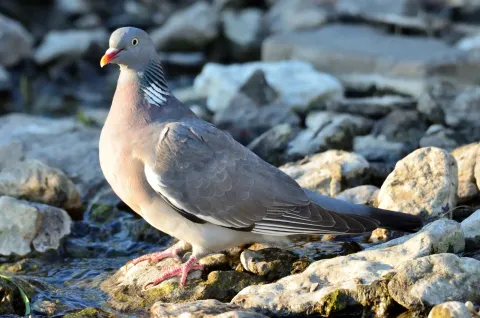
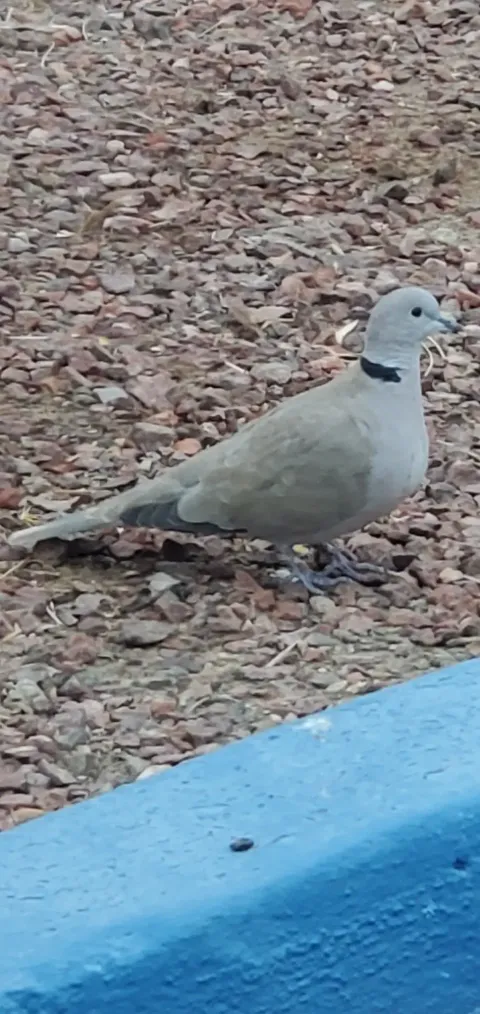
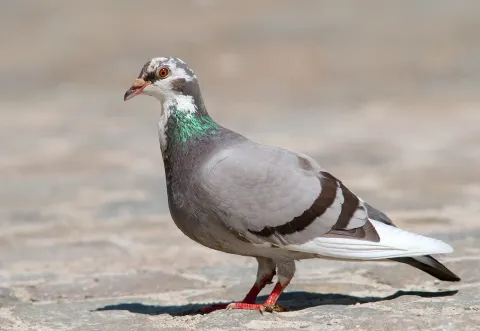
Photo: Frank Vassen, CC BY 2.0, via Wikimedia Commons, resized

Photo: Frank Vassen, CC BY 2.0, via Wikimedia Commons, resized

The text was written with AI from facts in Wikipedia and may be shared under CC BY-SA 4.0. Sources: Swedish article, English article, German article
Report data: Artportalen (SLU Swedish Species Information Centre) via GBIF.org, 2016 to 2025. Red list: The Swedish Red List 2025, SLU Swedish Species Information Centre via GBIF.org.
Checked against sources on . How we make these pages