Columbidae
Eurasian Collared Dove
Streptopelia decaocto
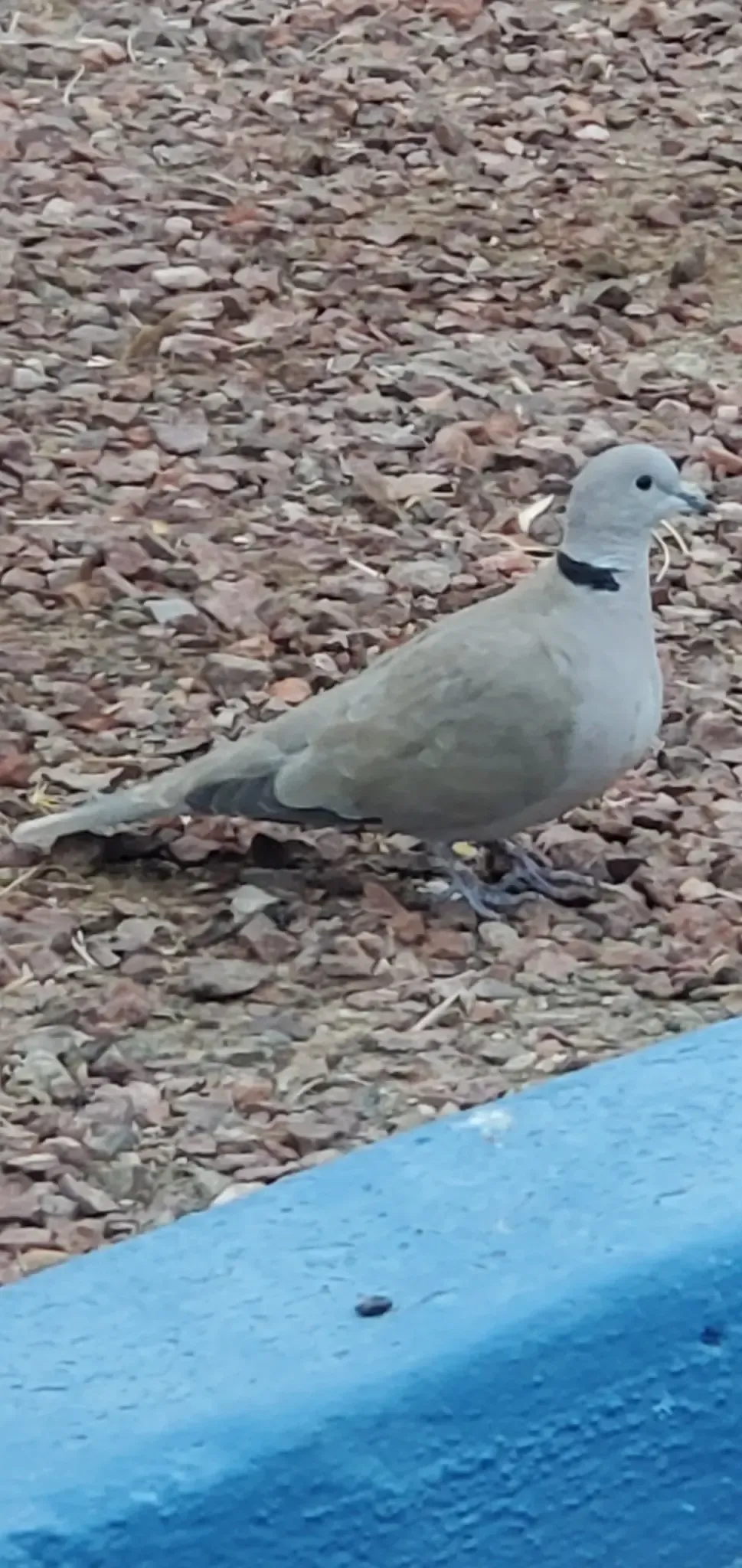
- Scientific name
- Streptopelia decaocto
- Family
- Columbidae
- In Sweden
- Resident all year
- Size
- 29 to 33 cm
- Swedish Red List 2025
- Near threatened (NT)
- Global Red List (IUCN)
- Least concern (LC)
The Eurasian Collared Dove is a small, slender dove and a resident bird in Sweden. It is mainly found in towns with older residential areas of detached houses, as well as in smaller communities and on farms.
How to recognise it
- Mostly pale beige-grey with a slightly darker brown back and lesser wing coverts
- Black, white-edged half-collar on the nape, sexes look alike, juveniles have a weak collar
- Long tail with a broad white edge, the central tail feathers are beige
- Red iris with a narrow white eye-ring, dark grey bill and short reddish-pink legs
Call and song
The song is a monotonous do doo-do, with a drawn-out, stressed second note and a lower third note. In flight, especially just before landing, it gives a hoarse, harsh call.
Where and when
It is resident and reported all year round. It lives in towns and villages in southern and central Sweden and locally along the Norrland coast north to Luleå. It favours leafy gardens, parks and avenues with tall, old trees. Its share of all bird reports is highest in Gotland, Kalmar and Blekinge. It is listed as Near Threatened (NT) on the 2025 Swedish Red List.
When is it seen in Sweden?
Where is it reported?
- No reports
- Small share
- Medium share
- Large share
Reported all year round. Its share of all bird reports is highest in Gotland, Kalmar and Blekinge.
Food and behaviour
It eats mainly seeds, sprouts and green leaves, and in towns scraps such as bread. Large flocks can gather where food is plentiful, for example grain. The male's display flight is a fast, almost vertical climb followed by a long, circling glide downwards. The pair builds a simple twig nest in a tree or bush, sometimes on a building, and usually lays two to four clutches.
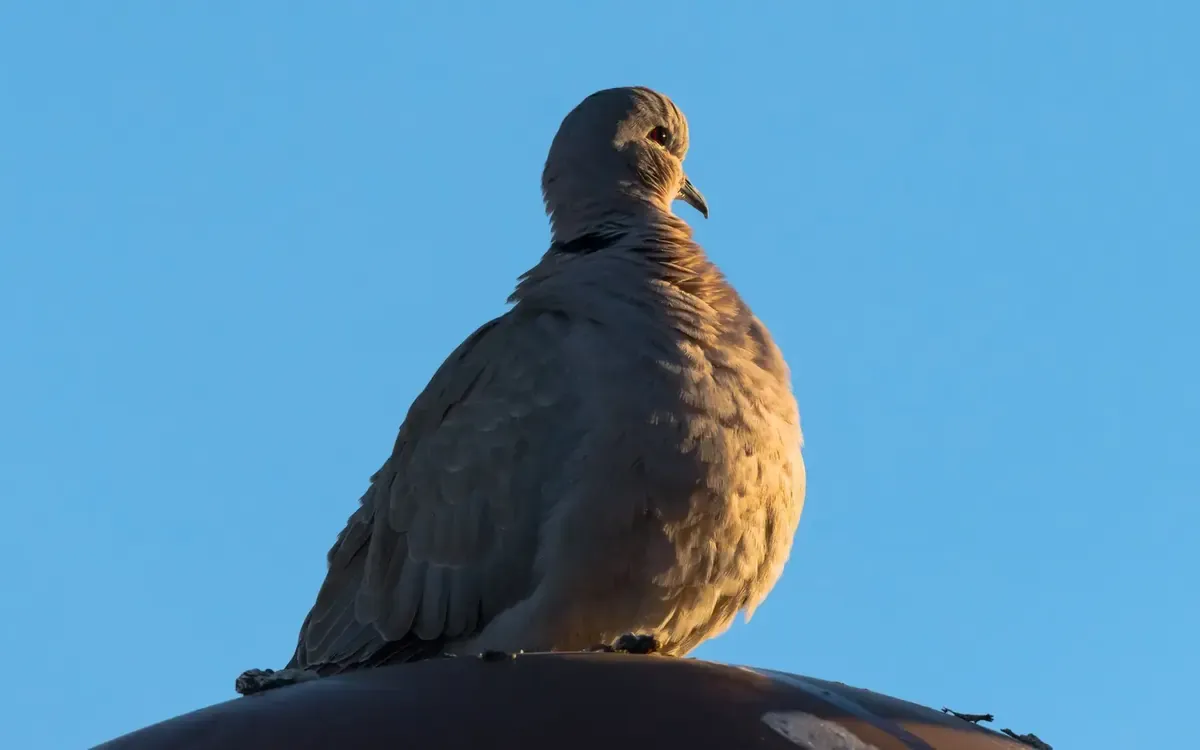
Easily confused with
-
S. xanthocycla
S. xanthocycla is generally smaller and darker than the Eurasian Collared Dove and has a yellower ring around the eye.
More in the Columbidae family
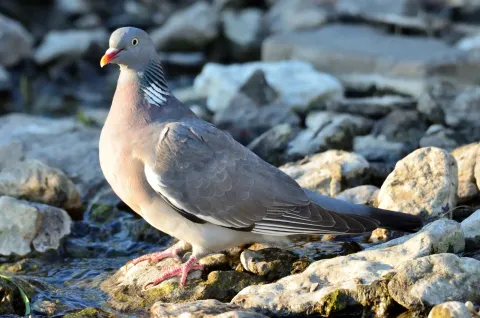
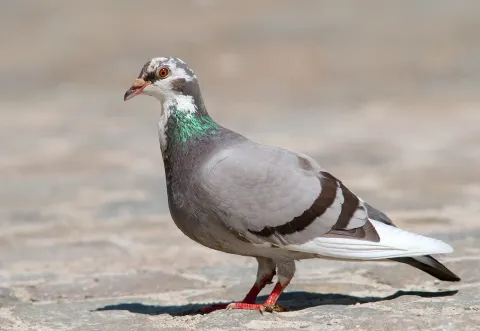
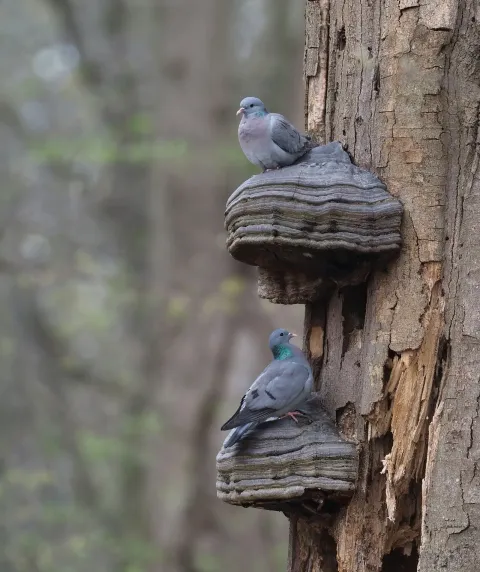
Photo: Dan Horowitz, CC0, via Wikimedia Commons, resized

Photo: Christian Ferrer, CC BY 4.0, via Wikimedia Commons, resized

The text was written with AI from facts in Wikipedia and may be shared under CC BY-SA 4.0. Sources: Swedish article, English article, German article
Report data: Artportalen (SLU Swedish Species Information Centre) via GBIF.org, 2016 to 2025. Red list: The Swedish Red List 2025, SLU Swedish Species Information Centre via GBIF.org.
Checked against sources on . How we make these pages