Laniidae
Great Grey Shrike
Lanius excubitor
- Scientific name
- Lanius excubitor
- Family
- Laniidae
- In Sweden
- Partial migrant, breeds here
- Size
- 22 to 26 cm
- Swedish Red List 2025
- Not red-listed
- Global Red List (IUCN)
- Least concern (LC)
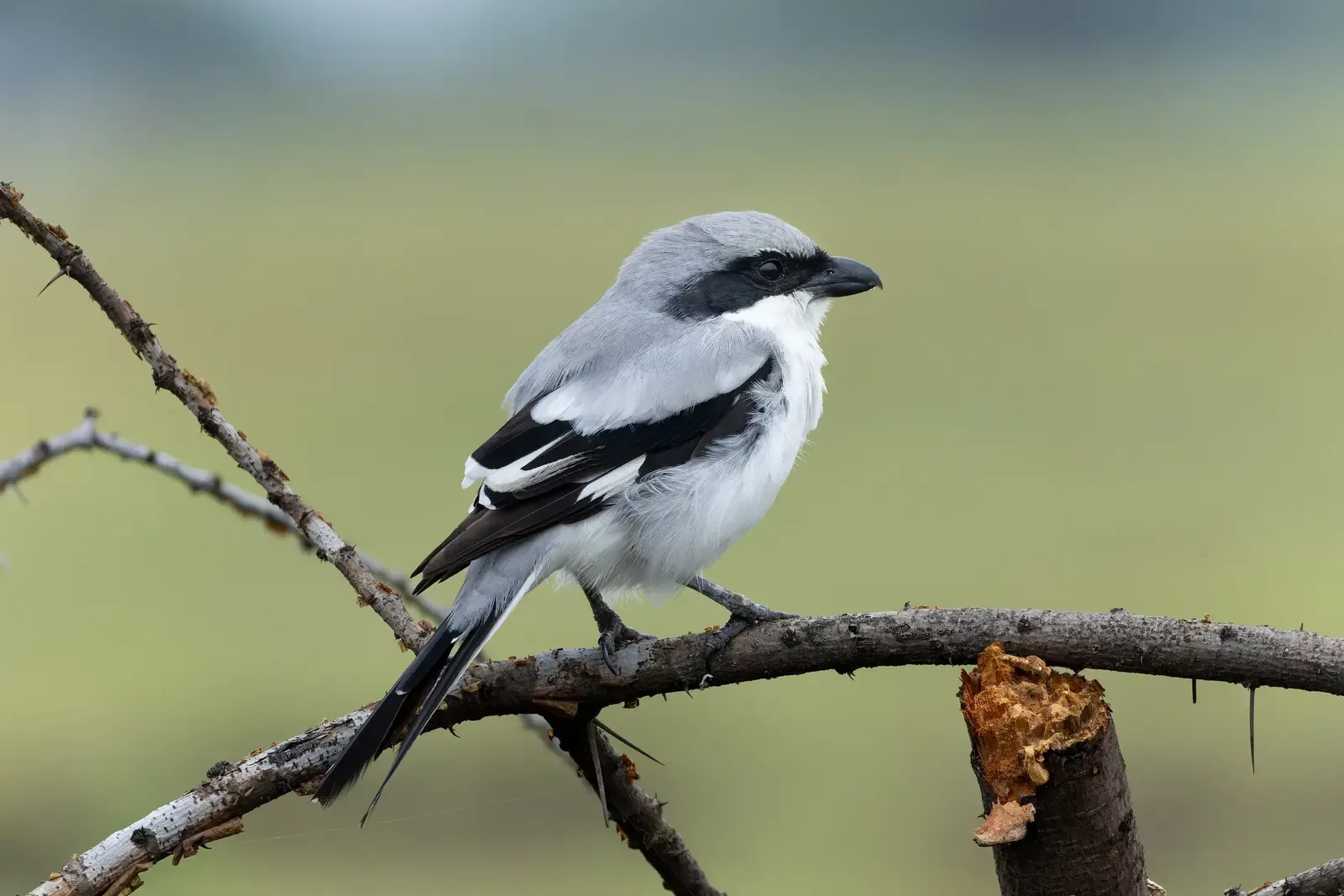
The Great Grey Shrike has pale ash-grey upperparts and a black eye mask from the bill to the ear coverts. In Sweden it breeds in pine forest on bogs and in open woodland, including clear-cuts.
How to recognise it
- Pale ash-grey upperparts and a black mask from the bill to the ear coverts
- Black-and-white wings with white scapulars and a long black-and-white tail
- Mostly white underparts, greyer and faintly barred grey-brown in the female
- Often perches at the very top of a tree or post and hovers when hunting
Call and song
The male's song is made up of short, pleasant twittering phrases mixed with flowing whistles. When disturbed it gives a harsh, jay-like alarm call, often repeated twice. On spotting a bird of prey it warns with a sharp scream.
Where and when
The Great Grey Shrike is a partial migrant that breeds in Sweden, from northern Värmland, central Dalarna, western Hälsingland and Medelpad northwards. As winter approaches, most of the population moves south within the country. The Swedish population is estimated at 12 000 adult birds. It is reported most from October to February and rarely in August. Its share of all bird reports is highest in Västmanland, Värmland and Dalarna.
When is it seen in Sweden?
Where is it reported?
- No reports
- Small share
- Medium share
- Large share
Reported most in October to February. Rarely reported in May to August. Its share of all bird reports is highest in Västmanland, Värmland and Dalarna.
Food and behaviour
It feeds mostly on insects and small rodents, and often stores prey by impaling it on thorns or twigs. It usually flies low and lands on its perch with an upward swoop. It may chase off and pursue birds of prey, ravens and crows.
Easily confused with
-
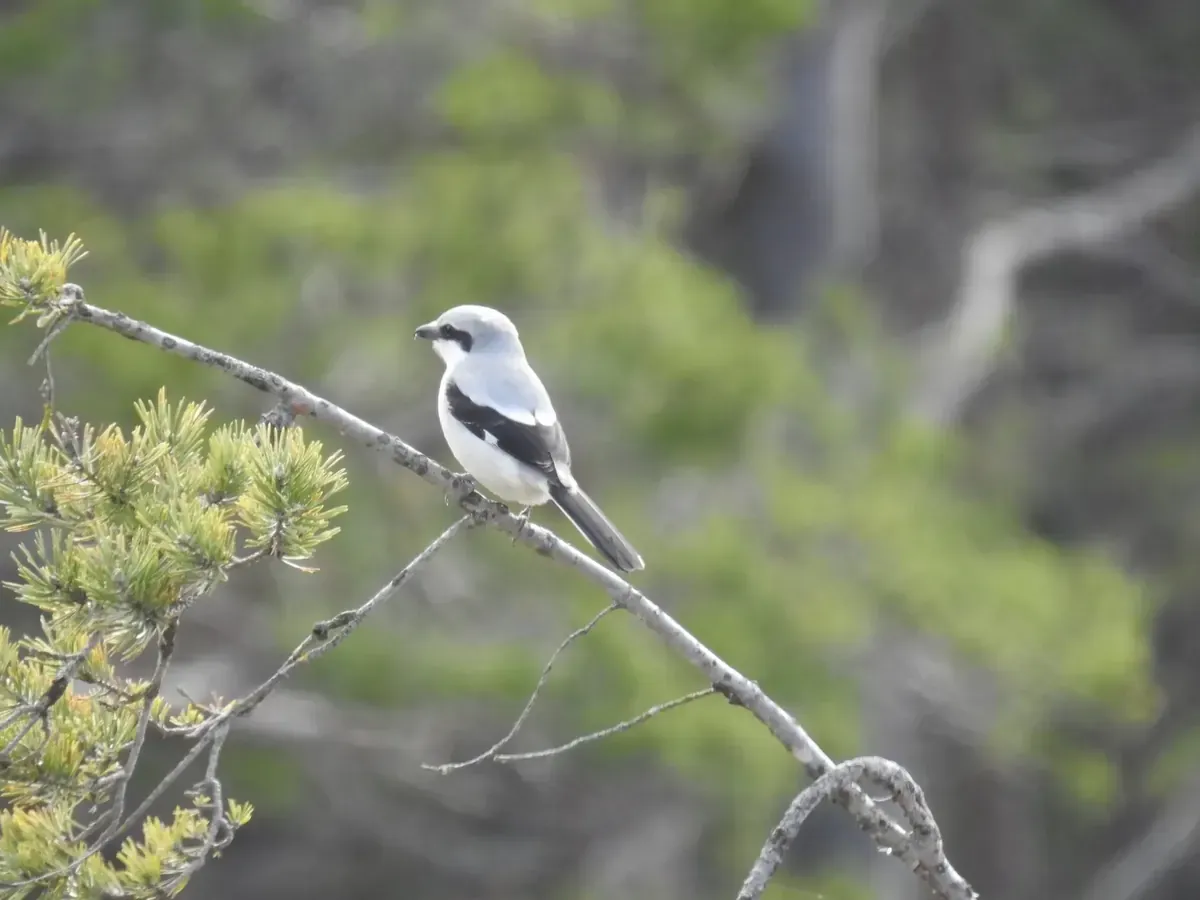
Lanius minor
The Lesser Grey Shrike is smaller and shorter-tailed. It has a large black patch above the bill that reaches almost to the forehead.
More songbirds
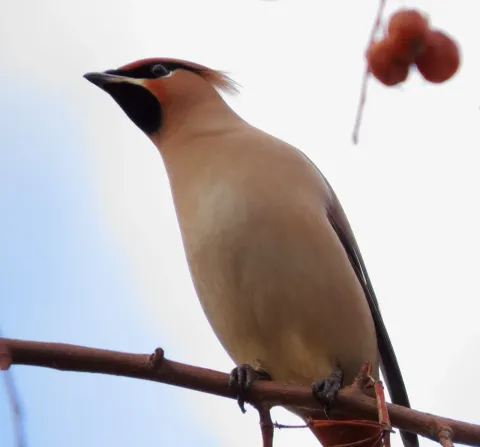
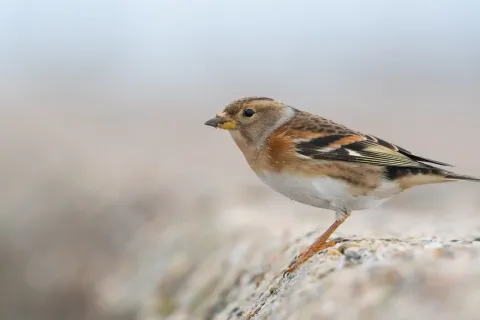
Photo: Tisha Mukherjee, CC BY-SA 4.0, via Wikimedia Commons, resized

Photo: Jaana Siitonen, CC BY 4.0, via Wikimedia Commons, resized

The text was written with AI from facts in Wikipedia and may be shared under CC BY-SA 4.0. Sources: Swedish article, English article, German article
Report data: Artportalen (SLU Swedish Species Information Centre) via GBIF.org, 2016 to 2025. Red list: The Swedish Red List 2025, SLU Swedish Species Information Centre via GBIF.org.
Checked against sources on . How we make these pages