Corvidae
Hooded Crow
Corvus cornix
- Scientific name
- Corvus cornix
- Family
- Corvidae
- Size
- 48 to 52 cm
- Swedish Red List 2025
- Not red-listed
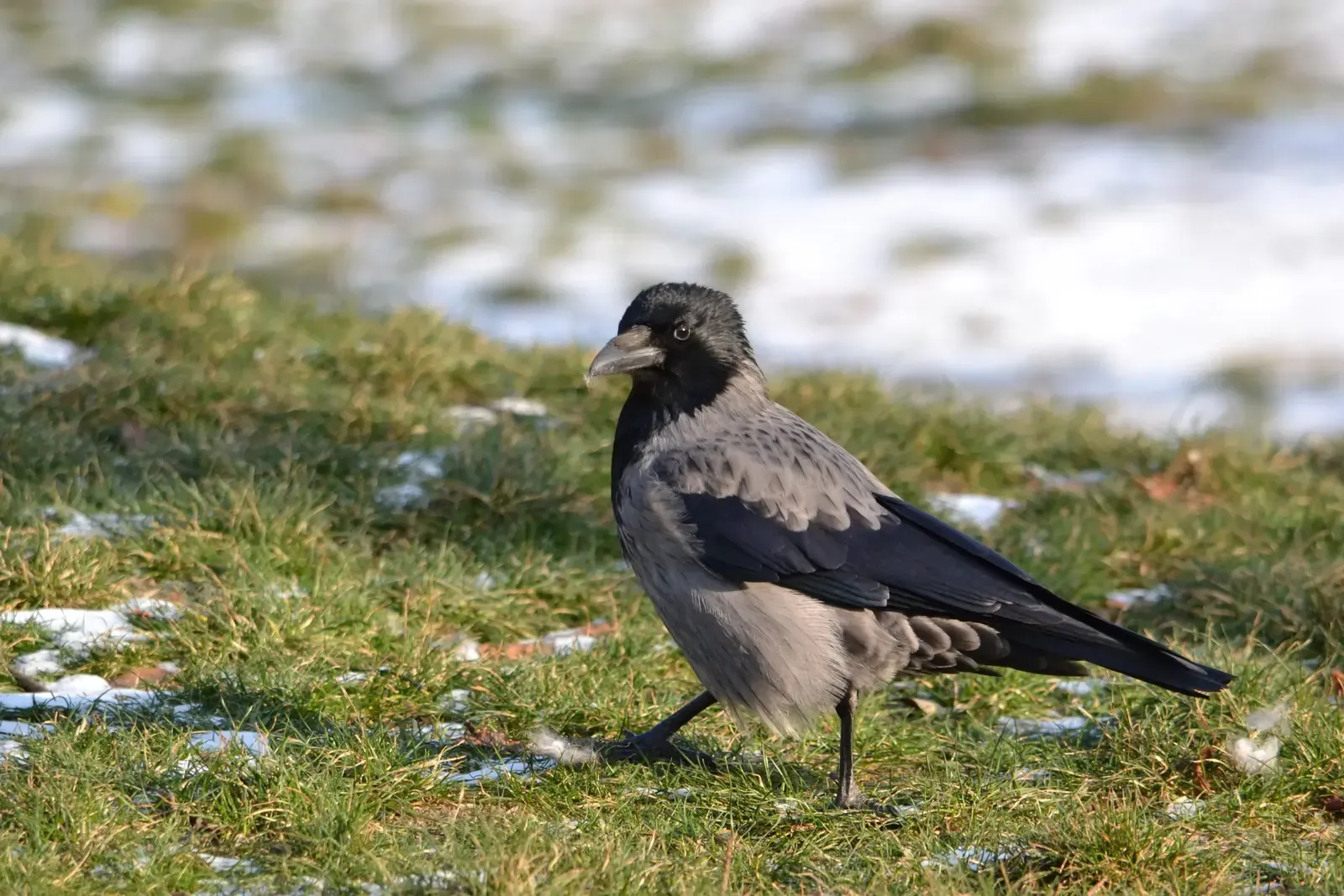
The Hooded Crow is a member of the crow family with black and ash-grey plumage. It likes small woods, parks and gardens near people, and feeds on fields and farmland.
How to recognise it
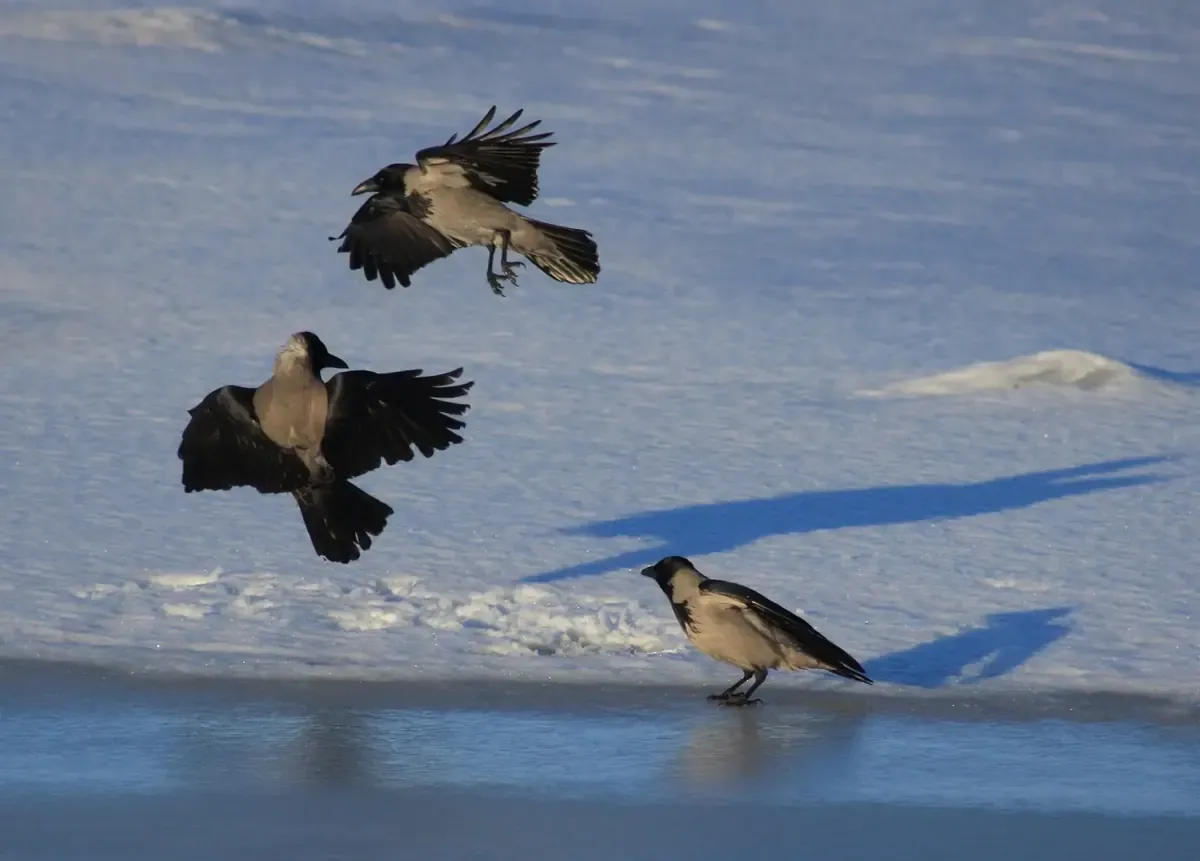
- Black head, chin, upper breast, flight feathers and tail, the rest of the plumage ash-grey
- The grey plumage looks streaked because of the dark feather shafts
- Black bill, black legs and a ragged black breast patch that varies in size
- Males are slightly larger than females, young birds are darker with bluish to greyish eyes
Call and song
The call is a kraa that can hardly be told from that of the Carrion Crow. Crows chase birds of prey with loud screams.
Where and when
The Hooded Crow likes small woods, and also parks and gardens near people. It often lives in open country and feeds on fields and farmland. It is reported all year round and from all 21 counties.
When is it seen in Sweden?
Where is it reported?
- No reports
- Small share
- Medium share
- Large share
Reported all year round. Reported from all 21 counties.
Food and behaviour
The Hooded Crow is omnivorous and eats carrion, snails, insects, fruit, grain, small birds, small mammals, fish and birds' eggs, among other things. It drops mussels and crabs from a height to crack them, and often hides food to eat later. In the breeding season it lives in pairs, at other times of year often in flocks. Towards evening the local crows gather to roost in a grove or wood.
Easily confused with
-
Corvus corone
The Carrion Crow is all black, while the Hooded Crow shows contrasting grey and black areas. Their calls can hardly be told apart.
More in the Corvidae family
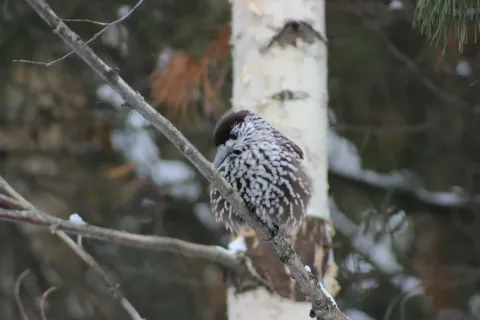
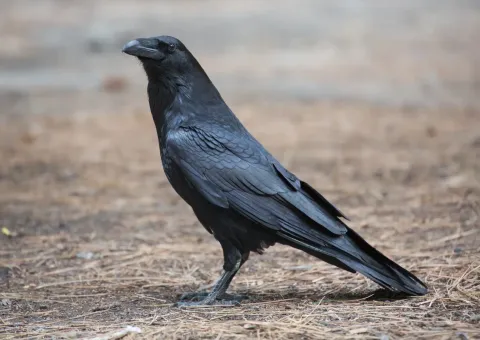
Photo: Nicolas Weghaupt, CC0, via Wikimedia Commons, resized

Photo: Estormiz, CC0, via Wikimedia Commons, resized

The text was written with AI from facts in Wikipedia and may be shared under CC BY-SA 4.0. Sources: Swedish article, English article, German article
Report data: Artportalen (SLU Swedish Species Information Centre) via GBIF.org, 2016 to 2025. Red list: The Swedish Red List 2025, SLU Swedish Species Information Centre via GBIF.org.
Checked against sources on . How we make these pages