Corvidae
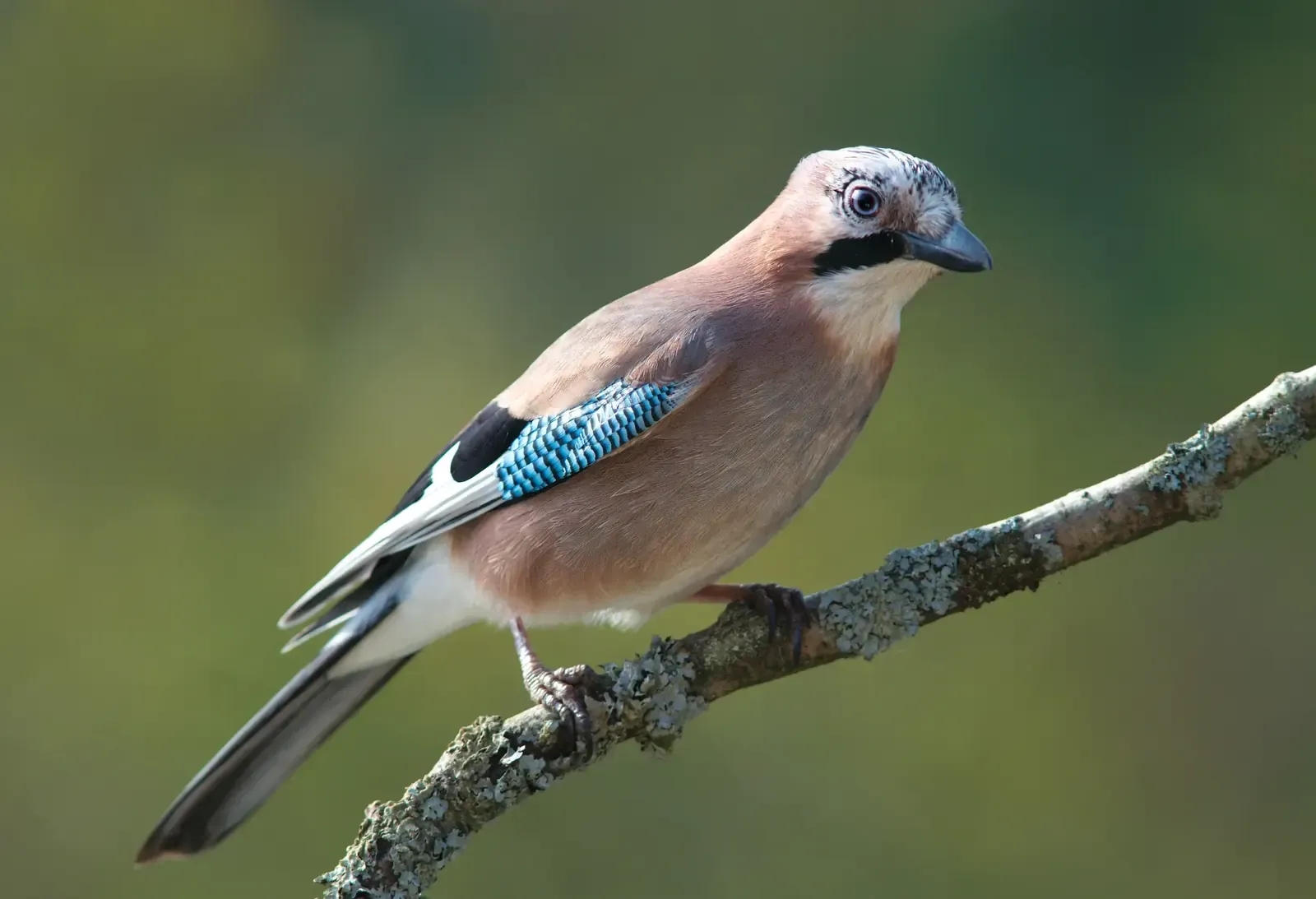
Eurasian Jay
Garrulus glandarius
- Scientific name
- Garrulus glandarius
- Family
- Corvidae
- Size
- 32 to 37 cm
- Swedish Red List 2025
- Not red-listed
- Global Red List (IUCN)
- Least concern (LC)
The Eurasian Jay is the most numerous member of the crow family in Sweden and lives in mixed woodland, especially with oak. In wooded settings it also breeds near houses, for example in parks, large gardens and churchyards.
How to recognise it
- Sexes alike: reddish-grey body, whitish throat and black moustache stripe
- Azure blue wing coverts barred black, and a large white patch on the black outer wing
- In flight, a white rump against a dark tail, and black, white and pale blue wings
- About the size of a Jackdaw, with a crest and a stout grey-black bill
Call and song
The commonest call is a loud, hoarse screeching "räk, räk", mainly as an alarm but sometimes as a contact call. It also gives a mewing call like a Common Buzzard's and can mimic other birds, especially Northern Goshawk. The song is quiet, with a deep, whistling tone, and is heard in late winter.
Where and when
It breeds commonly in southern and central Sweden and north to central Norrland. It is reported from all 21 counties, most often in October to January. In some years large numbers of jays on the move are seen along the Norrland coast. In the coniferous zone it prefers rich pine and spruce forest with a high share of spruce. It is not on the Swedish Red List 2025.
When is it seen in Sweden?
Where is it reported?
- No reports
- Small share
- Medium share
- Large share
Reported most in October to January. Reported from all 21 counties.
Food and behaviour
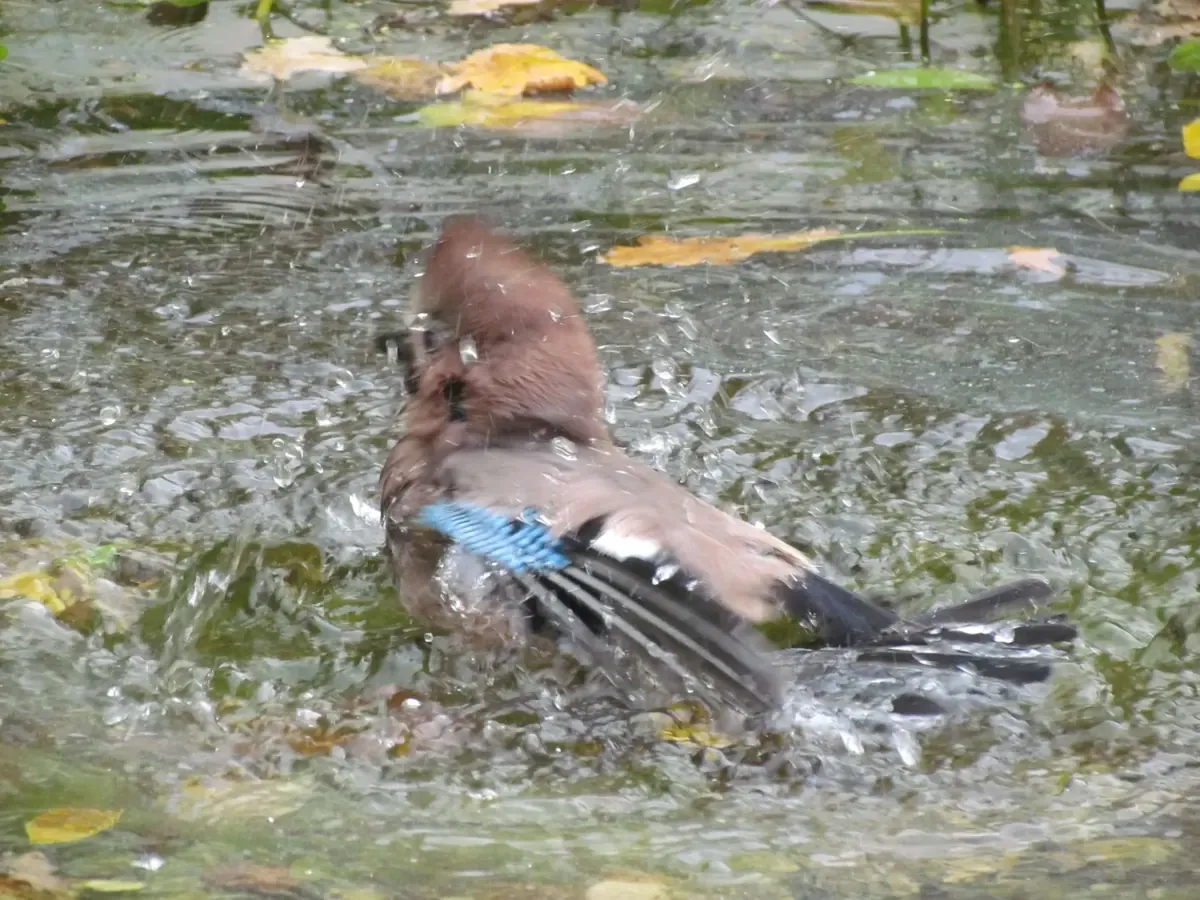
It eats fruit, insects, reptiles, birds' eggs, nestlings and small mammals. In autumn it stores food for winter, in the south mainly nuts and acorns. It flies silently, gliding between the trees, but on the ground it moves clumsily with hops. It lives in pairs in the breeding season, otherwise in family groups or loose flocks. The nest sits in a tree, often a spruce, 2 to 10 metres up.
More in the Corvidae family
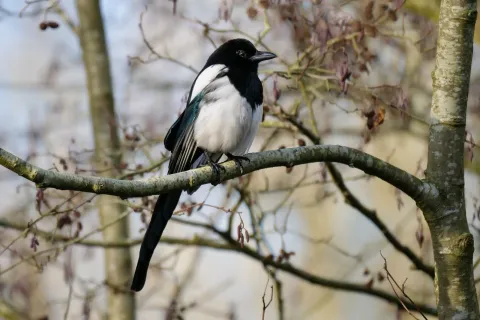
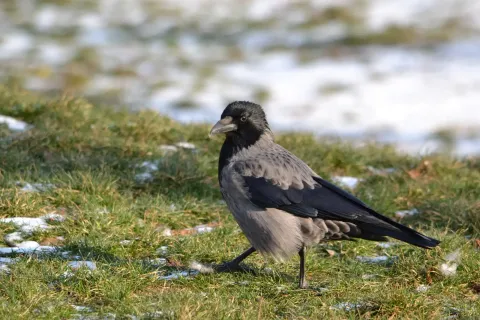
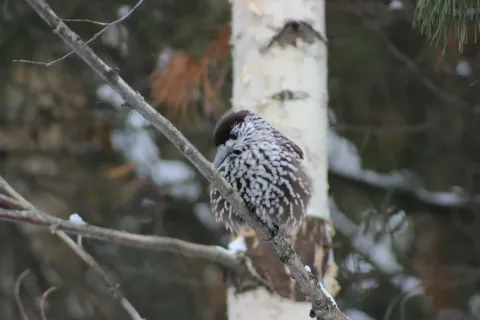
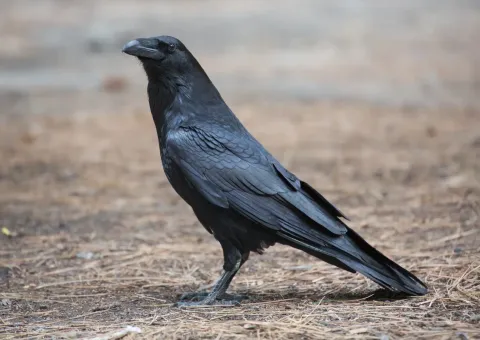
Photo: Luc Viatour, CC BY-SA 3.0, via Wikimedia Commons, resized

Photo: Klaaschwotzer, CC0, via Wikimedia Commons, resized

The text was written with AI from facts in Wikipedia and may be shared under CC BY-SA 4.0. Sources: Swedish article, English article, German article
Report data: Artportalen (SLU Swedish Species Information Centre) via GBIF.org, 2016 to 2025. Red list: The Swedish Red List 2025, SLU Swedish Species Information Centre via GBIF.org.
Checked against sources on . How we make these pages