Corvidae
Northern Raven
Corvus corax
- Scientific name
- Corvus corax
- Family
- Corvidae
- In Sweden
- Resident all year
- Size
- 54 to 67 cm
- Swedish Red List 2025
- Not red-listed
- Global Red List (IUCN)
- Least concern (LC)
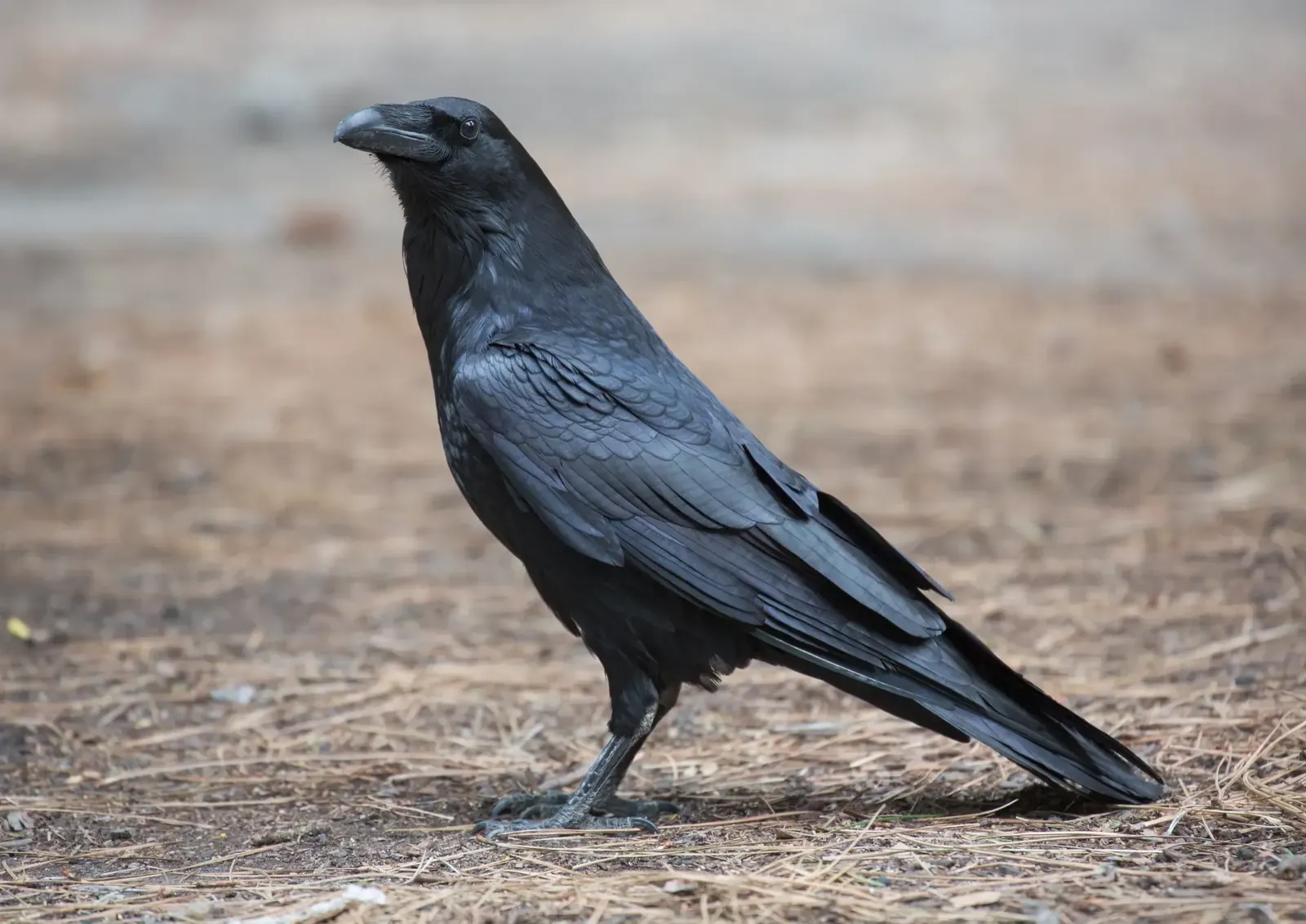
The Northern Raven is a crow-family bird with mostly black, iridescent plumage and a very heavy bill. It breeds commonly throughout Sweden and lives in forests, high mountains and open country.
How to recognise it
- Mostly black, iridescent plumage and a long, strongly graduated tail
- Very heavy, slightly curved bill, black in adults, as are the legs
- Elongated throat feathers, dark brown iris in adults, blue-grey in young birds
- In flight: wedge-shaped tail, long wings narrowing at the tips and a large head
Call and song
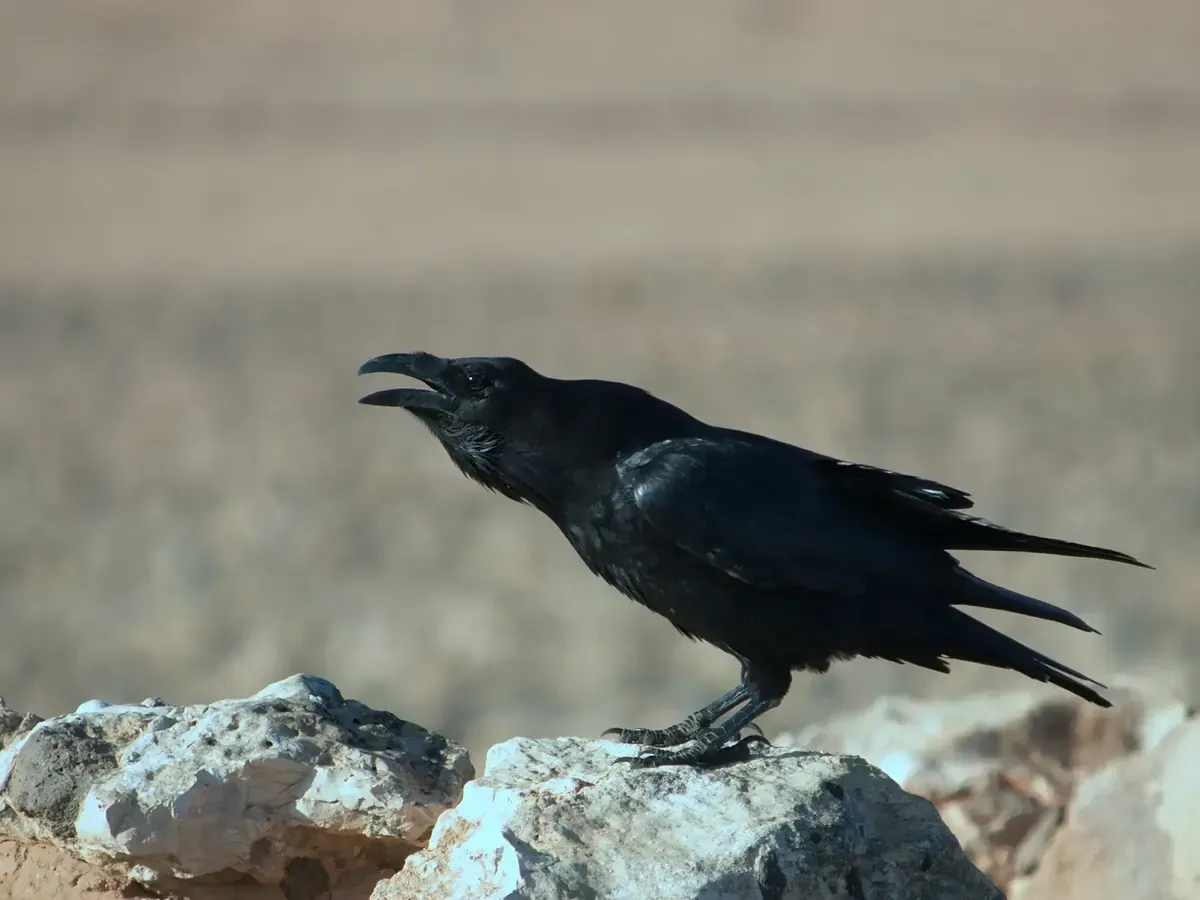
The call is a deep, rasping, hollow korrp, often repeated 3 to 4 times. It also gives a high, knocking krack-krack-krack and a dry, harsh kraa. It can mimic sounds around it, including human speech. In flight the feathers make a creaking sound likened to rustling silk.
Where and when
The Northern Raven is resident in Sweden and, after a strong increase in the 1970s, now breeds commonly across the whole country. It is reported from all 21 counties and is reported most in December to February. It favours forest with large open areas nearby, and coastal areas.
When is it seen in Sweden?
Where is it reported?
- No reports
- Small share
- Medium share
- Large share
Reported most in December to February. Reported from all 21 counties.
Food and behaviour
It eats carrion, insects and food waste, as well as grain, berries, fruit and small animals. In winter ravens may follow wolves to feed on the remains of their kills. Ravens usually travel in pairs, while young birds can form flocks. Unlike jackdaws, magpies and crows they are fairly shy, and they perform acrobatic display flights, such as loops.
Easily confused with
-
Corvus corone
The Carrion Crow also has a large bill but is clearly smaller, with the typical wing and tail shape of a crow. The raven has a wedge-shaped tail and long wings narrowing at the tips.
-
Rook
The Rook also has a large bill but is clearly smaller, with the typical wing and tail shape of a crow. The raven has a wedge-shaped tail and long wings narrowing at the tips.
More in the Corvidae family
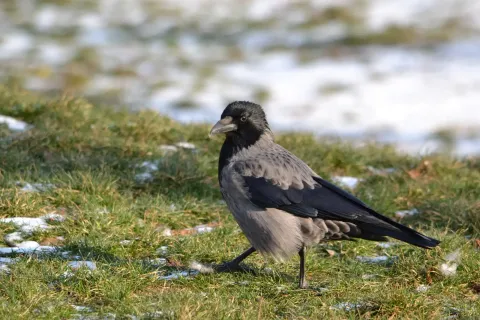
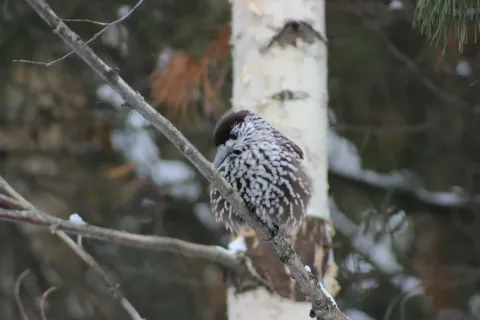
Photo: Diliff, CC BY-SA 3.0, via Wikimedia Commons, resized

Photo: Frank Vassen, CC BY 2.0, via Wikimedia Commons, resized

The text was written with AI from facts in Wikipedia and may be shared under CC BY-SA 4.0. Sources: Swedish article, English article, German article
Report data: Artportalen (SLU Swedish Species Information Centre) via GBIF.org, 2016 to 2025. Red list: The Swedish Red List 2025, SLU Swedish Species Information Centre via GBIF.org.
Checked against sources on . How we make these pages