Phasianidae
Western Capercaillie
Tetrao urogallus
- Scientific name
- Tetrao urogallus
- Family
- Phasianidae
- In Sweden
- Resident all year
- Size
- Male 74 to 90 cm, female 54 to 63 cm
- Swedish Red List 2025
- Not red-listed
- Global Red List (IUCN)
- Least concern (LC)
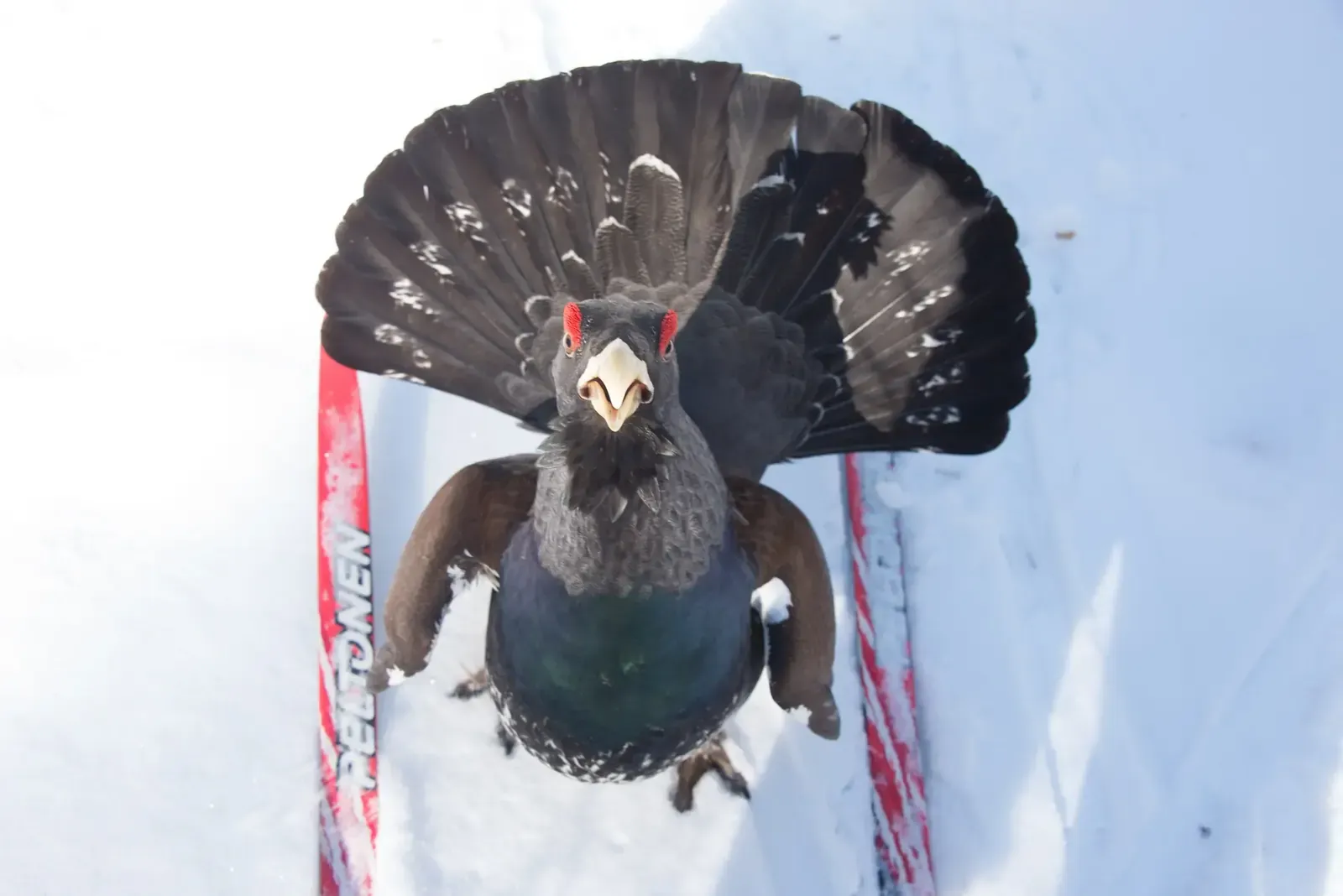
The Western Capercaillie is the largest wild gamebird in Sweden. It lives in open, old conifer forest, and a quarter of Europe's capercaillie population is found in Sweden.
How to recognise it
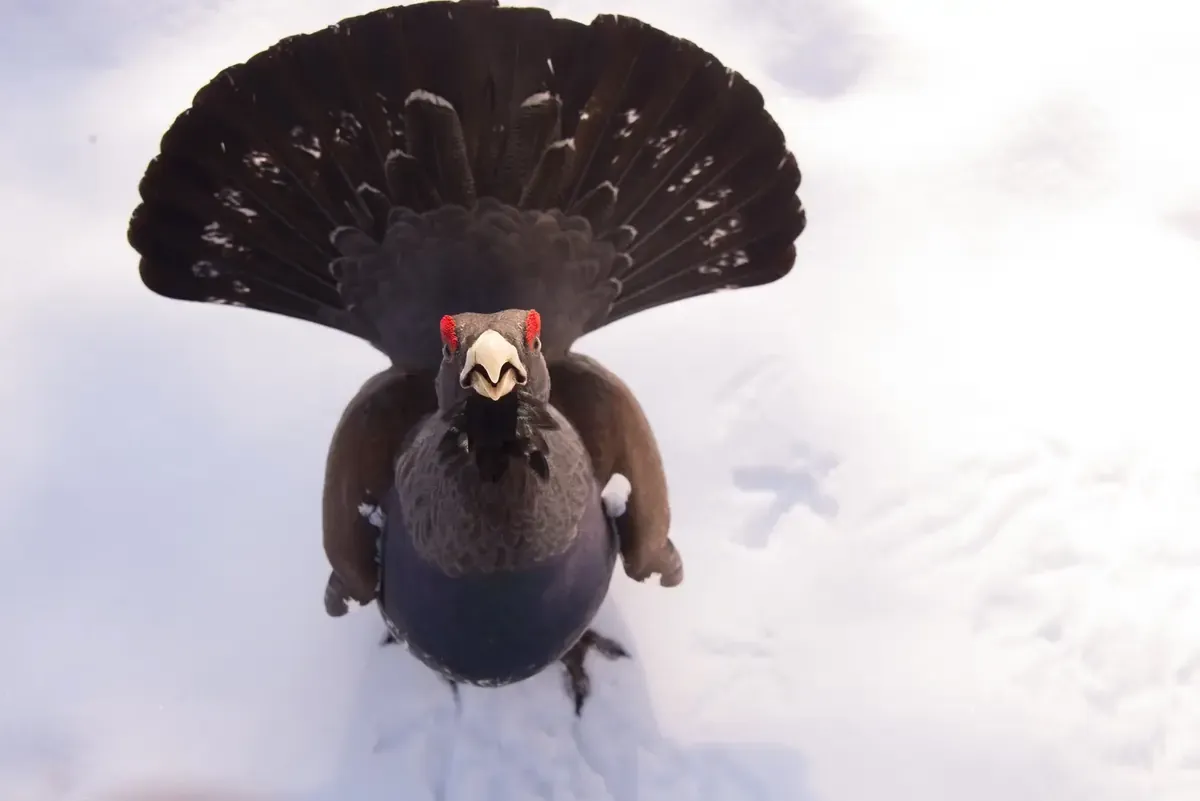
- Male much larger than female, with a greenish breast showing strong metallic gloss
- Male's head, throat and upper breast finely vermiculated black and pale grey
- Female mottled blackish brown, rusty yellow and grey, with a plain orange-brown breast
- Red, swollen bare-skin eyebrow and a yellowish white bill on older birds
Call and song
It is usually silent except in spring, when the males display. The display opens with clicks like thin wooden sticks knocked together, 8 to 10 times, ever faster. Then comes a pop like a cork pulled from a bottle, then hissing like a scythe being sharpened. The pop carries best, up to 100 to 150 metres in calm weather.
Where and when
It is a resident and is reported all year round. It occurs in all larger conifer forests from northern Skåne up to the conifer tree line in the Lapland mountains. It prefers open forest over 90 years old and avoids clear-cuts, plantations, open bogs and meadows. Its share of all bird reports is highest in Jämtland, Norrbotten and Dalarna. It is not red-listed in the Swedish Red List 2025.
When is it seen in Sweden?
Where is it reported?
- No reports
- Small share
- Medium share
- Large share
Reported all year round. Its share of all bird reports is highest in Jämtland, Norrbotten and Dalarna.
Food and behaviour
In winter it eats mainly pine needles. On bare ground bilberry matters most, the whole plant including leaves. In summer it stays mostly on the ground but spends the night in trees. Taking off, it makes a sudden roaring sound. Males usually gather at leks in early April, displaying with fanned tail and dragging wings. The female lays 8 to 9 eggs in a simple ground hollow.
More in the Phasianidae family
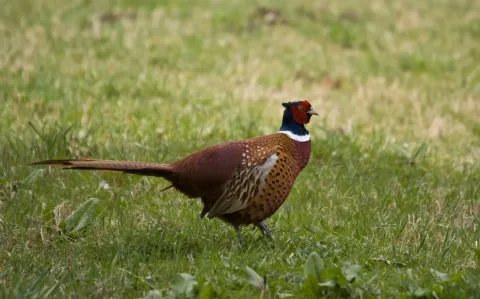
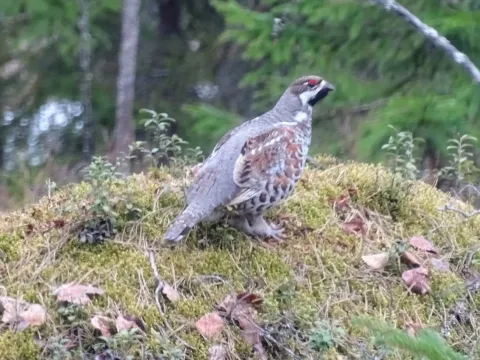
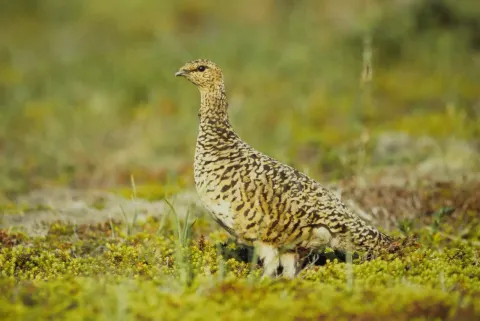
Photo: Tero Laakso, CC BY 2.0, via Wikimedia Commons, resized

Photo: Tero Laakso, CC BY 2.0, via Wikimedia Commons, resized

The text was written with AI from facts in Wikipedia and may be shared under CC BY-SA 4.0. Sources: Swedish article, English article, German article
Report data: Artportalen (SLU Swedish Species Information Centre) via GBIF.org, 2016 to 2025. Red list: The Swedish Red List 2025, SLU Swedish Species Information Centre via GBIF.org.
Checked against sources on . How we make these pages