Phasianidae
Willow Ptarmigan
Lagopus lagopus
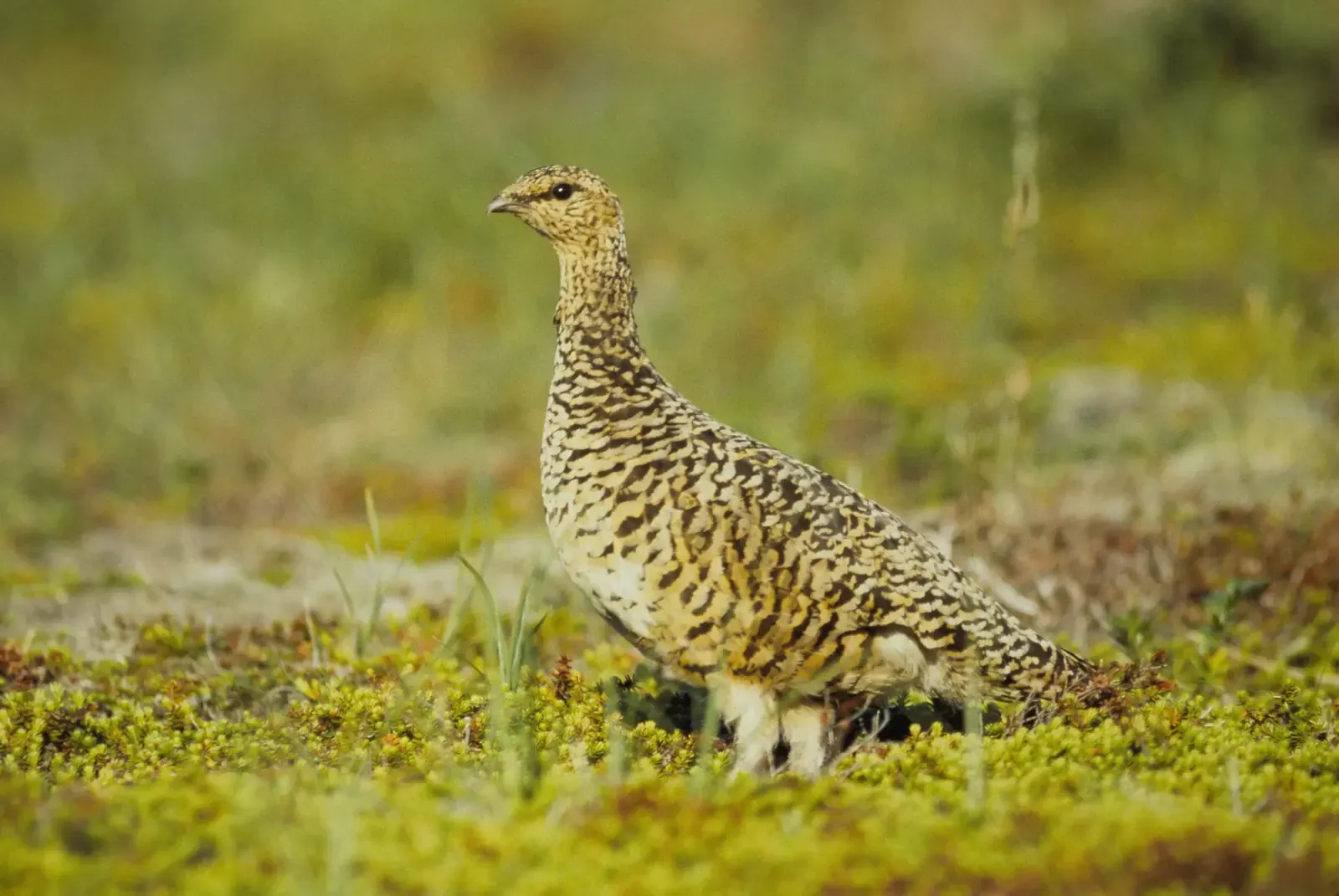
- Scientific name
- Lagopus lagopus
- Family
- Phasianidae
- Size
- 35 to 43 cm
- Swedish Red List 2025
- Not red-listed
- Global Red List (IUCN)
- Least concern (LC)
The Willow Ptarmigan lives in open pine and birch woods, willow and alder thickets, heather moors, tundra and mountain slopes. In Sweden it is common in the mountains, mainly on the lower slopes among willow and birch.
How to recognise it
- Round body, small head and a short, thick, dark bill
- White eye-ring and almost all-white wings in every plumage
- In winter both sexes are white, except for the black tip of the tail
- Spring male has dark red-brown head and large red combs, female only a faint red line
Call and song
The call is low and rough, with cackling and repeated clucking sounds. During display the male gives rattling and barking calls.
Where and when
The Willow Ptarmigan is common in the Swedish mountains and reaches its southern limit in Dalarna, Värmland, Västmanland and northern Hälsingland. It is reported most in June and rarely reported in October and November. Its share of all bird reports is highest in Jämtland and Norrbotten. The Swedish population has fallen by 50 to 70 percent over the last twelve years.
When is it seen in Sweden?
Where is it reported?
- No reports
- Small share
- Medium share
- Large share
Reported most in June. Rarely reported in October and November. Its share of all bird reports is highest in Jämtland and Norrbotten.
Food and behaviour
It is mainly a plant eater, though the chicks may also eat insects. Winter food is almost entirely shoot tips and buds of willow and birch. In winter it usually keeps to lower, sheltered ground and spends most of the day in small flocks of five to 15 birds in snow holes. Parents can lure predators away by pretending to have a broken wing.
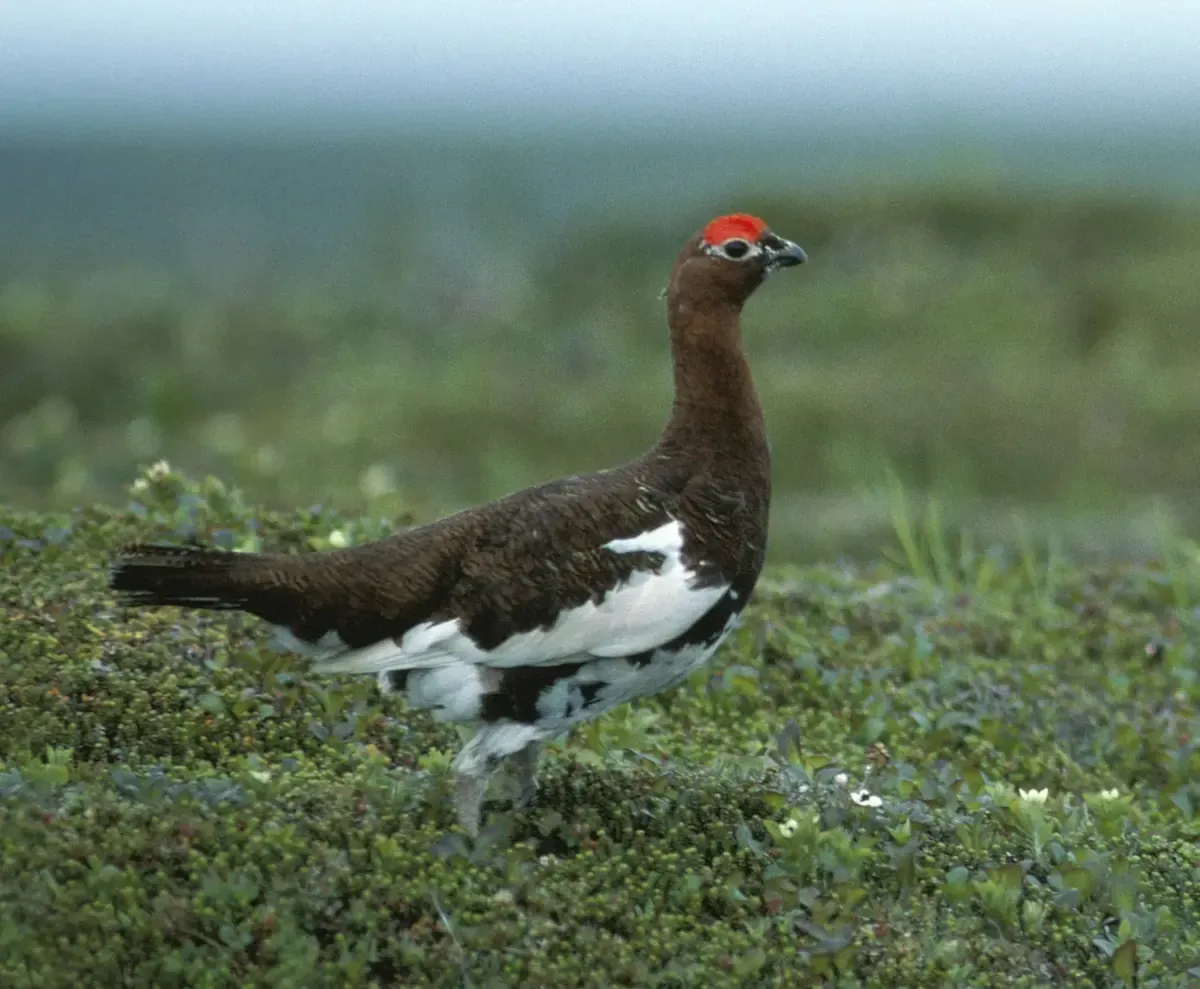
More in the Phasianidae family
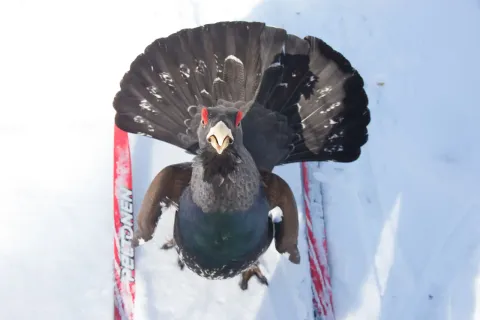
Photo: David Menke, public domain, via Wikimedia Commons, resized

Photo: David Menke, public domain, via Wikimedia Commons, resized

The text was written with AI from facts in Wikipedia and may be shared under CC BY-SA 4.0. Sources: Swedish article, English article, German article
Report data: Artportalen (SLU Swedish Species Information Centre) via GBIF.org, 2016 to 2025. Red list: The Swedish Red List 2025, SLU Swedish Species Information Centre via GBIF.org.
Checked against sources on . How we make these pages