Phasianidae
Common Pheasant
Phasianus colchicus
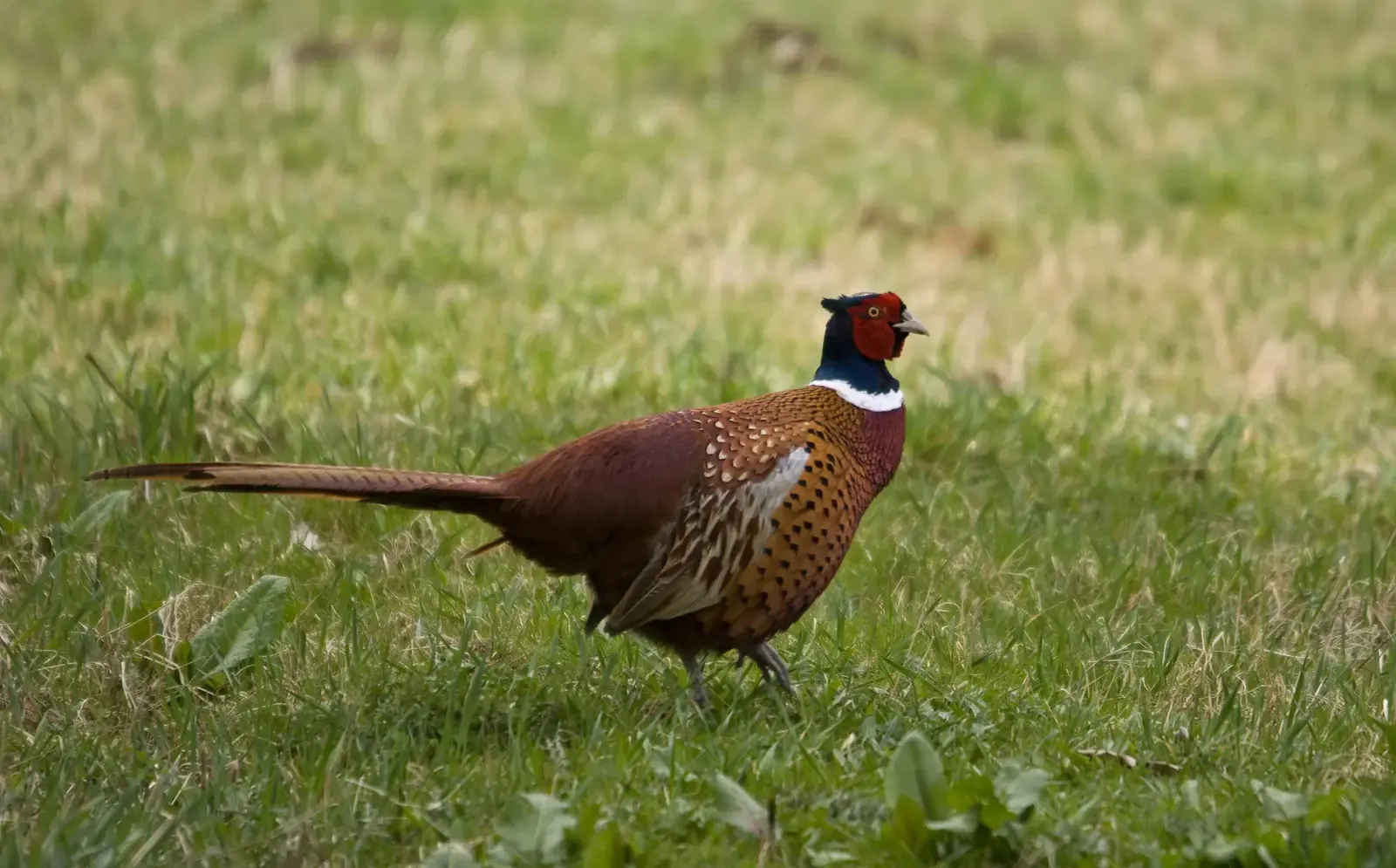
- Scientific name
- Phasianus colchicus
- Family
- Phasianidae
- Size
- 53 to 85 cm
- Swedish Red List 2025
- Not red-listed
- Global Red List (IUCN)
- Least concern (LC)
The Common Pheasant is a gamebird that was introduced to Swedish castle grounds in the 1700s and has since gone feral and spread widely. It prefers groves and dense thickets surrounded by meadows and fields with access to water.
How to recognise it
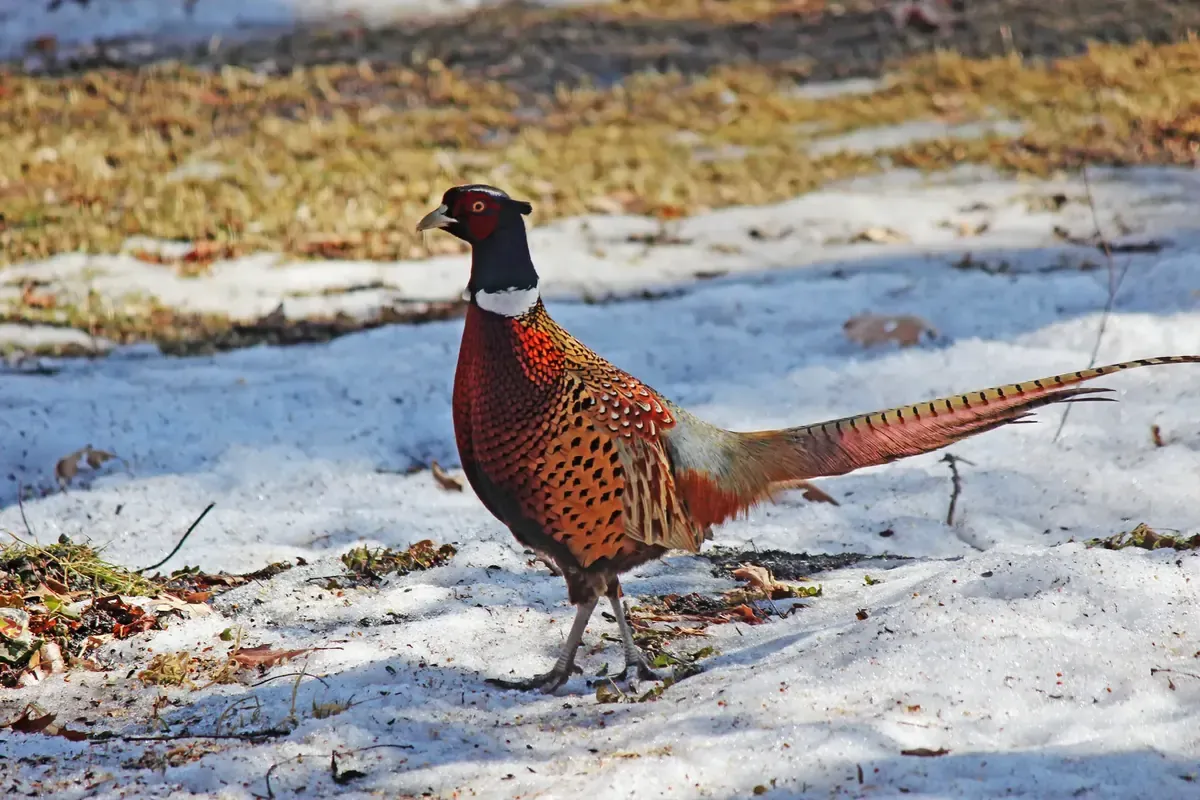
- Male has a mainly buff-brown body with a glossy green-blue head and neck
- Tail is narrow, very long and wedge-shaped
- Male's bottle-green head has a small tuft and clear red facial wattles
- Female is far less colourful, with a duller, mottled brown plumage all over
Call and song
The male's most frequent call is the territorial call, a loud, two-syllable, unmusical "göö-gock" or "kotock", often repeated. It is followed by a long, audible whirr of the wings. When flushed, it takes off with a whirring of wings and often calls "kok kok kok". Females are rarely heard.
Where and when
In Sweden it lives in the southern half of the country, on Öland and Gotland, and further north mainly along the Baltic coast, reaching about as far as Medelpad. It is reported most in April and from December to February. Its share of all bird reports is highest in Södermanland, Gotland and Uppsala.
When is it seen in Sweden?
Where is it reported?
- No reports
- Small share
- Medium share
- Large share
Reported most in April and December to February. Its share of all bird reports is highest in Södermanland, Gotland and Uppsala.
Food and behaviour
It feeds on the ground on insects, worms, berries and seeds. It stays on the ground by day and only flies up into trees in the evening to roost. It can fly short distances but prefers to run. Males are very aggressive in the breeding season, and outside it pheasants gather in loose flocks.
More in the Phasianidae family
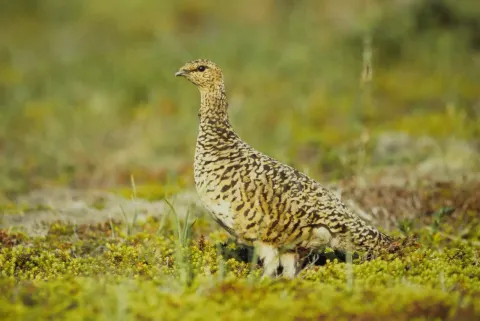
Photo: Tlusťa, public domain, via Wikimedia Commons, resized

Photo: U.S. Fish and Wildlife Service - Midwest Region, public domain, via Wikimedia Commons, resized

The text was written with AI from facts in Wikipedia and may be shared under CC BY-SA 4.0. Sources: Swedish article, English article, German article
Report data: Artportalen (SLU Swedish Species Information Centre) via GBIF.org, 2016 to 2025. Red list: The Swedish Red List 2025, SLU Swedish Species Information Centre via GBIF.org.
Checked against sources on . How we make these pages