Phasianidae
Hazel Grouse
Tetrastes bonasia
- Scientific name
- Tetrastes bonasia
- Family
- Phasianidae
- In Sweden
- Resident all year
- Size
- 34 to 39 cm
- Swedish Red List 2025
- Not red-listed
- Global Red List (IUCN)
- Least concern (LC)
The Hazel Grouse is a resident bird of closed conifer forest, mainly spruce forest mixed with birch and alder, preferably with bogs and streams. It is the smallest forest grouse in Sweden.
How to recognise it
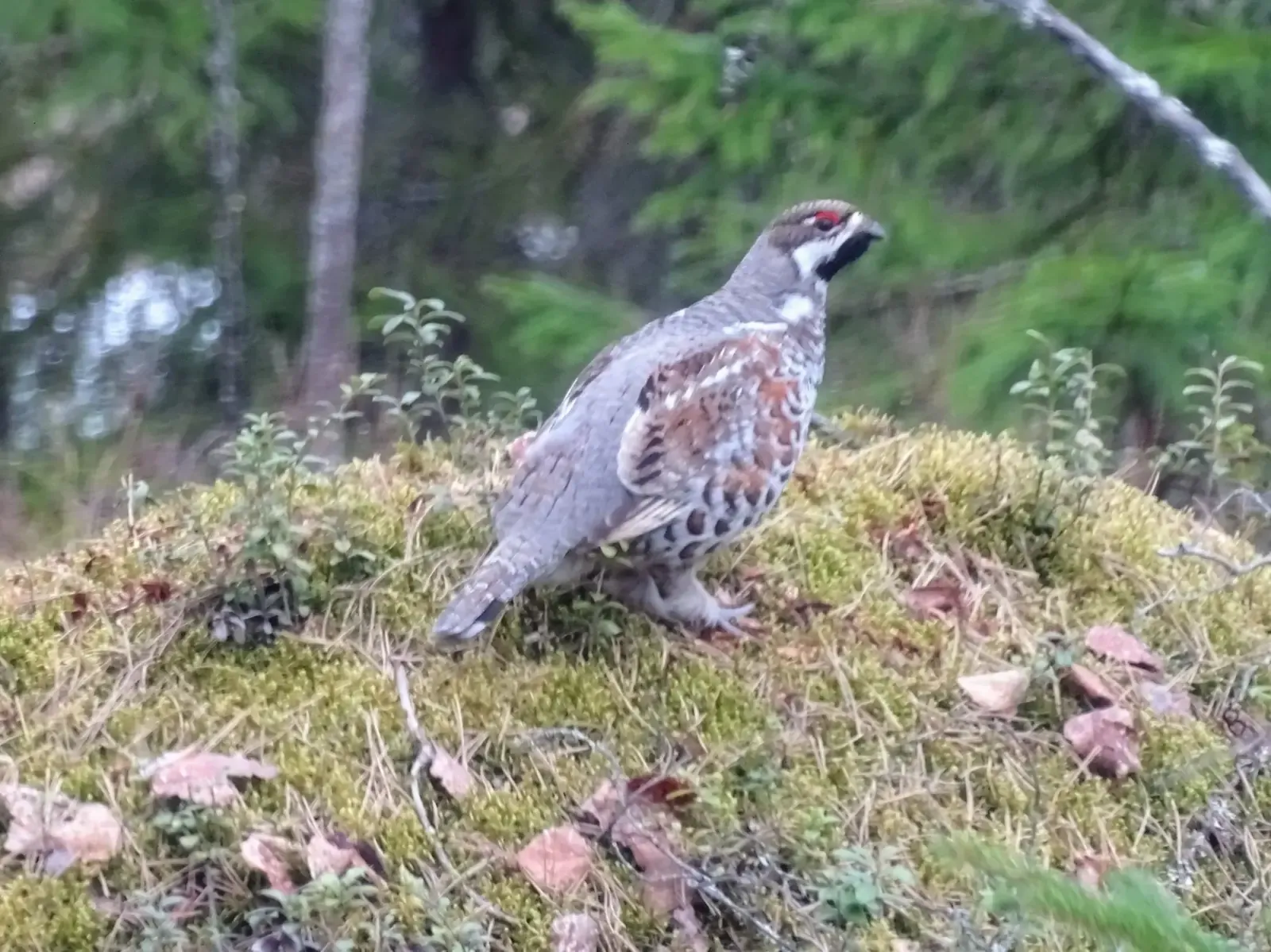
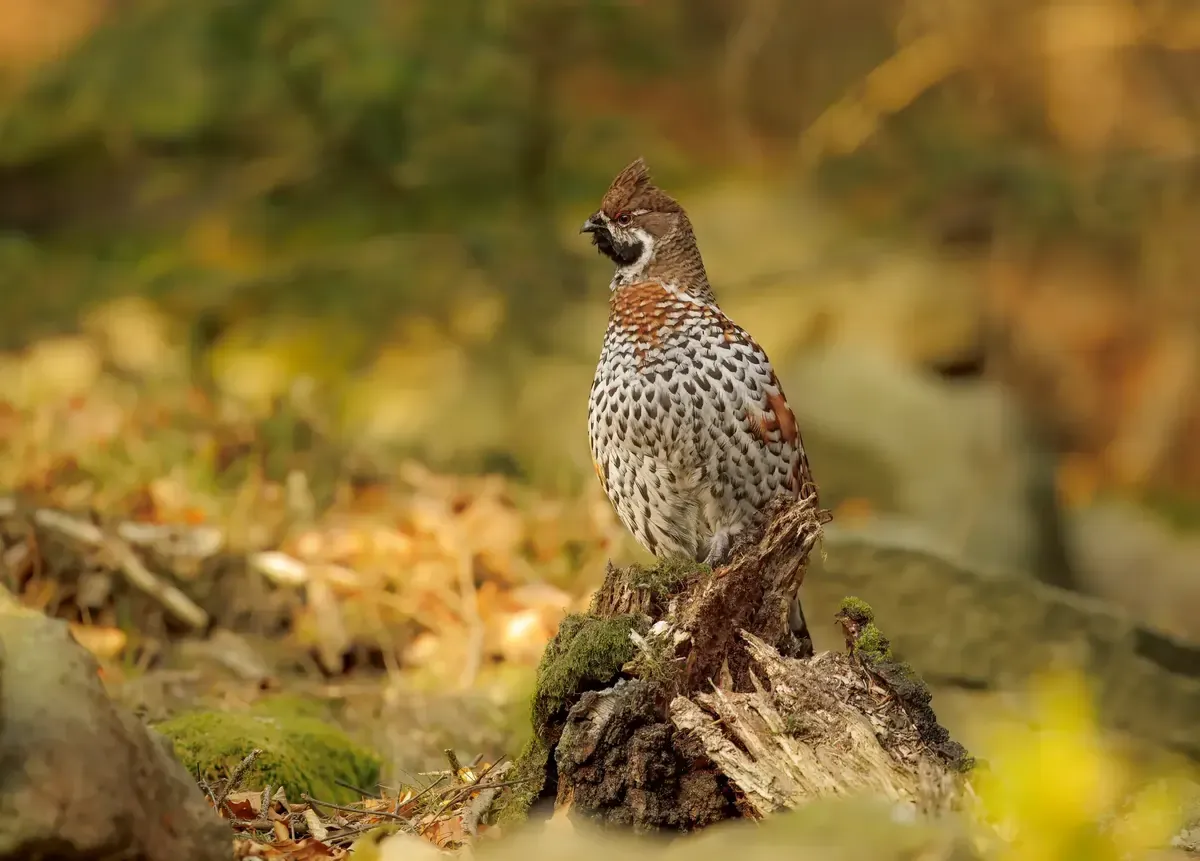
- Grey upperparts with blackish bars, underparts mottled in brown, black and white
- In flight it shows a grey tail with a black tip
- Male has a black throat and white-edged black bib, female a paler rusty brown throat
- Male has a fine red stripe above the eye and a clear brownish crest
Call and song
The song is a whistling, rhythmic phrase as high in pitch as a Goldcrest's. The male gives a high ti-ti-ti-ti-ti and the female a flowing tettettettettet. The calls and the whirring wing noise in flight are often the only sign that the bird is there.
Where and when
The Hazel Grouse is a resident bird in Sweden and is reported all year round. It occurs from Småland to Lappland, but not in the mountains, and is most numerous in the forests of Norrland. Its share of all bird reports is highest in Västerbotten, Norrbotten and Jämtland. Sweden has 80 000 to 120 000 breeding pairs, but numbers in southern and southwestern Sweden have fallen sharply during the 2000s.
When is it seen in Sweden?
Where is it reported?
- No reports
- Small share
- Medium share
- Large share
Reported all year round. Its share of all bird reports is highest in Västerbotten, Norrbotten and Jämtland.
Food and behaviour
It eats seeds, berries, buds and young leaves, and in winter birch buds are its main food. Small chicks are fed mainly on insects. It is very sedentary, does not form larger winter flocks, and in snowy areas spends most of the winter day in snow holes. It flushes with noisy wingbeats at about ten metres and usually takes cover in trees.
More in the Phasianidae family
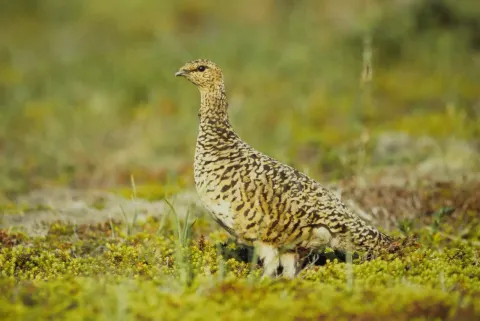
Photo: Antti Latikka, CC0, via Wikimedia Commons, resized

Photo: Lukas Kott, CC BY-SA 4.0, via Wikimedia Commons, resized

The text was written with AI from facts in Wikipedia and may be shared under CC BY-SA 4.0. Sources: Swedish article, English article, German article
Report data: Artportalen (SLU Swedish Species Information Centre) via GBIF.org, 2016 to 2025. Red list: The Swedish Red List 2025, SLU Swedish Species Information Centre via GBIF.org.
Checked against sources on . How we make these pages