Emberizidae
Yellowhammer
Emberiza citrinella
- Scientific name
- Emberiza citrinella
- Family
- Emberizidae
- In Sweden
- Partial migrant, breeds here
- Size
- 15.5 to 17 cm
- Swedish Red List 2025
- Near threatened (NT)
- Global Red List (IUCN)
- Least concern (LC)
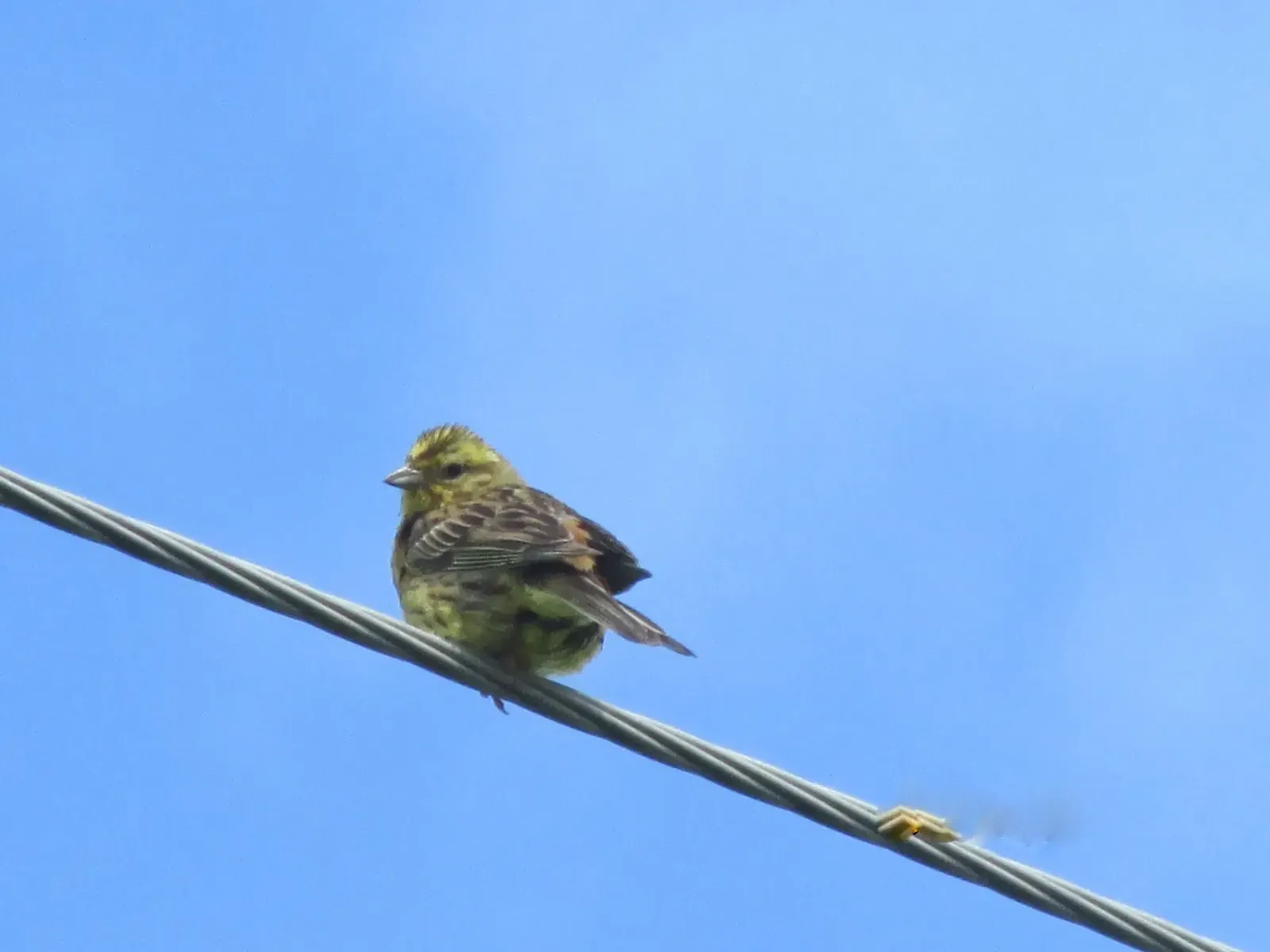
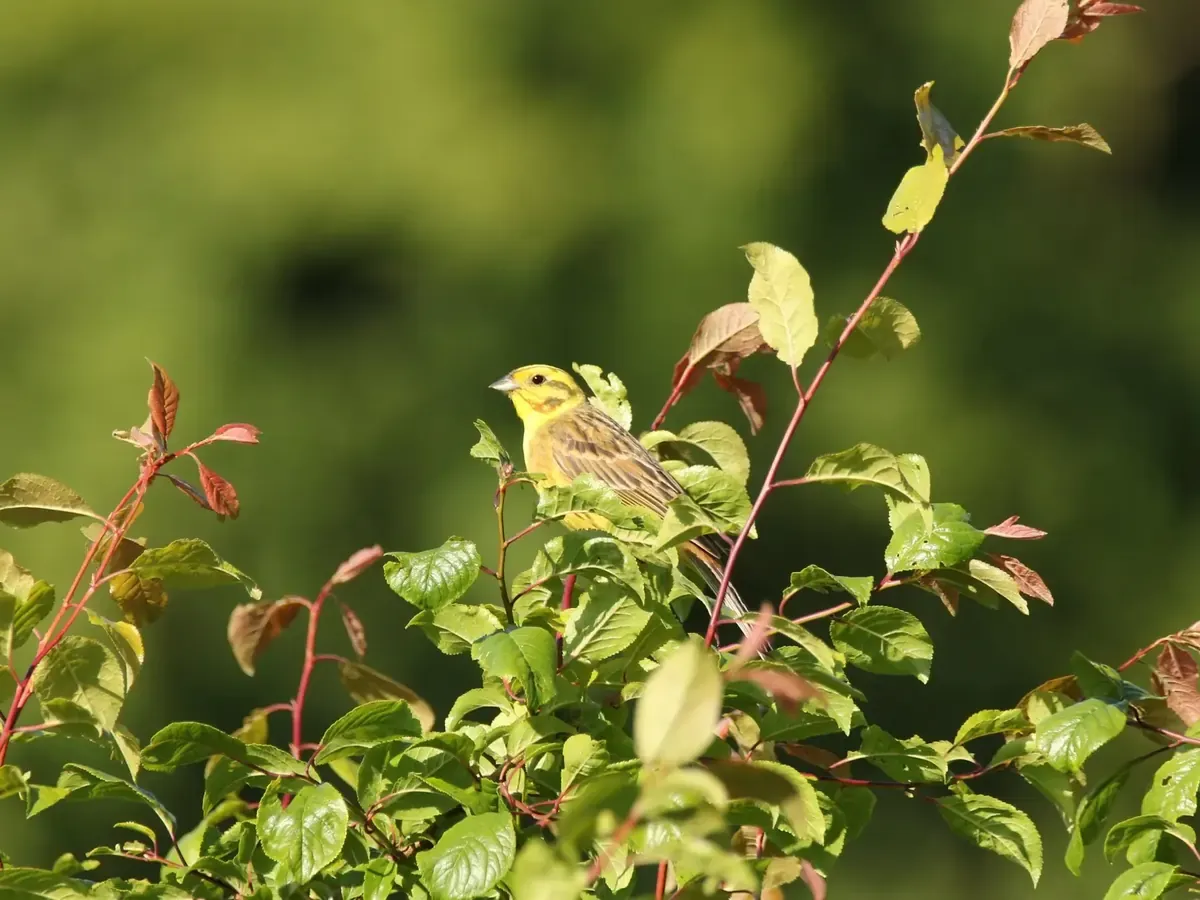
The Yellowhammer is a long-tailed bunting with yellow tones in its plumage. It breeds in scrub and farmland, woodland with clearings, clear-cuts, heaths and shore meadows.
How to recognise it
- Unstreaked rufous rump and yellow tones in every plumage
- Breeding male has a bright yellow head and throat and a thin dark eye-stripe
- Female is browner, more heavily streaked below and lacks the male's bright yellow head
- Dark tail with white edges that show clearly in flight
Call and song
The song is a series of short notes that gradually get louder and end in one or two longer drawn-out notes, roughly tju, tju, tju, tju, tju, tju, tjuuu. It sings from a raised perch such as a bush top or a post. Other calls include a contact call zit, an alarm call see and a trilling tirrr in flight.
Where and when
It breeds across large parts of Sweden, in places in good numbers, but not in the mountains or the far north. A partial migrant, it leaves northern inland breeding areas in autumn but stays all year along the Norrland coast and from central Sweden southwards. It is reported from all 21 counties, most in December to February. It is Near Threatened on the Swedish Red List 2025.
When is it seen in Sweden?
Where is it reported?
- No reports
- Small share
- Medium share
- Large share
Reported most in December to February. Reported from all 21 counties.
Food and behaviour
The Yellowhammer feeds mainly on the ground and eats mostly seeds, and in autumn and winter grain makes up a large part of its diet. Outside the breeding season it feeds in flocks, sometimes hundreds of birds, often mixed with other buntings and finches. The female builds a cup-shaped nest on or near the ground, and both parents feed the chicks.
More songbirds
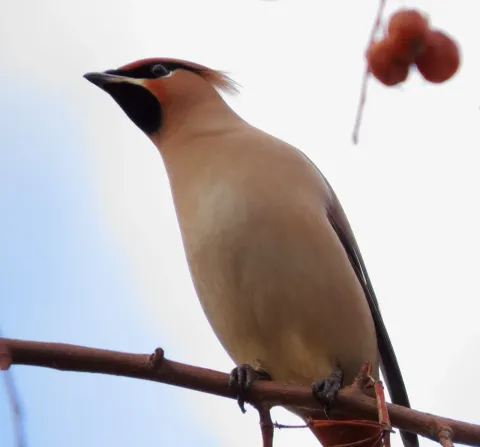
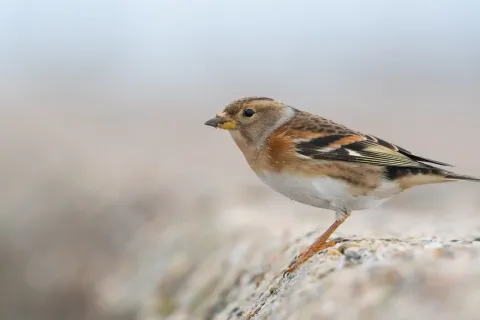
Photo: Sunny365days, CC BY 4.0, via Wikimedia Commons, resized

Photo: Donald Hobern, CC BY 2.0, via Wikimedia Commons, resized

The text was written with AI from facts in Wikipedia and may be shared under CC BY-SA 4.0. Sources: Swedish article, English article, German article
Report data: Artportalen (SLU Swedish Species Information Centre) via GBIF.org, 2016 to 2025. Red list: The Swedish Red List 2025, SLU Swedish Species Information Centre via GBIF.org.
Checked against sources on . How we make these pages