Anatidae
Barnacle Goose
Branta leucopsis
- Scientific name
- Branta leucopsis
- Family
- Anatidae
- In Sweden
- Partial migrant, breeds here
- Size
- 58 to 70 cm
- Swedish Red List 2025
- Not red-listed
- Global Red List (IUCN)
- Least concern (LC)
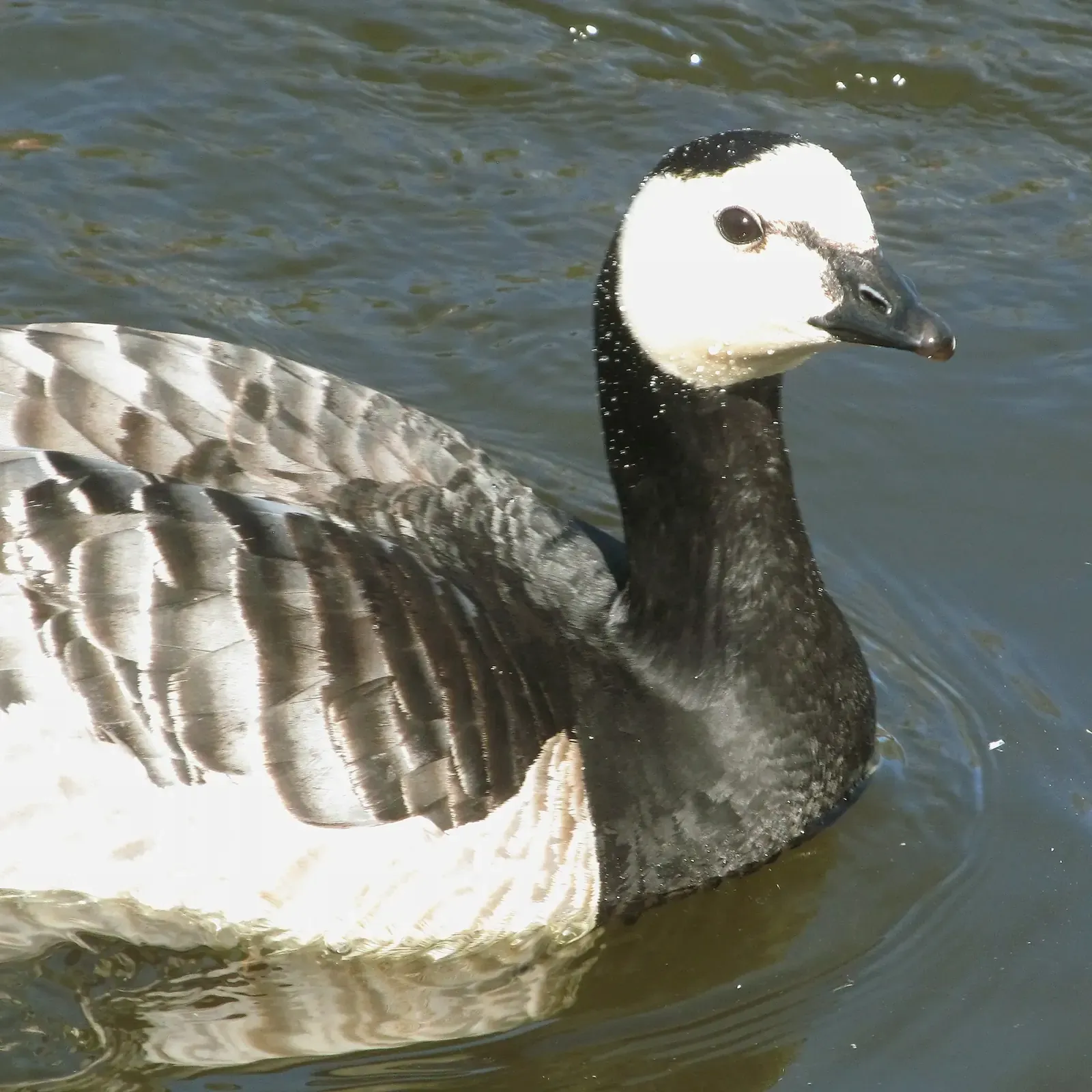
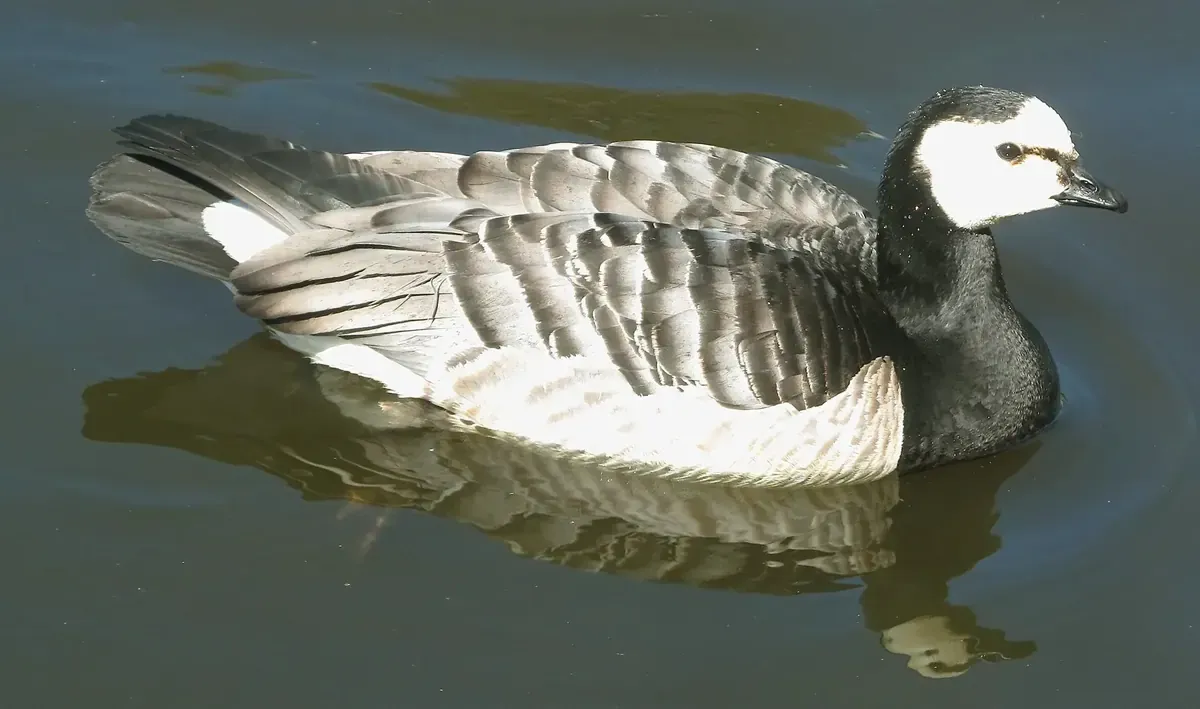
The Barnacle Goose is a compact, fairly short-necked goose in black, white and grey. It is closely tied to sea coasts and breeds in Sweden on both the east and west coasts.
How to recognise it
- White sides of the head and white forehead, with a black line from bill to eye
- Black crown, neck and breast in strong contrast to the white belly
- Barred grey upperparts, and a white V-shaped rump patch in flight
- Male and female look alike, young birds are browner with less distinct flank bars
Call and song
It is noisy, with a single barking “ka”. In large flocks the calls form a chorus at different pitches, and from a distance they can be mistaken for dogs barking.
Where and when
The Barnacle Goose is a partial migrant that breeds in Sweden, now along the east coast up to Norrbotten and since the late 1990s also on the west coast. It nests near the coast on rock ledges, grassy shores, low islands and flat sandbars. It is reported most in October. Its share of all bird reports is highest in Blekinge, Halland and Gotland.
When is it seen in Sweden?
Where is it reported?
- No reports
- Small share
- Medium share
- Large share
Reported most in October. Its share of all bird reports is highest in Blekinge, Halland and Gotland.
Food and behaviour
It eats plants, including willow, and in winter mainly short grass. Outside the breeding season it lives in flocks and often joins other goose species. It nests in large colonies or alone, and the parents take the young to the water almost straight after hatching.
Easily confused with
-
The Canada Goose is clearly larger, and the Barnacle Goose also has a white forehead.
More in the Anatidae family
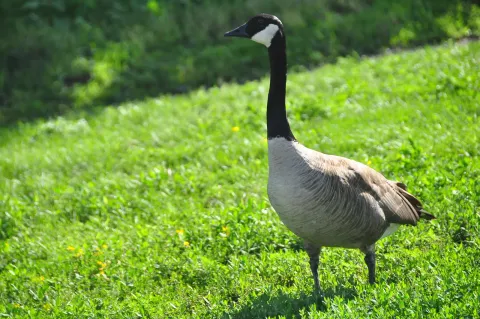
Photo: Tsyganov Sergey, CC0, via Wikimedia Commons, resized

Photo: Tsyganov Sergey, CC0, via Wikimedia Commons, resized

The text was written with AI from facts in Wikipedia and may be shared under CC BY-SA 4.0. Sources: Swedish article, English article, German article
Report data: Artportalen (SLU Swedish Species Information Centre) via GBIF.org, 2016 to 2025. Red list: The Swedish Red List 2025, SLU Swedish Species Information Centre via GBIF.org.
Checked against sources on . How we make these pages