Anatidae
Common Eider
Somateria mollissima
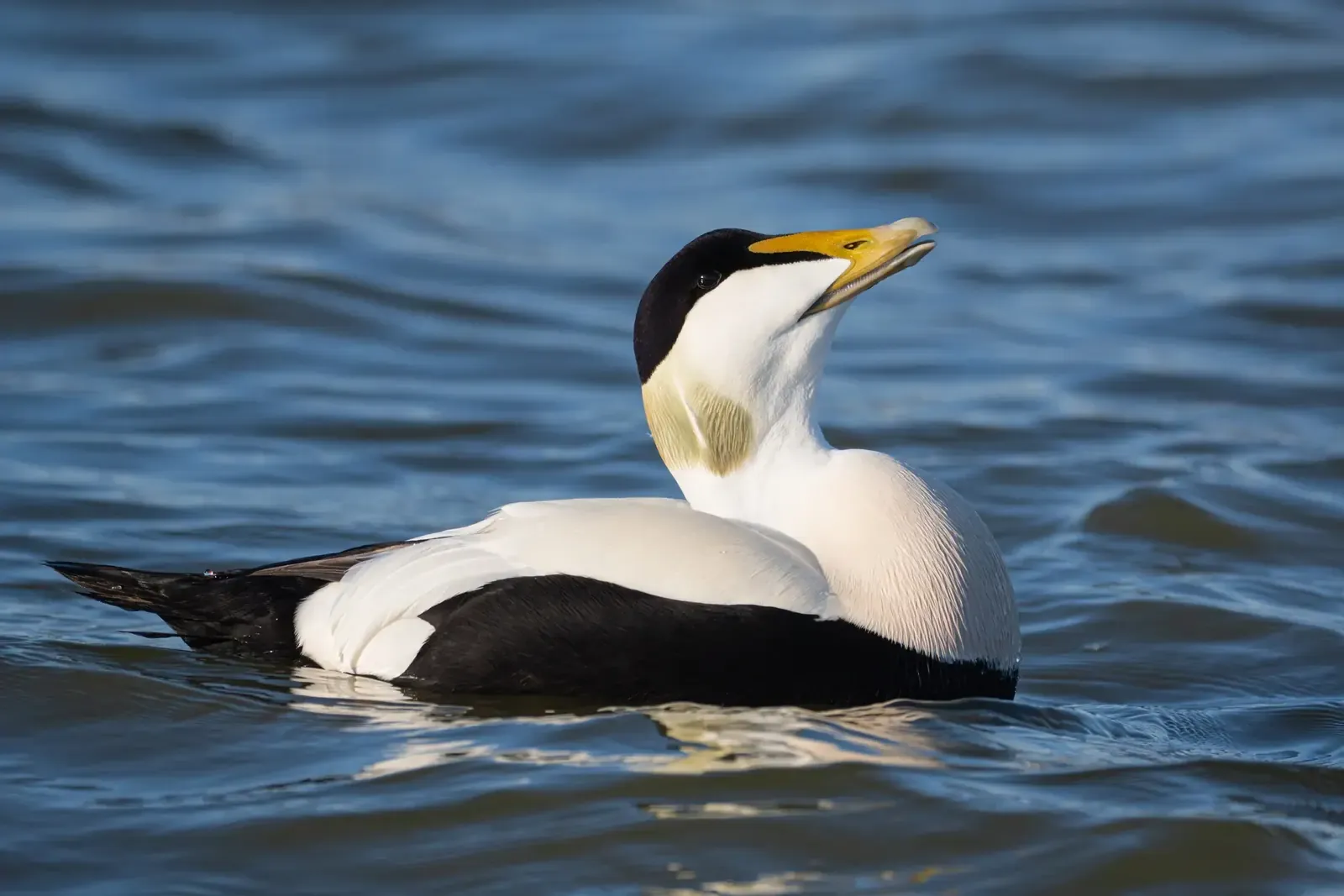
- Scientific name
- Somateria mollissima
- Family
- Anatidae
- In Sweden
- Partial migrant, breeds here
- Size
- 60 to 70 cm
- Swedish Red List 2025
- Endangered (EN)
- Global Red List (IUCN)
- Near threatened (NT)
The Common Eider is a heavily built diving duck that lives mainly in marine habitats. It breeds commonly along Sweden's sea coasts but is considered endangered in Sweden.
How to recognise it
- Long wedge-shaped bill forming a straight line with the forehead
- Breeding male is white with black crown, pinkish-red breast and pale green nape patch
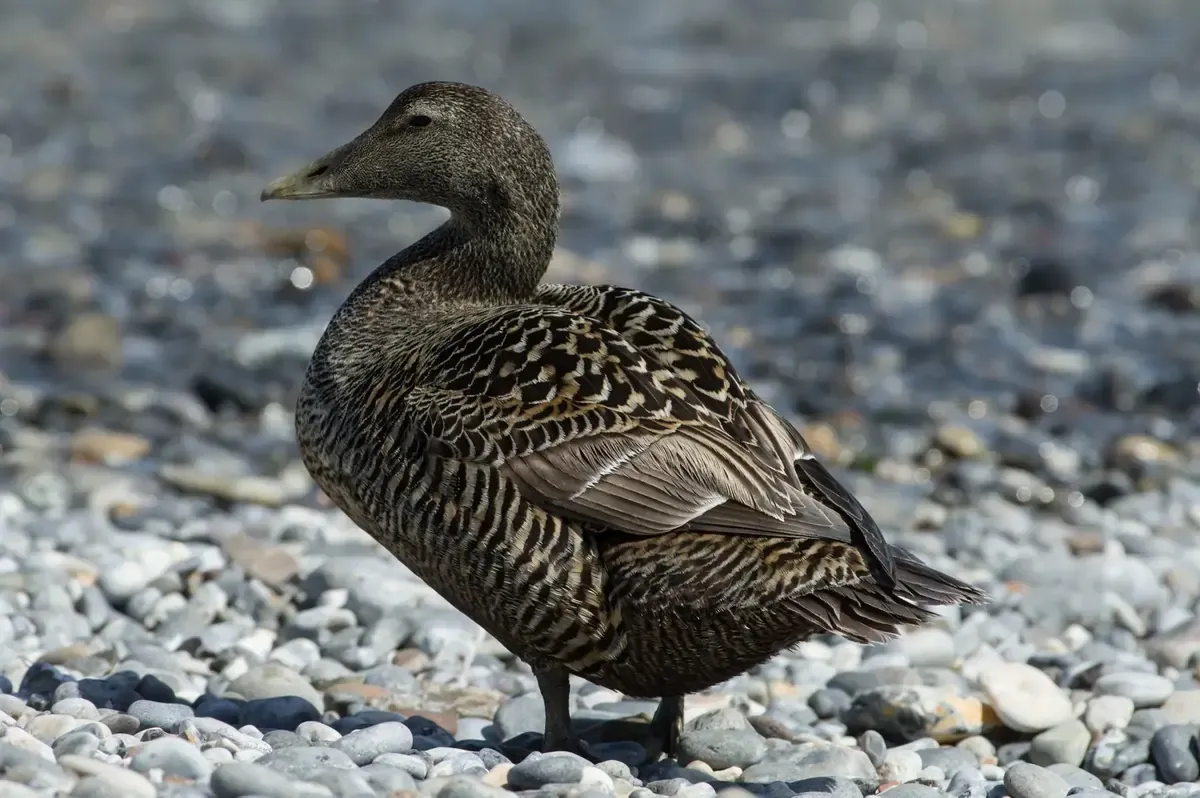
- Female is rusty grey and brown with black barring, speculum edged by two white bars
- In flight, note the heavy body, thick short neck and striking head shape
Call and song
The Common Eider is vocal during the breeding season. The male has a soft, far-carrying call, "a-ooh-å". The female cackles "gak-ak-ak-ak...", a sound likened to a distant fishing boat.
Where and when
The Common Eider is a partial migrant that breeds commonly along Sweden's sea coasts, and the largest Swedish population is in the Stockholm archipelago. It is reported all year round, and its share of all bird reports is highest in Halland, Blekinge and Gotland. The Swedish Red List 2025 classes it as Endangered (EN), and it has declined sharply, probably because of thiamine deficiency.
When is it seen in Sweden?
Where is it reported?
- No reports
- Small share
- Medium share
- Large share
Reported all year round. Its share of all bird reports is highest in Halland, Blekinge and Gotland.
Food and behaviour
It feeds on crustaceans and molluscs, and mussels are its most important food. Mussels are swallowed whole and the shells crushed in the gizzard. It dives for food down to 20 metres or picks it from the bottom in shallow water. To take off it first runs along the water surface to gain speed. In winter it often stays out on the open sea in large flocks.
More in the Anatidae family
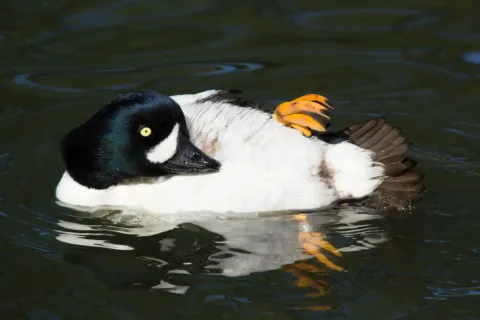
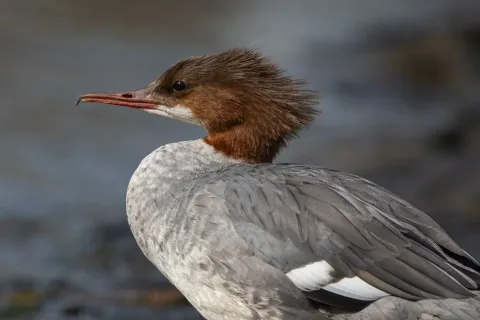
Photo: Hobbyfotowiki, CC0, via Wikimedia Commons, resized

Photo: Hobbyfotowiki, CC0, via Wikimedia Commons, resized

The text was written with AI from facts in Wikipedia and may be shared under CC BY-SA 4.0. Sources: Swedish article, English article, German article
Report data: Artportalen (SLU Swedish Species Information Centre) via GBIF.org, 2016 to 2025. Red list: The Swedish Red List 2025, SLU Swedish Species Information Centre via GBIF.org.
Checked against sources on . How we make these pages