Anatidae
Common Goldeneye
Bucephala clangula
- Scientific name
- Bucephala clangula
- Family
- Anatidae
- In Sweden
- Partial migrant, breeds here
- Size
- 40 to 48 cm
- Swedish Red List 2025
- Not red-listed
- Global Red List (IUCN)
- Least concern (LC)
The Common Goldeneye is a medium-sized, compact diving duck with a large head. It breeds by rivers, lakes and wetlands and in winter is found on ice-free water and along the coast.
How to recognise it
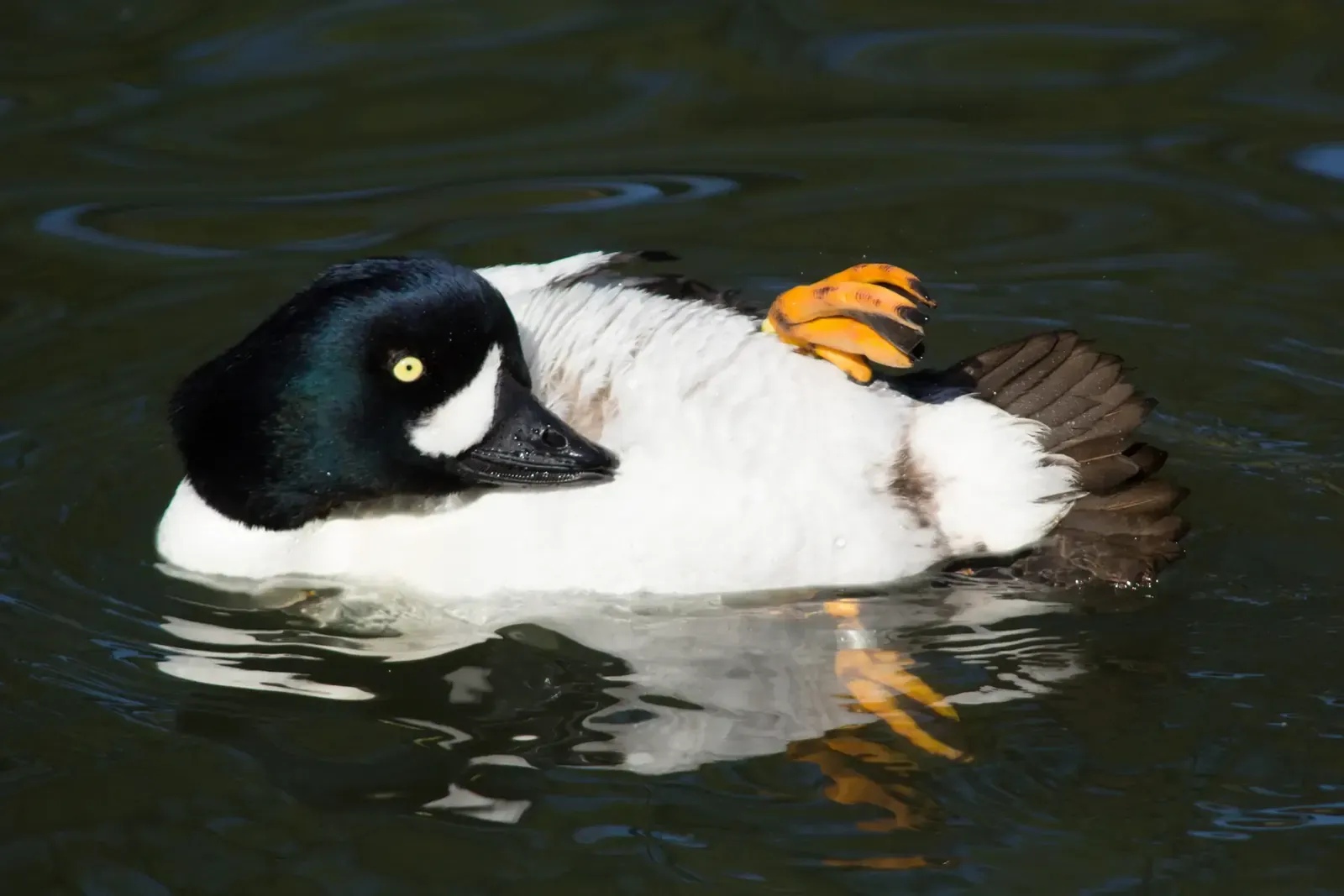
- Large, slightly peaked head on a short neck, small triangular bill and yellow eyes
- Breeding male: black and white, glossy green-black head, large white spot between bill and eye
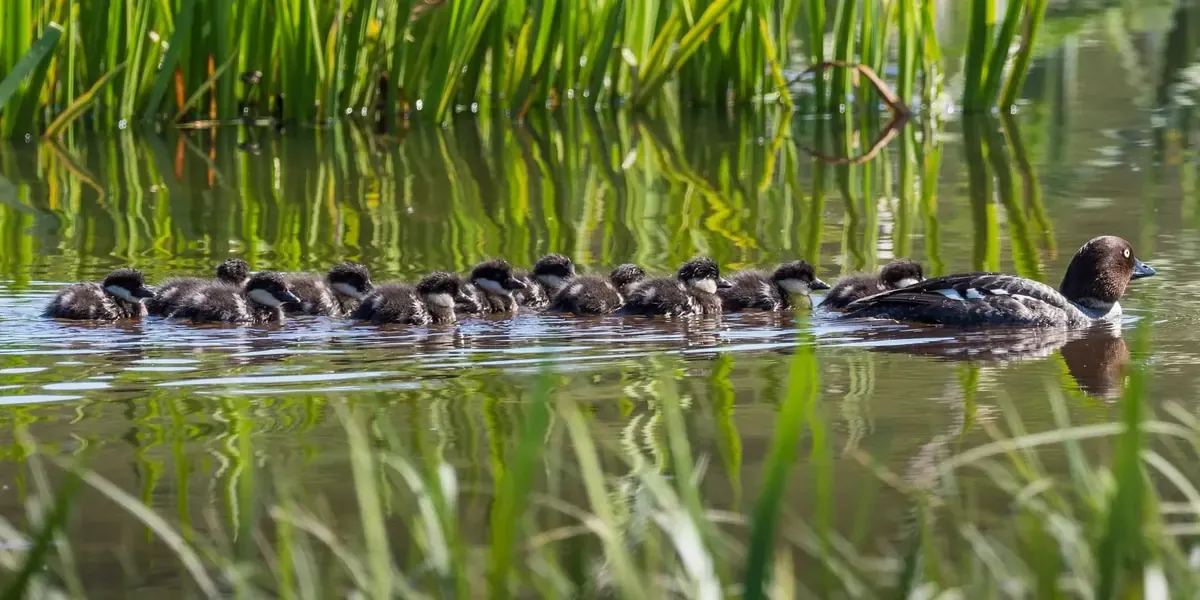
- Female: grey body, brown head, variable white neck ring, yellow and black bill tip
- In flight both sexes show a white patch on the inner wing
Call and song
In flight the wings make a whistling sound, hyhyhyhy, audible at long range and loudest in the male. During display the male gives a croaking sound, like running a finger along a comb. The female gives a grar call at the breeding site.
Where and when
The Common Goldeneye is a partial migrant that breeds in Sweden. The Swedish population was estimated at 65 000 pairs in 2018. It is reported from all 21 counties and is reported most from November to March. In winter it stays on ice-free lakes, rivers and along the coast, in pairs or larger flocks. It is not red-listed, but an ongoing decline has been noted.
When is it seen in Sweden?
Where is it reported?
- No reports
- Small share
- Medium share
- Large share
Reported most in November to March. Reported from all 21 counties.
Food and behaviour
It dives for food, sometimes down to eight metres. It eats small fish, snails, crustaceans, plant parts, insects and larvae. In display in early spring the male bobs down and throws his head back over his back. The female lays ten to twelve eggs in a tree hole, old woodpecker hole or nest box. She calls the young out of the nest and they jump out one by one.
Easily confused with
-
Bucephala islandica
Male Barrow's Goldeneye has a blue-purple glossed head and a larger, more crescent-shaped spot in front of the eye. Its female has more yellow on the bill than the Common Goldeneye female.
More in the Anatidae family

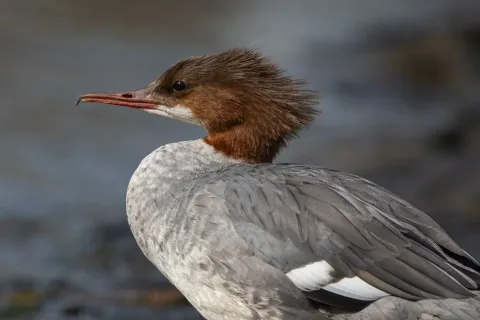
Photo: U.S. Fish and Wildlife Service - Midwest Region, public domain, via Wikimedia Commons, resized

Photo: Bengt Nyman, CC BY 2.0, via Wikimedia Commons, resized

The text was written with AI from facts in Wikipedia and may be shared under CC BY-SA 4.0. Sources: Swedish article, English article, German article
Report data: Artportalen (SLU Swedish Species Information Centre) via GBIF.org, 2016 to 2025. Red list: The Swedish Red List 2025, SLU Swedish Species Information Centre via GBIF.org.
Checked against sources on . How we make these pages