Anatidae
Common Merganser
Mergus merganser
- Scientific name
- Mergus merganser
- Family
- Anatidae
- In Sweden
- Partial migrant, breeds here
- Size
- 58 to 68 cm
- Swedish Red List 2025
- Not red-listed
- Global Red List (IUCN)
- Least concern (LC)
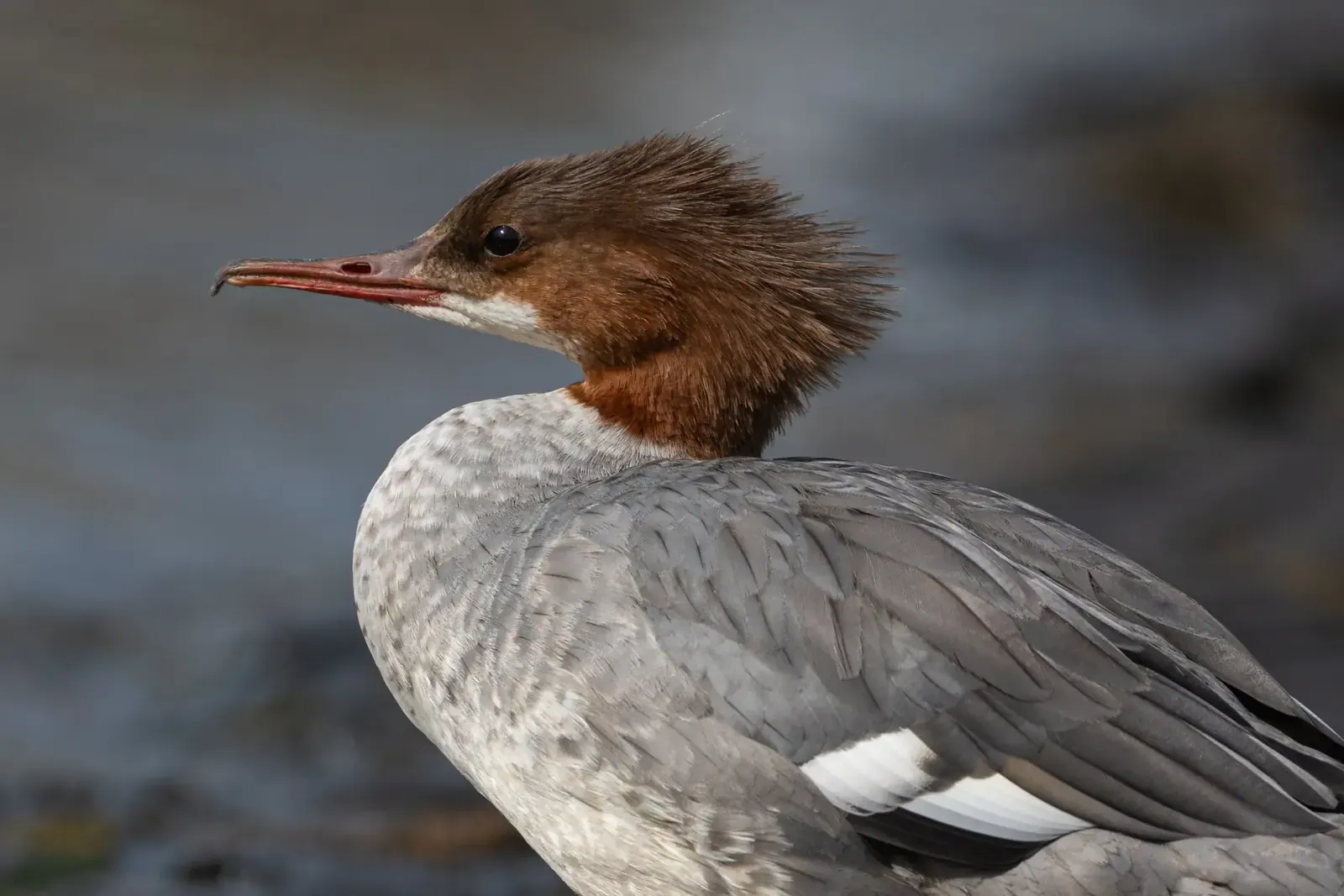
The Common Merganser is a duck found on deep, clear water, where it dives for fish. It uses both fresh and salt water, favouring clear rivers, lakes and coasts with trees.
How to recognise it
- Long, slim red bill with a small downcurved black hook at the tip
- Breeding male has a dark green head, black back and almost white wings
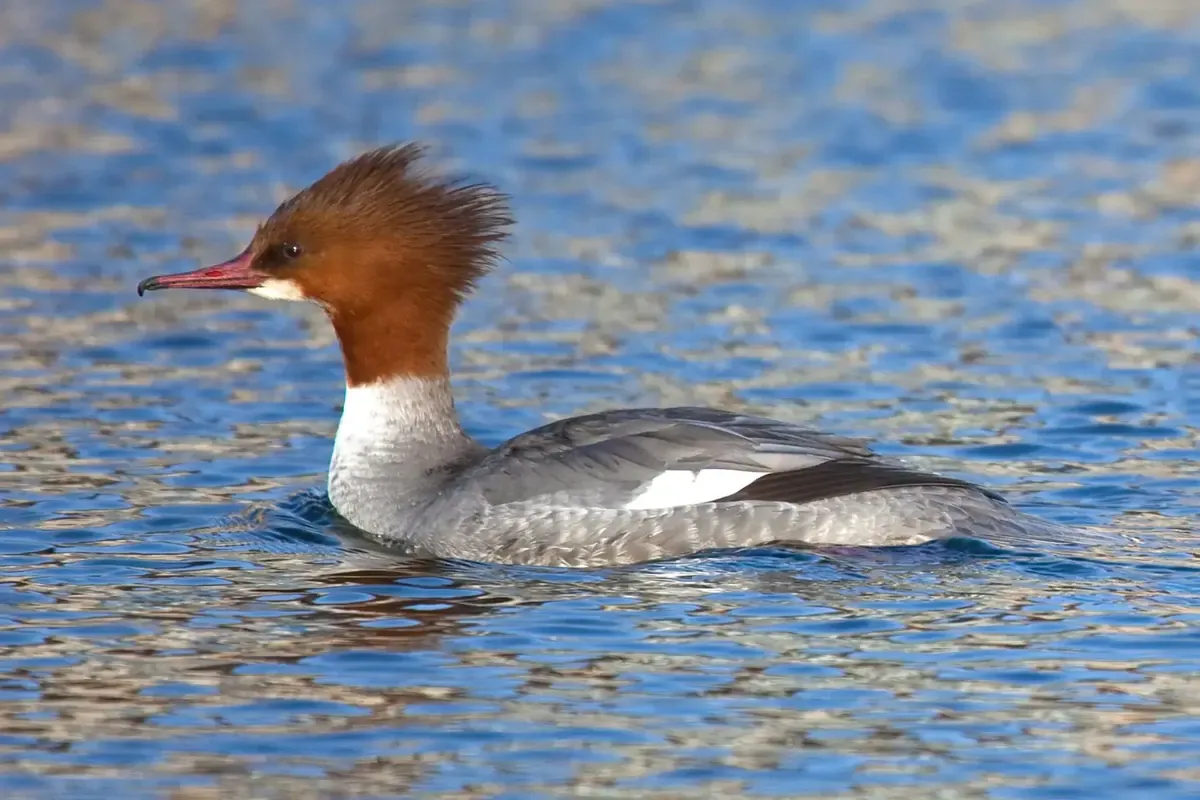
- Female has a red-brown head sharply divided from the pale neck, white chin, long nape feathers
- In flight it looks like a diver or grebe, with a long outstretched neck
Call and song
The usual call is a low, hoarse croak. The displaying male gives a muted, ringing "krroo-krråå", and the female gives a hard "pra, pra-pra" during courtship. In flight it is louder, with a grinding "prrah, prrah, prrah" and a faster "tjackerack-ack-ack".
Where and when
The Common Merganser occurs across Sweden and is most numerous in the eastern archipelago. It is a partial migrant that breeds here. It often winters on the east coast south of Stockholm unless the Baltic freezes completely. Many Swedish birds winter on the west coast, in Denmark, Germany, Poland and the Netherlands. It is reported most in November to March, and from all 21 counties.
When is it seen in Sweden?
Where is it reported?
- No reports
- Small share
- Medium share
- Large share
Reported most in November to March. Reported from all 21 counties.
Food and behaviour
It feeds mainly on smaller fish, and besides fish it takes molluscs, crustaceans, worms, insect larvae and amphibians. In autumn, flocks fish together in a line parallel to the shore, driving small fish towards land by diving and splashing their wings. It often sits on a rock in the water with half-open wings in the sun, like cormorants. The nest is often in a tree hole or nest box.
More in the Anatidae family
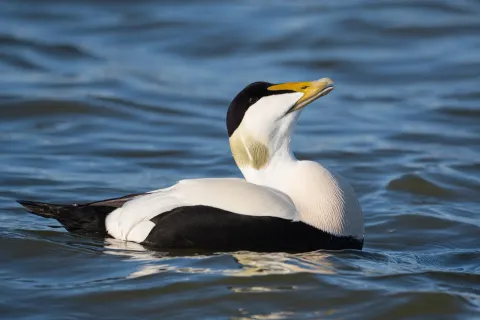
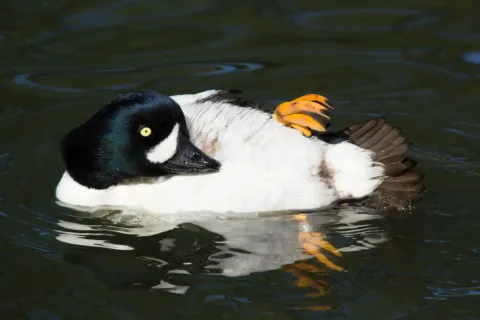
Photo: Hobbyfotowiki, CC0, via Wikimedia Commons, resized

Photo: Bengt Nyman, CC BY 2.0, via Wikimedia Commons, resized

The text was written with AI from facts in Wikipedia and may be shared under CC BY-SA 4.0. Sources: Swedish article, English article, German article
Report data: Artportalen (SLU Swedish Species Information Centre) via GBIF.org, 2016 to 2025. Red list: The Swedish Red List 2025, SLU Swedish Species Information Centre via GBIF.org.
Checked against sources on . How we make these pages