Anatidae
Canada Goose
Branta canadensis
- Scientific name
- Branta canadensis
- Family
- Anatidae
- In Sweden
- Partial migrant, breeds here
- Size
- 90 to 105 cm
- Swedish Red List 2025
- Not red-listed
- Global Red List (IUCN)
- Least concern (LC)
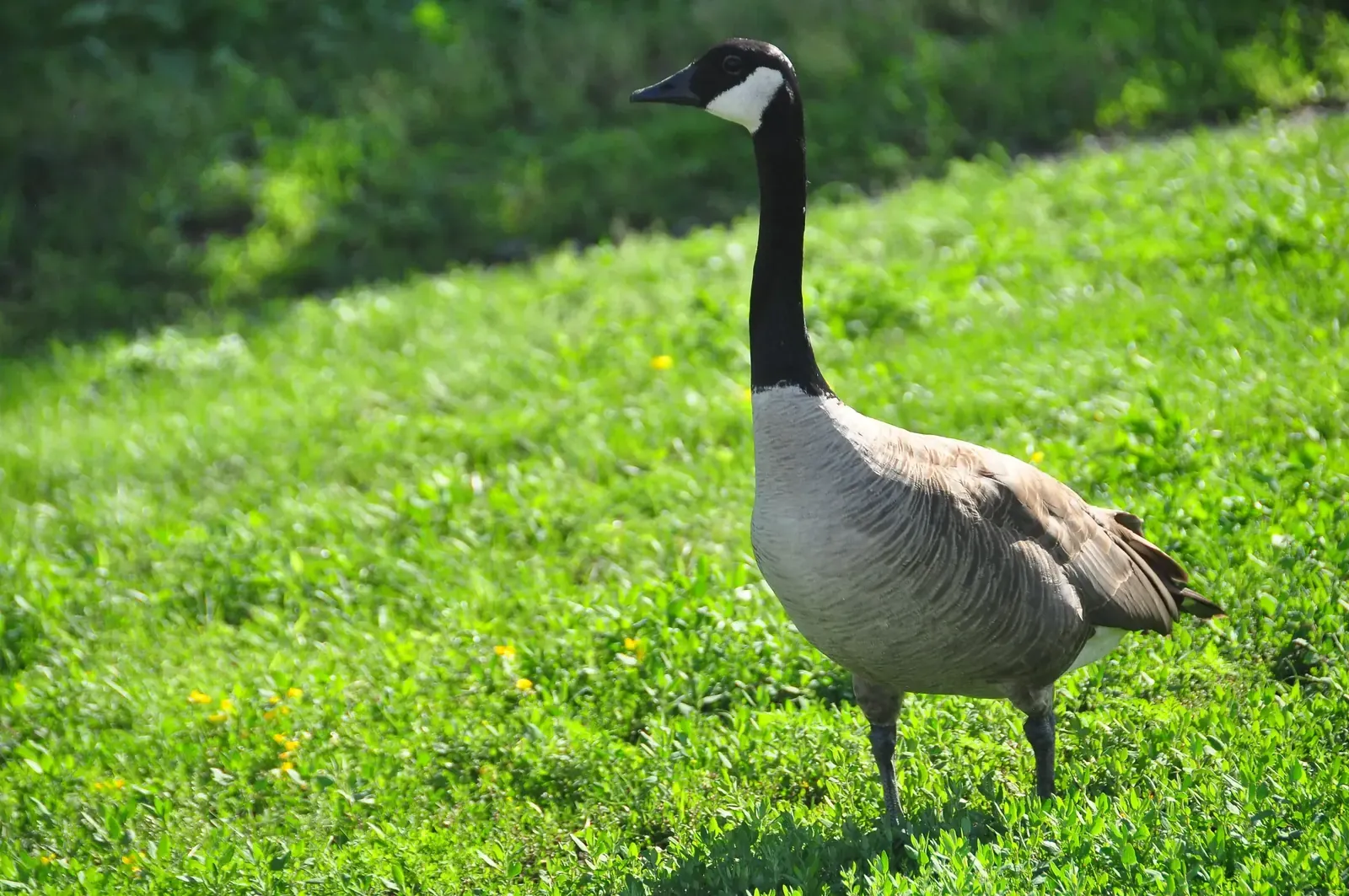
The Canada Goose was introduced to Scandinavia in the 1900s, starting in Sweden in 1929, and is now Sweden's commonest and most widespread goose. It lives on open lakes and archipelagos, and in parks and farmland with smaller lakes or ponds.
How to recognise it
- Black head and neck with a white chinstrap reaching from the throat to behind the eyes
- The black neck is sharply divided from the grey breast
- Beige-brown belly and flanks with clear bars, darker grey-brown back
- White rump, blackish-grey tail, grey-black bill and feet, sexes alike
Call and song
The typical call is a nasal, two-syllable “år-lytt”, with the second syllable almost rising into falsetto. It calls especially often in flight. Agitated or territorial geese often start a confrontation with a loud hiss.
Where and when
The Canada Goose is a partial migrant that breeds in Sweden, also in bogs with larger open water. It is reported all year round and from all 21 counties. Birds from northern Sweden move to the North Sea and Baltic coasts, and many northern European Canada Geese winter around Denmark, the Netherlands and Poland. In northern places where water is kept open artificially, it often stays for the winter.
When is it seen in Sweden?
Where is it reported?
- No reports
- Small share
- Medium share
- Large share
Reported all year round. Reported from all 21 counties.
Food and behaviour
It eats mainly grass, other plants and their roots, sometimes small insects and fish. When grazing water plants it lifts its rear out of the water to reach deeper. Outside the breeding season it lives in large flocks, where some geese keep watch while the others graze. It flies in a characteristic V formation, and many are half tame, living in parks and ponds near people.
Easily confused with
-
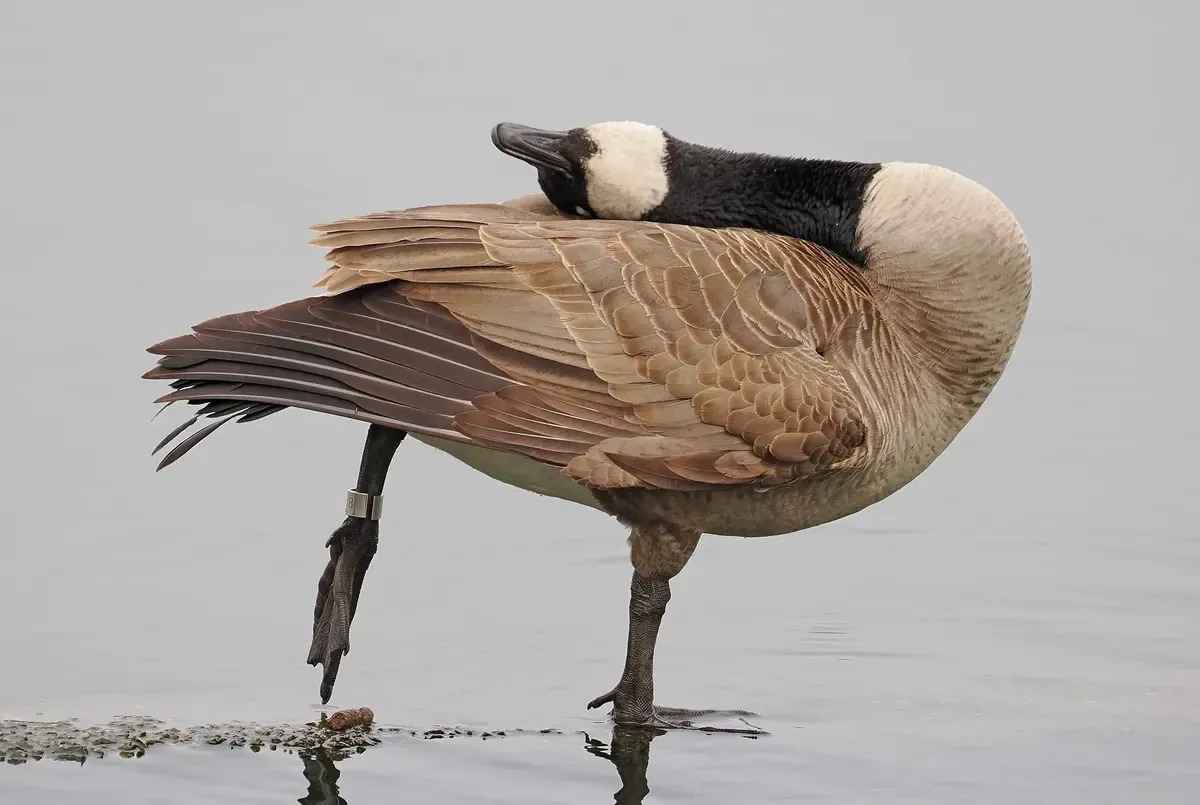
Branta hutchinsii
Branta hutchinsii looks like a smaller Canada Goose but has a proportionally shorter neck and a smaller bill.
More in the Anatidae family
Photo: abdallahh, CC BY 2.0, via Wikimedia Commons, resized

Photo: Judy Gallagher, CC BY 2.0, via Wikimedia Commons, resized

The text was written with AI from facts in Wikipedia and may be shared under CC BY-SA 4.0. Sources: Swedish article, English article, German article
Report data: Artportalen (SLU Swedish Species Information Centre) via GBIF.org, 2016 to 2025. Red list: The Swedish Red List 2025, SLU Swedish Species Information Centre via GBIF.org.
Checked against sources on . How we make these pages