Prunellidae
Dunnock
Prunella modularis
- Scientific name
- Prunella modularis
- Family
- Prunellidae
- In Sweden
- Summer visitor, breeds here
- Size
- 14.5 cm
- Swedish Red List 2025
- Near threatened (NT)
- Global Red List (IUCN)
- Least concern (LC)
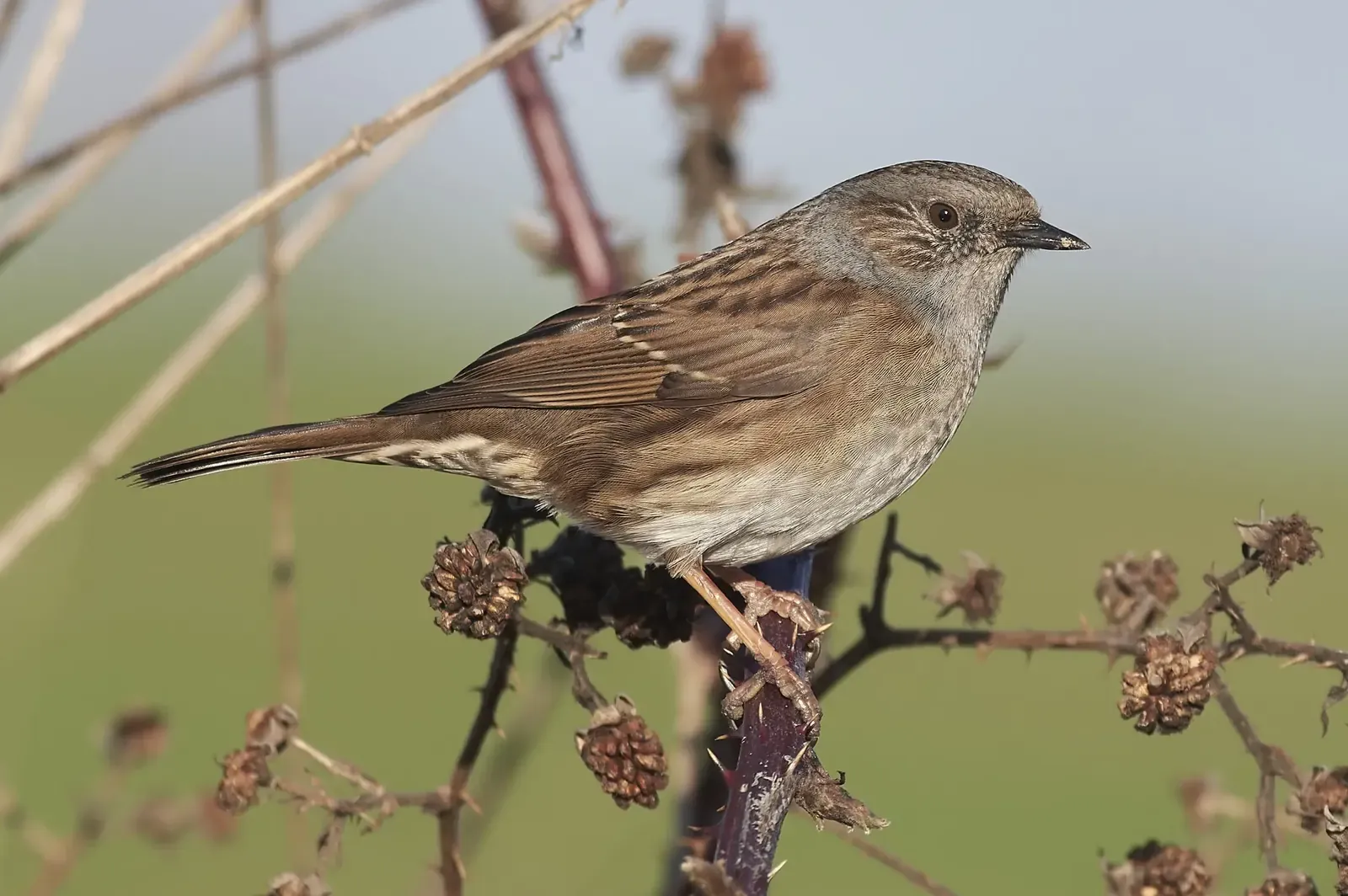
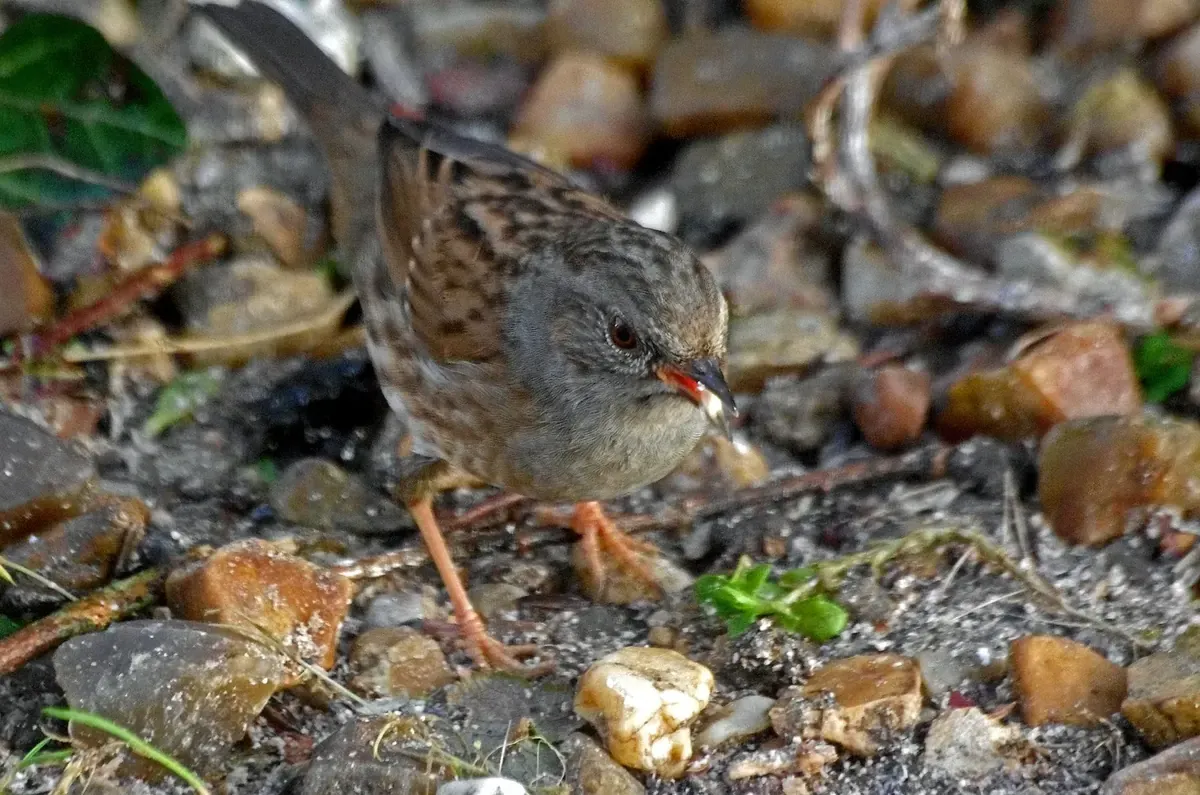
The Dunnock looks like a brownish sparrow but has a thin, insect-eater's bill and an iron-grey head. It breeds in woodland, gardens, parks and mountain forest, often with young spruces, dense bushes and thickets.
How to recognise it
- Lead-grey crown, eyebrow, nape, throat and breast
- Dark, plain body with a deep dark brown, black-streaked back
- Thin dark bill and reddish-brown legs
- The male averages slightly more lead-grey on head and neck than the female
Call and song
The song is fast, simple, high-pitched and silvery tinkling, and can recall that of the Goldcrest. The call is a thin, high "tih".
Where and when
The Dunnock is a migrant that breeds in Sweden and is common across the country, only exceptionally in the mountains. It leaves in September to November for western and southwestern Europe and returns in early April, when it is reported most. A few may winter in southern Sweden, and it is rarely reported in February. In 2025 it was added to the Swedish Red List as Near Threatened (NT).
When is it seen in Sweden?
Where is it reported?
- No reports
- Small share
- Medium share
- Large share
Reported most in April. Rarely reported in February. Reported from all 21 counties.
Food and behaviour
The Dunnock often keeps hidden in dense bushes and sits more in the open when it sings. It usually feeds on the ground. In summer it eats insects such as small beetles, larvae and pupae, plus spiders and earthworms, and in winter also berries and seeds. It often flicks its wings, especially during territorial disputes or competition for mating.
More songbirds
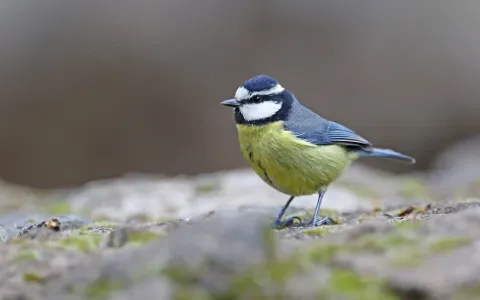
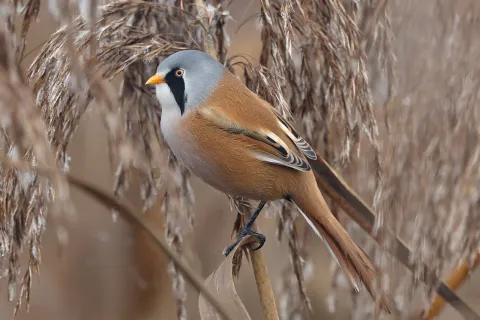
Photo: Hobbyfotowiki, CC0, via Wikimedia Commons, resized

Photo: Daniel Jolivet, CC BY 2.0, via Wikimedia Commons, resized

The text was written with AI from facts in Wikipedia and may be shared under CC BY-SA 4.0. Sources: Swedish article, English article, German article
Report data: Artportalen (SLU Swedish Species Information Centre) via GBIF.org, 2016 to 2025. Red list: The Swedish Red List 2025, SLU Swedish Species Information Centre via GBIF.org.
Checked against sources on . How we make these pages