Fringillidae
Eurasian Bullfinch
Pyrrhula pyrrhula
- Scientific name
- Pyrrhula pyrrhula
- Family
- Fringillidae
- In Sweden
- Resident all year
- Size
- 15 to 17 cm
- Swedish Red List 2025
- Not red-listed
- Global Red List (IUCN)
- Least concern (LC)
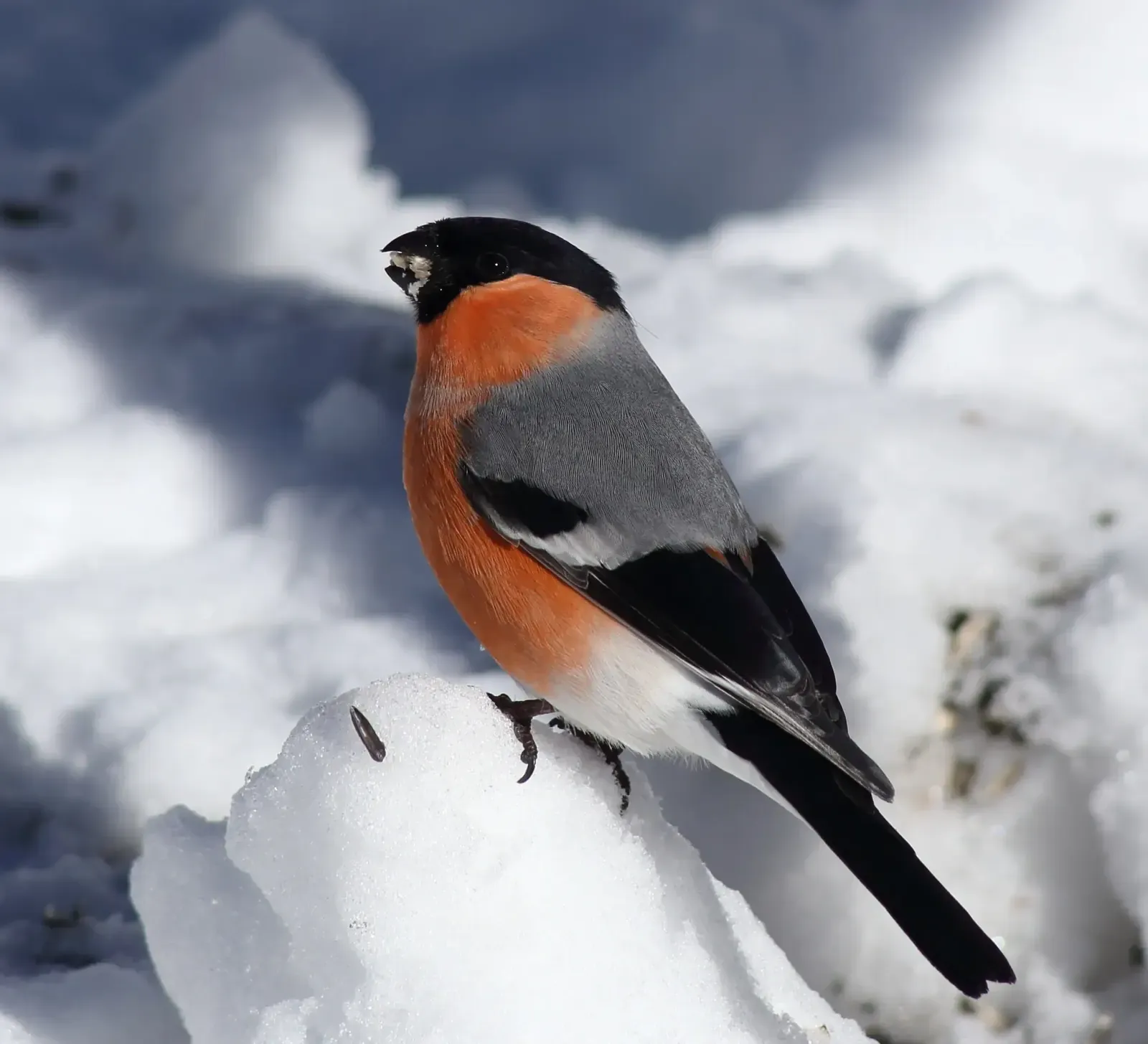
The Eurasian Bullfinch is a fairly large, sturdily built finch of coniferous and mixed forest. In winter it readily comes to houses and bird feeders.
How to recognise it
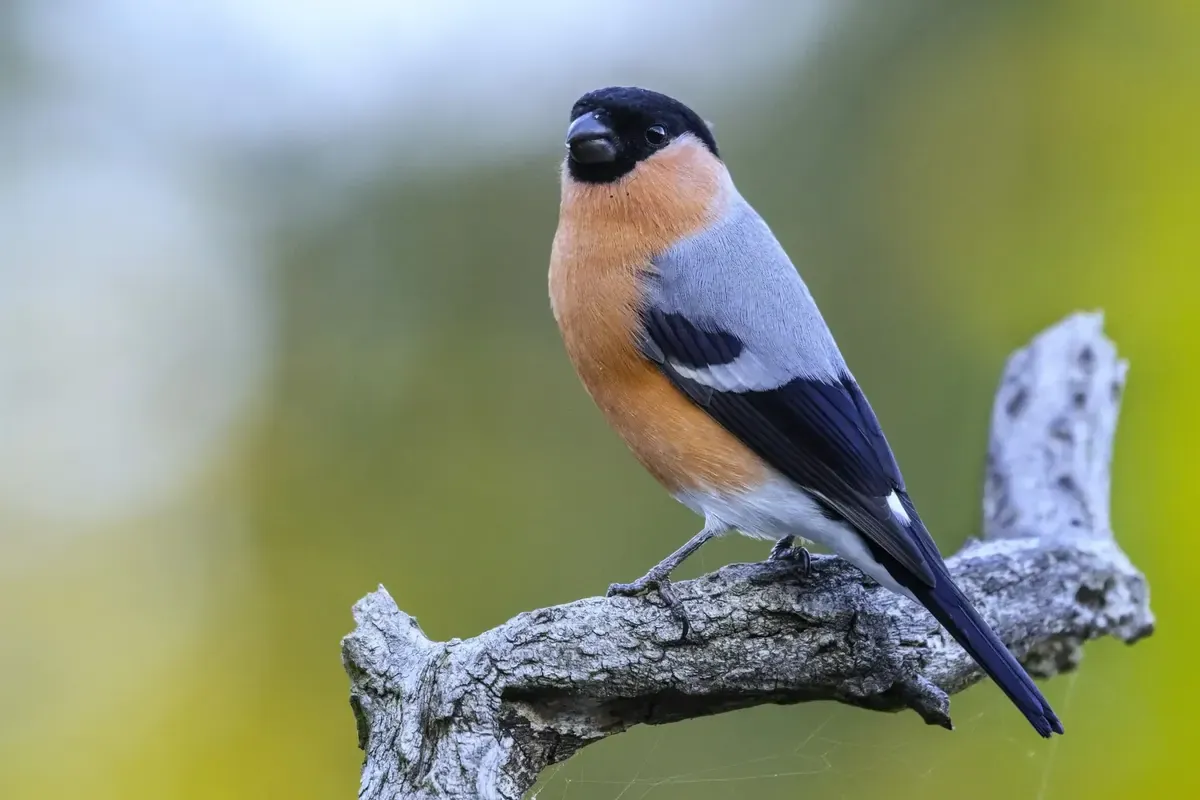
- Black cap, wings and tail with a blue metallic sheen
- Male red on the sides of the head and breast, female paler, grey-brown tinged lilac
- Grey back, white wing bar and white rump, clear in the undulating flight
- Short, thick bill with a strongly curved upper mandible
Call and song
The usual call is a quiet, low, melancholy whistle, roughly "peeu" or "pew". The northern subspecies pyrrhula, found from Scandinavia to Eastern Europe, has a call that recalls a toy trumpet. The song is a weak whistling mixed with creaking and plaintive notes, and both female and male sing.
Where and when
A resident found throughout Sweden except in the high mountains. It lives in coniferous and mixed forest, often damp with rich undergrowth. It is reported most in December and January, when it visits settlements and bird feeders, and rarely in August and September. In some years many move to Denmark and Central Europe. Its share of all bird reports is highest in Norrbotten, Västernorrland and Jämtland.
When is it seen in Sweden?
Where is it reported?
- No reports
- Small share
- Medium share
- Large share
Reported most in December and January. Rarely reported in May to September. Its share of all bird reports is highest in Norrbotten, Västernorrland and Jämtland.
Food and behaviour
It eats seeds, buds, berries such as rowan berries, young leaves and some insects. It usually moves in pairs and only rarely in groups. It is shy in the breeding season but easier to watch the rest of the year. The nest is usually placed in young spruces or hedges, and the female incubates two to three times a year between April and August.
More in the Fringillidae family
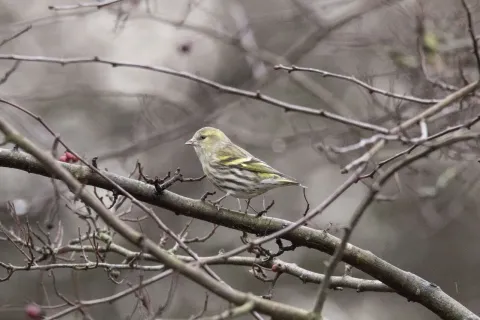
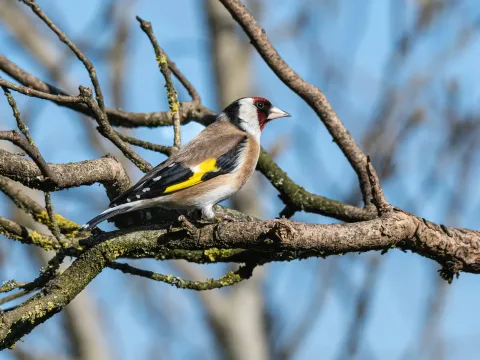
Photo: Estormiz, CC0, via Wikimedia Commons, resized

Photo: TRinaud, CC BY 4.0, via Wikimedia Commons, resized

The text was written with AI from facts in Wikipedia and may be shared under CC BY-SA 4.0. Sources: Swedish article, English article, German article
Report data: Artportalen (SLU Swedish Species Information Centre) via GBIF.org, 2016 to 2025. Red list: The Swedish Red List 2025, SLU Swedish Species Information Centre via GBIF.org.
Checked against sources on . How we make these pages